Audio-Technica AT-LP7X Review: A Mid-Range Belt-Drive Turntable Built for Dedicated Vinyl Enthusiasts

Audio-Technica AT-LP7X Review: A Mid-Range Belt-Drive Turntable Built for Dedicated Vinyl Enthusiasts
The consumer audio landscape has undergone a profound transformation over the past two decades, characterized by the dramatic resurgence of physical music formats. While compact discs and cassettes have enjoyed modest, niche revivals, the vinyl LP has emerged as the undisputed titan of physical media sales. Within this modern analog renaissance, Japanese audio electronics manufacturer Audio-Technica has cemented its position as a household name. Though the company established its reputation crafting high-precision phonographic cartridges since the early 1960s, it notably bided its time before entering the standalone turntable market. Aside from retrospective novelties like the late-1980s Sound Burger—which received a surprise re-release in recent years—Audio-Technica did not launch its own modern record player lineup until late 2009.
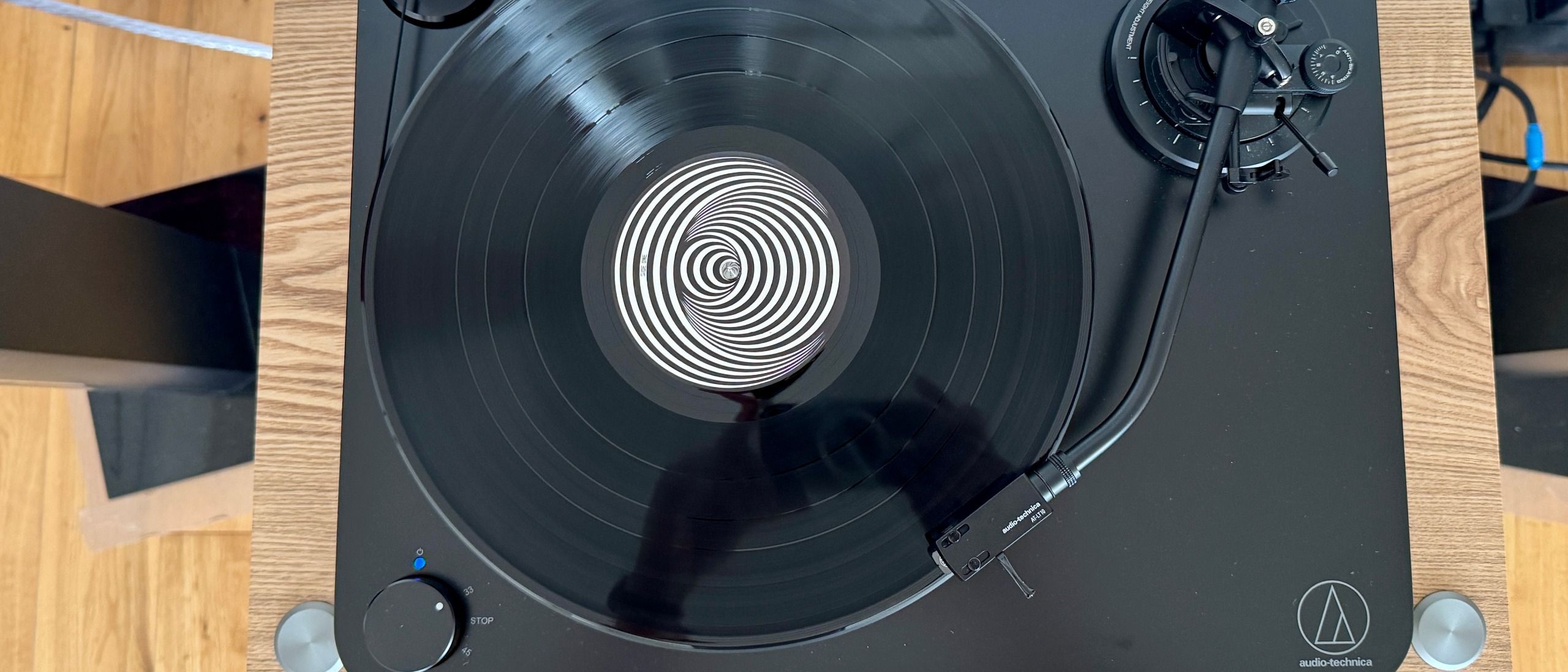
Since that pivotal breakthrough, the brand has flooded the market with accessible, high-value turntables designed for everyday consumers. However, with the introduction of the Audio-Technica AT-LP7X, the manufacturer is casting its net wider, targeting committed audiophiles who demand performance beyond entry-level specifications. Priced at £699 in the United Kingdom, approximately $999 in the United States, and roughly AU$1,799 in Australia, the AT-LP7X occupies a decidedly upper-mid-range tier. It is an uncompromised deck tailored for serious vinyl collectors, complete with a pre-mounted cartridge, advanced motor isolation, and a versatile, switchable phono preamplifier.
An Examination of Pricing and Market Positioning
Positioned firmly in the "proper vinyl" category, the AT-LP7X bypasses the casual, entry-level demographic that relies on budget-oriented plastic builds, built-in plinth amplification, or bundled desktop speakers. At its price point, the turntable enters a fiercely contested market segment, going head-to-head with industry heavyweights such as the acclaimed Rega Planar 3.
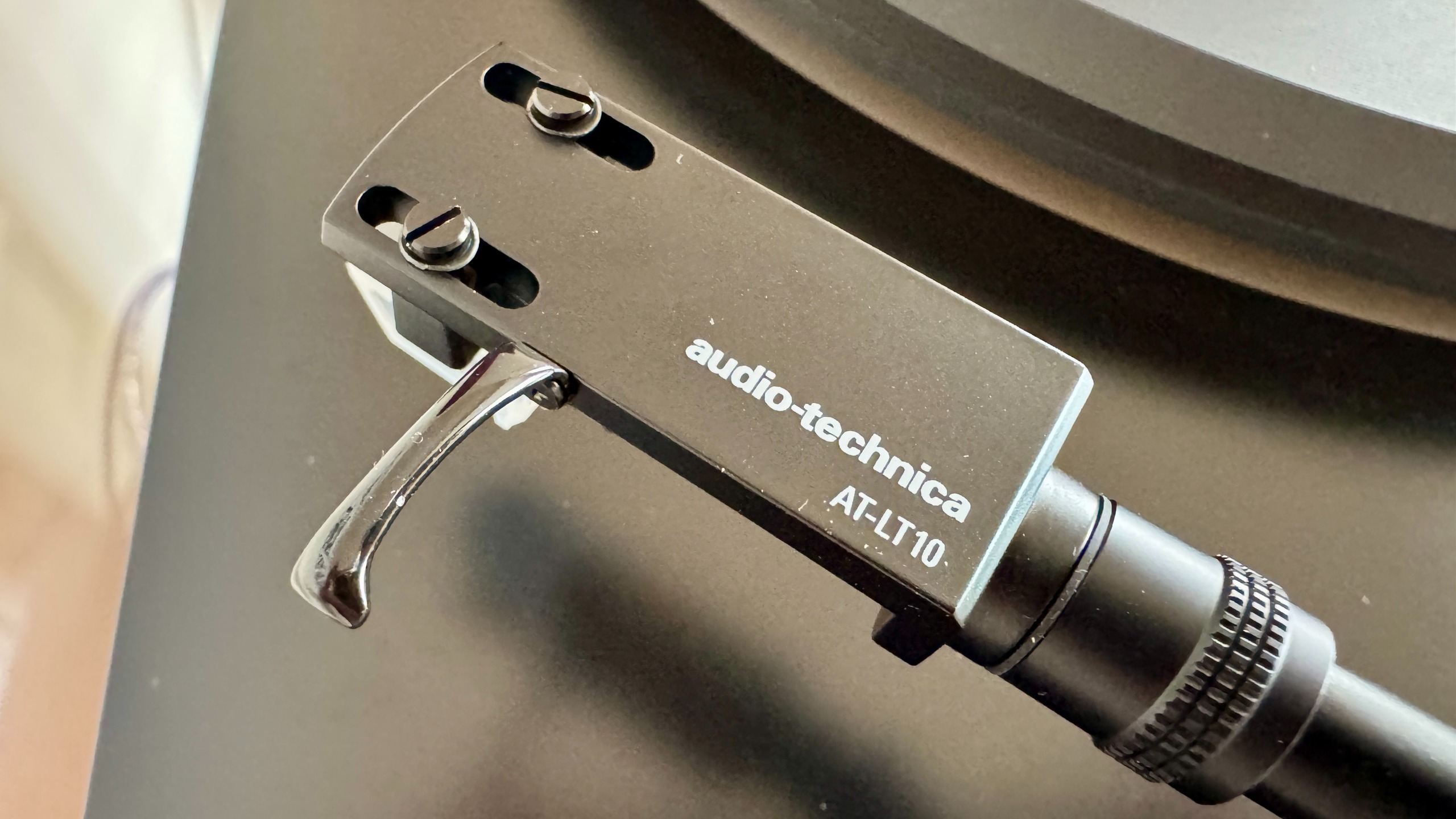
Yet, Audio-Technica approaches product packaging differently than some of its British competitors. While alternatives like the Rega Planar 3 frequently ship as a blank canvas—requiring the purchaser to source a separate cartridge and an external phono stage—the AT-LP7X arrives fully equipped. Out of the box, it includes the company’s own AT-LT10 headshell fitted with the well-regarded AT-VM95E moving magnet (MM) cartridge, alongside an integrated, switchable phono preamplifier capable of handling both moving magnet and moving coil (MC) cartridges. This all-inclusive approach delivers immediate value, particularly for audiophiles seeking a streamlined path to high-fidelity playback without the hidden costs of supplementary hardware.
Engineering, Design, and Vibration Isolation
When evaluating turntables at this price tier, structural integrity and mechanical damping are critical performance metrics. Audio-Technica has adhered to the classic rectangular plinth geometry with circular platter layout, eschewing radical aesthetic experiments in favor of proven acoustic engineering principles.
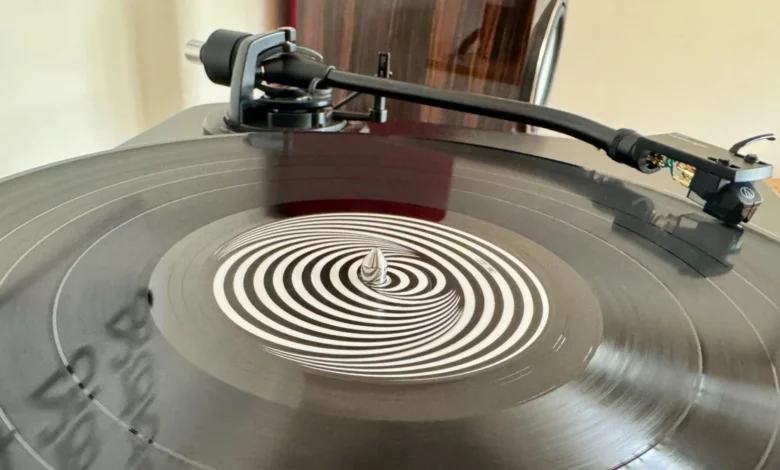
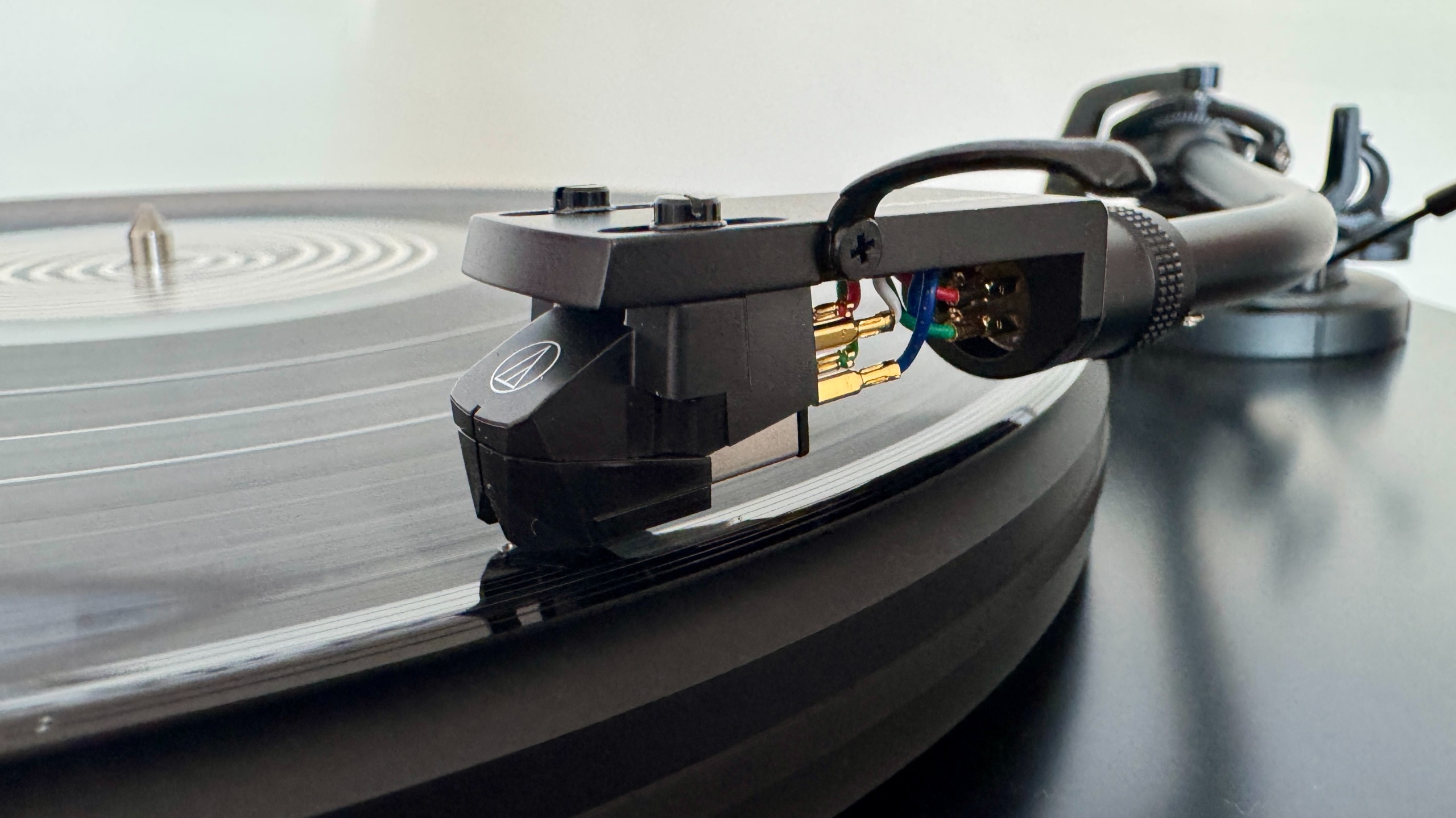
The AT-LP7X is anchored by a dense medium-density fiberboard (MDF) plinth finished to a high standard, contributing to a total weight of 7.6kg when fitted with its smoked Perspex dust-cover. Rather than utilizing permanent hinges, the dust-cover is fully detachable, a design choice favored by purists to prevent airborne vibrations from translating through the chassis during playback.
To combat external mechanical interference, the turntable rests upon four hefty, height-adjustable, spring-based isolation feet. These feet serve as a crucial first line of defense against footfall and structural resonances. Atop the plinth sits a 20mm high-density acrylic platter. Its smooth surface finish is so refined that a traditional slip-mat becomes optional rather than mandatory, while its mass effectively dampens micro-vibrations originating from the vinyl record itself.
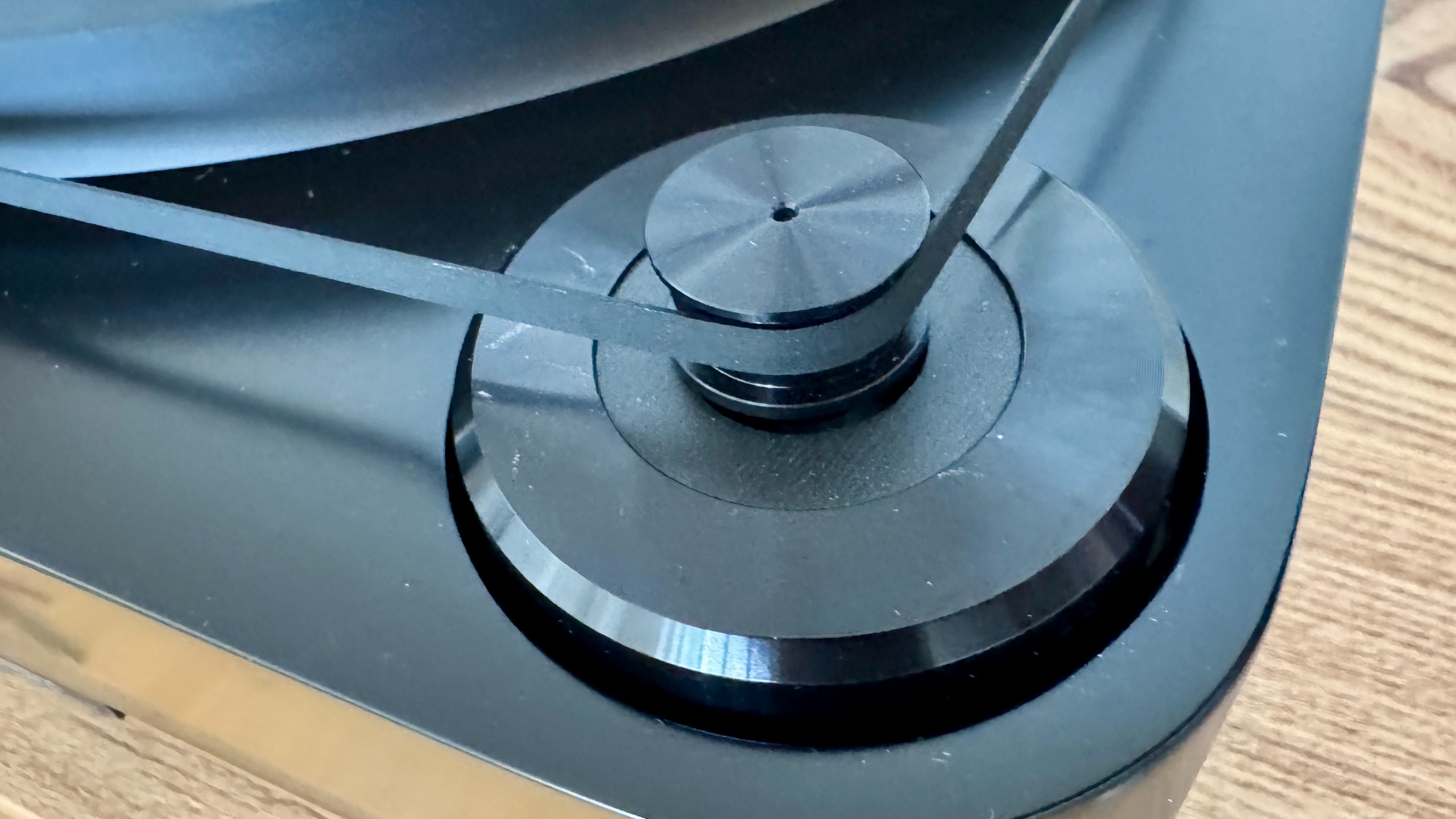
Under the hood, the drive system relies on an electronically controlled belt-drive mechanism. Rotational stability is governed by an optical sensor-monitored motor designed to eliminate speed fluctuations. To prevent mechanical motor noise from bleeding into the audio signal, the motor assembly is physically decoupled from the plinth using specialized rubber bushings. Furthermore, speed selection is executed via a robust rotary dial on the plinth supporting 33-rpm and 45-rpm speeds, eliminating the manual belt-shifting required by many minimalist audiophile decks. Rotational precision is further reinforced by a stainless steel spindle featuring a thermal-plastic sheet-type bearing. Power is delivered via an external switching power supply, which physically separates AC-to-DC conversion away from the chassis to minimize electrical interference.
Tonearm and Cartridge Specifications
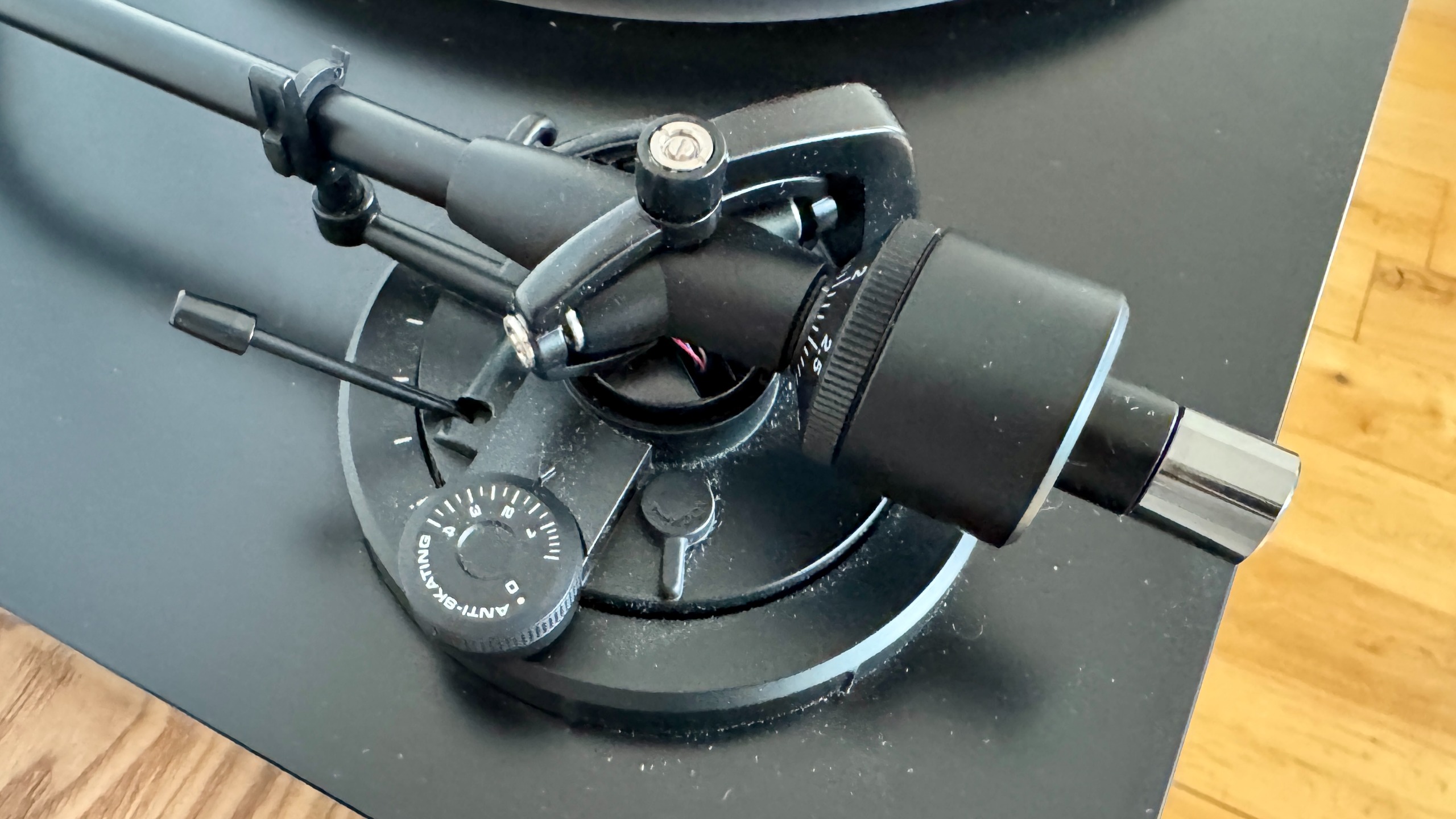
The tonearm assembly is another area where Audio-Technica leverages its decades of electro-acoustic expertise. The AT-LP7X features a 247mm J-shaped tonearm equipped with a dual-axis gimbal suspension system, engineered to minimize bearing play and tracking tilt. Manual adjustments are provided for tracking force, tonearm height (VTA), and anti-skate, allowing users to fine-tune the tracking parameters with precision.
As previously noted, the tonearm arrives pre-fitted with the AT-LT10 headshell and the AT-VM95E moving magnet cartridge, which is pre-adjusted at the factory. Audio-Technica includes a clear, concise setup manual that makes balancing the counterweight and setting the anti-skate straightforward, even for users upgrading from more basic systems.
Connectivity and Integrated Preamplification
One of the standout features of the AT-LP7X is its integrated, switchable phono preamplifier located on the rear panel of the plinth. Situated near the stereo RCA analog outputs are two toggle switches labeled "phono/line" and "MM/MC."
Switching the output to "line" engages the internal preamplifier, boosting the weak phono signal to standard line-level. This allows the turntable to connect directly to any integrated amplifier, active speaker system, or AV receiver with standard analog inputs, bypassing the need for a dedicated external phono stage. The secondary switch instructs the internal preamp whether a moving magnet or moving coil cartridge is attached, tailoring the input impedance and gain structure accordingly. This level of versatility is remarkably rare at this price point.
Sonic Performance and Listening Analysis
When evaluated through its integrated phono stage connected to a reference line-level input, the AT-LP7X presents a refined, highly informative sound signature. Testing across diverse musical genres—ranging from the atmospheric warmth of Bob Dylan’s Love Sick to the driving rhythms of experimental recordings—reveals a turntable with exceptional command over frequency response.
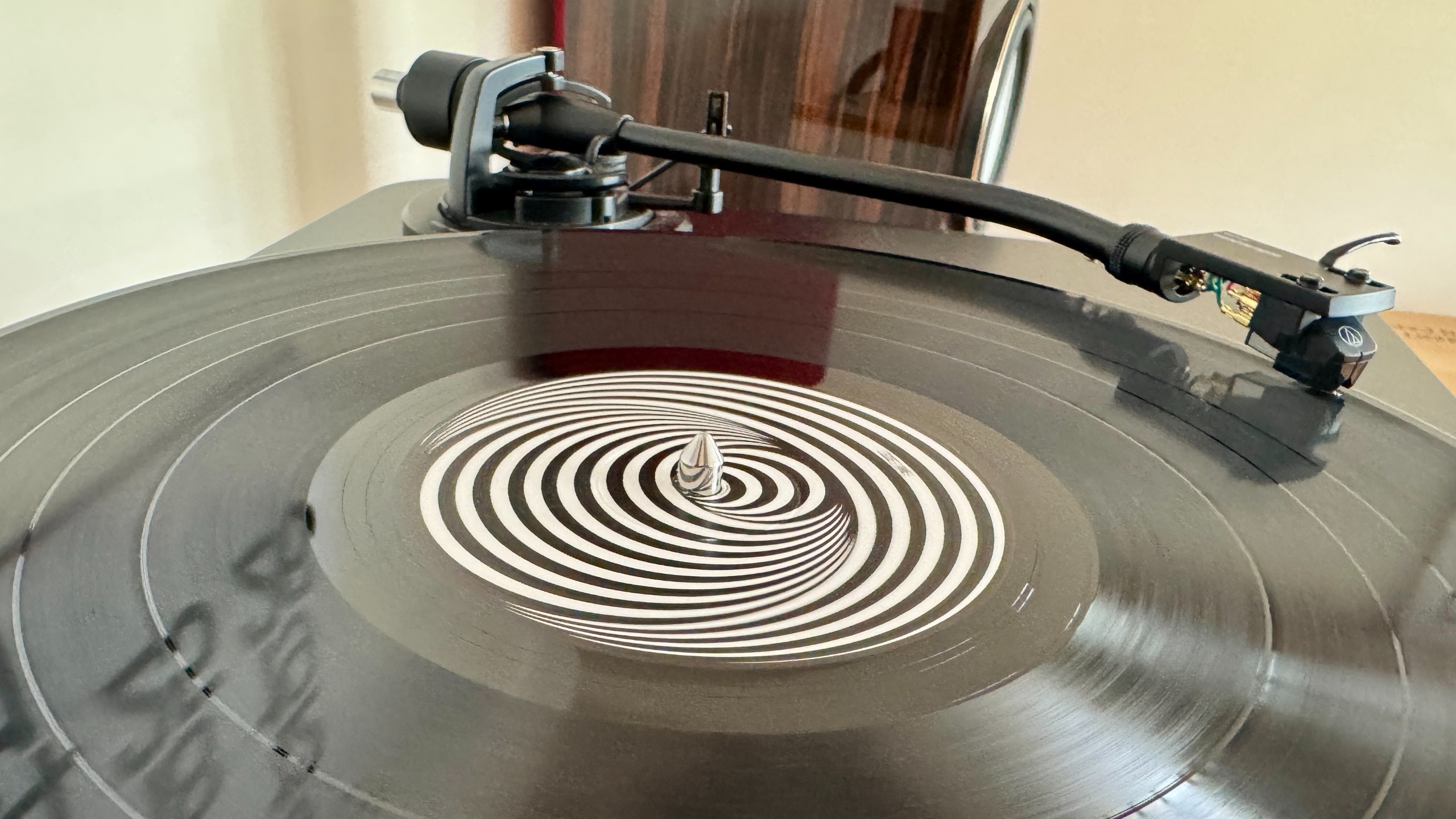
The low-frequency reproduction leans slightly toward a softer presentation, yet bass notes remain rigorously controlled, maintaining the rhythmic pacing and timing that vinyl enthusiasts prize. The midrange is remarkably open and transparent, allowing the distinctive timbres, vocal textures, and stylistic techniques of different performers to emerge with clarity. In the upper frequencies, the AT-LP7X offers a polite, controlled attack, providing just enough transient bite to keep treble elements engaging without ever tipping into harshness.
Soundstage imaging is well-defined, positioning individual instruments and vocalists within a convincing spatial matrix. Dynamic expression is handled competently, though the deck tends to prioritize composure over explosive theatricality, managing gradual volume and intensity shifts with a steady hand. Detail retrieval is a distinct strong suit; the turntable effortlessly unearths subtle background elements and contextual nuances in complex mixes.
However, the overriding sonic character leans toward a neutral, matter-of-fact presentation that prioritizes relaxed accuracy over visceral excitement. Listeners seeking a high-octane, aggressive sonic delivery may find the AT-LP7X overly restrained.
Crucially, testing reveals that the integrated phono stage is partly responsible for this polite demeanor. Bypassing the internal electronics by switching the rear panel to "phono" and routing the signal through a dedicated external preamplifier—such as a Pro-Ject Phono Box—infuses the performance with an added layer of animation. While the fundamental tonal balance and detail retrieval remain intact, the external preamp unlocks a more dynamic, engaging, and lively musical presentation.
Verdict: Should You Buy the Audio-Technica AT-LP7X?
The Audio-Technica AT-LP7X occupies a specific niche within the high-fidelity audio market. It is engineered for enthusiasts who value build quality, effortless setup, and exceptional feature integration.
Buy it if your audio system lacks a built-in phono stage and you require the flexibility of a dual MM/MC internal preamp. It is also an ideal choice for collectors who appreciate a reliable, beautifully isolated deck that arrives factory-configured and ready to play within minutes.
Conversely, skip it if your current hi-fi setup already features a superior standalone phono stage, as paying for integrated amplification you will ultimately bypass diminishes the turntable’s overall cost-effectiveness. Similarly, if your collection includes legacy 78rpm shellac records, the AT-LP7X’s two-speed motor will not accommodate your needs. Finally, listeners chasing high-energy, aggressive sonic thrills may prefer alternatives like the Rega Planar 3 or the Pro-Ject Debut Pro, both of which offer a more impassioned and dynamic presentation at a comparable price point.

Ultimately, the AT-LP7X stands as a testament to Audio-Technica’s maturity in the turntable market, delivering a sophisticated, feature-rich analog experience for the dedicated vinyl enthusiast.