The landscape of generative artificial intelligence is undergoing a significant transformation as researchers pivot from the standard autoregressive paradigm toward diffusion-based architectures for text generation. While autoregressive models—the foundation of the Generative Pre-trained Transformer (GPT) series—have dominated the field by predicting one token at a time, diffusion language models are challenging this serial dependency. By utilizing iterative refinement processes originally designed for image synthesis, these new models suggest that the future of large language models (LLMs) may lie in simultaneous, non-linear text construction, potentially offering faster inference times and more coherent long-form generation.
The Evolution of Diffusion: From Pixels to Prose
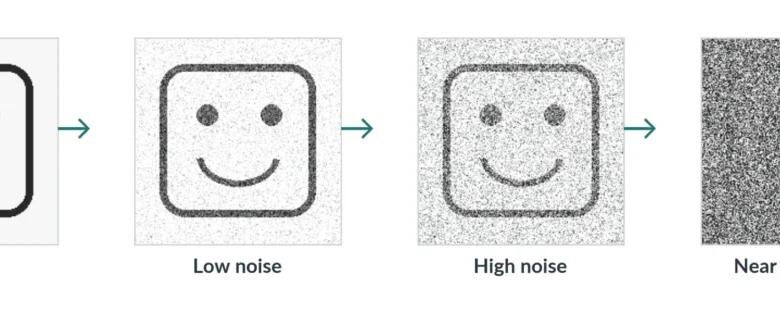
Diffusion models first gained prominence in the research community through the 2020 paper "Denoising Diffusion Probabilistic Models," which demonstrated that neural networks could synthesize high-fidelity images by reversing a degradation process. In this context, a model learns to remove Gaussian noise from a continuous signal, gradually sculpting an image from pure static. Applying this methodology to text, however, presented a distinct technical hurdle. Unlike image pixels, which exist on a continuous spectrum, text consists of discrete token IDs. Mathematically adding noise to a token ID does not inherently result in a "meaningful" adjacent word, necessitating a shift in how "noise" is defined for linguistic data.
By 2025, the research community began to solve these discrete challenges, leading to a surge of innovative architectures. Projects such as LLaDA, Mercury, and Google’s Gemini Diffusion began to demonstrate that language could be modeled as a "masked" sequence. Instead of starting from scratch and predicting forward, these models start with a sequence of placeholders and progressively replace them with tokens, effectively "denoising" the intent of a sentence until the full sequence emerges.
The Autoregressive Constraint
To understand the shift, one must examine the operational mechanics of current industry-standard models. Autoregressive models operate on a probabilistic chain rule: to generate the next word, the model must know all previous words. The probability of a sequence is defined as the product of the conditional probabilities of each token given its predecessors.
This creates a "serial dependency problem." During the inference phase—the moment the model is actually writing a response—it cannot generate the second word until the first is finalized. This results in high latency, as the system must pass through the entire neural network for every single token produced. This is a primary bottleneck for high-throughput applications requiring instant responses. In contrast, diffusion models treat the sequence as a canvas. They can "fill in" multiple positions across the sentence simultaneously, refining the entire structure in parallel iterations.
Chronology of Recent Advancements
The transition toward diffusion-based language generation has accelerated rapidly over the last 24 months:

- 2020–2022: The rise of Denoising Diffusion Probabilistic Models in computer vision establishes the theoretical framework for non-autoregressive generative tasks.
- 2025 (Q1–Q2): The emergence of LLaDA and Mercury signals a breakthrough in applying masked diffusion to natural language processing. These models demonstrate that text can be generated by iteratively refining masked tokens.
- 2025 (Late): Google incorporates diffusion techniques into the Gemini ecosystem, signaling institutional confidence in the scalability of these models.
- 2026 (Mid-year): The release of DiffusionGemma highlights a push toward accessible, high-performance diffusion models, marking a shift from experimental research to applied development.
Technical Mechanics: Forward and Reverse Diffusion
In a text-based diffusion framework, the "forward" process involves systematically masking tokens in a clean sequence. By introducing a mask with a probability level defined as t, the model is trained to predict the original content from a partially obscured input. At a mask level of 1.0, the model is presented with a sequence of placeholders and must reconstruct the entire thought.
During the "reverse" or denoising phase, the model functions as an iterative editor. It initializes the sequence with uncertainty, evaluates the likelihood of various tokens for every position, and commits to the most confident predictions. Advanced samplers may even revisit and "remask" previously committed tokens if later parts of the sentence suggest a contextual mismatch, a process known as revision. This allows the model to globally optimize the sentence structure, a capability that autoregressive models lack, as they are essentially "blind" to future tokens during their forward pass.
Analysis of Implications for the Industry
The move toward diffusion models carries profound implications for the efficiency of AI infrastructure. Current LLMs are computationally expensive to run, largely because of the memory and time required to generate sequences token-by-token. If diffusion models can achieve comparable linguistic accuracy with fewer serial steps, the energy requirements for AI inference could be significantly reduced.
However, the field is currently grappling with several unresolved challenges:
- Semantic Coherence: While diffusion models excel at global structure, maintaining consistent logical flow over long-form documents remains an active area of research.
- Sampling Complexity: Unlike the straightforward "next-token" prediction, diffusion sampling requires a carefully tuned number of iterations. Determining the optimal "step count" is a delicate balance between quality and speed.
- Training Stability: Training a model to handle multiple mask levels is inherently more complex than training a standard transformer, requiring larger datasets and more robust objective functions to prevent mode collapse.
Industry Outlook and Expert Consensus
Despite the excitement surrounding diffusion, it is unlikely that these models will render autoregressive systems obsolete in the near term. Rather, the consensus among researchers is that a hybrid approach is the most probable path forward. By utilizing autoregressive models for their proven ability to handle local context and diffusion models for their capability to perform global structural refinement, developers may create systems that are both more efficient and more precise.
The shift toward non-linear generation represents a fundamental maturation of the field. By moving beyond the necessity of left-to-right processing, the industry is exploring the boundaries of how machines interpret human language. Whether these models eventually replace standard architectures or simply provide a complementary toolkit for specific tasks, the focus on iterative refinement marks a significant departure from the "predict the next word" philosophy that defined the early era of generative AI.
As research continues, the integration of these models into production environments will likely be the next major milestone. For stakeholders in the AI sector, the key takeaway is that the architecture of the future will not necessarily be faster by virtue of faster hardware, but by virtue of more efficient mathematical approaches to the act of writing itself.