IFixit teardown reveals technical secrets of the new MacBook Pro with PROLED XDR Display

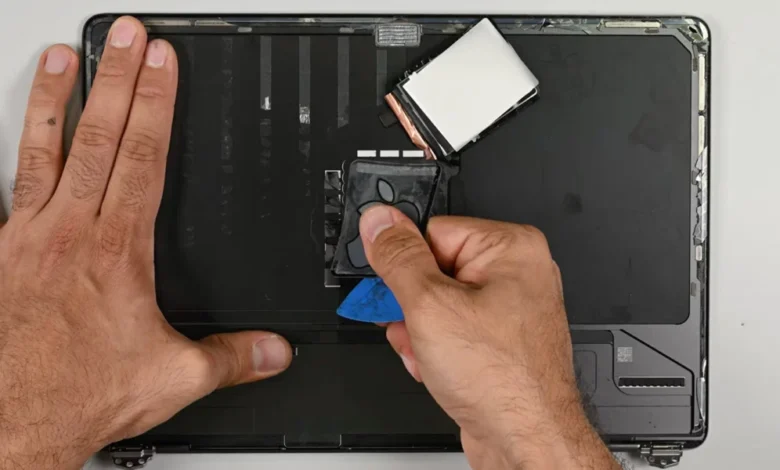
The latest teardown of the new MacBook Pro featuring the PROLED XDR display has arrived, providing a granular look at the engineering milestones Apple achieved in its most recent flagship portable. Conducted by the repair experts at iFixit, the investigation offers a deep dive into the return of the iconic illuminated Apple logo, the complexities of the new tandem OLED panel, and the significant weight-reduction efforts that have resulted in a leaner, more portable machine.
For enthusiasts and repair professionals, the teardown serves as a critical document, confirming that while Apple has made strides in modularity and software-level repair support, the company continues to prioritize internal density and proprietary integration over traditional user-serviceability.

Architectural Evolution and Weight Optimization
One of the most notable engineering feats highlighted in the report is the reduction in weight from the previous 14-inch model, which weighed 3.4 pounds (1.55 kg), to the current iteration, which sits at a trim 3 pounds (1.38 kg). According to the detailed analysis, this 200-gram reduction was not the result of a single component change but rather a holistic effort across the device’s architecture.
The chassis itself saw a reduction of 92 grams, while the display assembly was slimmed down by 101 grams. Minor adjustments to the trackpad assembly, which saved 8 grams, and a modest 2-gram reduction in battery mass, round out the total weight savings. Achieving this while incorporating a new, power-intensive OLED panel and a dedicated lighting system for the lid logo suggests that Apple’s material science team has significantly optimized the structural efficiency of the device’s internal frame.
The Return of the Illuminated Apple Logo
The resurgence of the illuminated Apple logo on the lid has been a point of intense speculation among the Apple enthusiast community since the announcement of the new MacBook Pro. iFixit’s investigation into the assembly revealed a sophisticated, albeit fragile, lighting implementation.

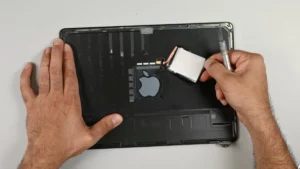
The logo is illuminated by a dedicated strip of four high-efficiency LEDs. To achieve the signature glow that defined older generations of MacBooks, these LEDs work in tandem with a specialized reflective layer and a precision-engineered diffuser, ensuring the light is distributed uniformly across the logo’s surface. Crucially, the exterior of the logo utilizes a two-way mirror coating. This allows the logo to maintain a sleek, metallic, and reflective appearance when the system is powered down, while remaining transparent enough for the light to pass through when the device is active.
However, the teardown highlighted a significant risk for third-party repairers: the process of reaching the logo components is inherently destructive. During the teardown, the iFixit team was unable to extract the logo assembly without damaging the underlying OLED display panel, underscoring that this aesthetic choice presents a substantial challenge for long-term component-level repair.
Tandem OLED Technology Under the Microscope
The PROLED XDR display represents a shift in Apple’s visual technology. By employing a tandem OLED structure—essentially stacking two light-emitting layers—Apple has addressed one of the primary historical limitations of OLED: peak brightness. By stacking these layers, the display can achieve significantly higher luminance levels than single-layer OLED counterparts, all while maintaining the deep blacks and high contrast ratios expected of the technology.

Under microscopic inspection, iFixit noted that the blue subpixels are manufactured with a larger surface area compared to their red and green counterparts. This is a deliberate engineering decision intended to mitigate the degradation of blue OLED materials, which typically have a shorter lifespan than other colors. By increasing the size, Apple reduces the current density required to achieve the same brightness, theoretically extending the overall lifespan of the display and reducing the risk of "burn-in" over extended periods of usage.
Repairability and Software-Locked Components
In the landscape of modern electronics, repairability is often a function of both physical design and software policy. iFixit awarded the new MacBook Pro a repairability score of 5 out of 10. While this represents a marginal improvement over the M5-powered MacBook Pro from the previous year, it remains a testament to the fact that Apple’s hardware is designed for factory-controlled maintenance rather than consumer or independent repair.
Key components, including the headphone jack, remain difficult to access, requiring the complete removal of the logic board. The logic board itself continues to be the host for soldered components, including the RAM and storage modules, which remain entirely non-upgradable post-purchase. Similarly, the HDMI and SDXC ports remain permanently affixed to the main board, limiting the potential for cost-effective port repairs.

However, there is a notable advancement in the software ecosystem. In previous years, swapping a logic board between two identical MacBooks would often trigger a total system lockout, as the "Repair Assistant" software required proprietary verification for Touch ID and other biometric sensors. The new model demonstrates a more flexible approach; the system successfully recognized the battery, display, and Touch ID sensor after a donor board swap. Furthermore, essential features like True Tone, display brightness, and even the new touchscreen functionality remained operational. The ability to successfully enroll a fingerprint on a donor logic board marks a tangible shift in Apple’s repair philosophy, potentially signaling a move toward more streamlined authentication processes for authorized service providers.
Broader Implications for the Laptop Market
The release of the MacBook Pro with the PROLED XDR display, alongside the findings of this teardown, provides a clear window into Apple’s current product strategy. By focusing on display excellence and iconic design flourishes, Apple is positioning its premium hardware as a luxury experience that leverages high-end materials and proprietary, high-density engineering.
The implications for the broader market are twofold. First, the industry is likely to watch the performance of the tandem OLED technology closely. If the panel demonstrates superior longevity and brightness in real-world scenarios, it may become the standard for professional-grade creative laptops across the board. Second, the modest improvements in repairability—specifically the ease of biometric sensor swapping—suggest that legislative pressure and consumer advocacy regarding the "Right to Repair" are beginning to influence internal design workflows, even if only incrementally.

Context and Chronology
The introduction of the PROLED XDR display follows a multi-year period of experimentation with Mini-LED backlighting in the MacBook Pro line. The shift to OLED reflects a long-awaited transition for many creative professionals who require the pixel-level contrast control that only self-emissive displays can offer.
The timeline of these internal refinements is significant. The M5-based models released last year set the foundation for the current modular internal layout, but they were often criticized for the lack of granular repair options. By refining the logic board swap process this year, Apple appears to be balancing the need for tight security—via their proprietary handshake protocols—with the operational necessity of providing a more sustainable path for component recycling and refurbishment.
As Apple continues to iterate on the MacBook Pro, the tension between sleek, thin, and lightweight design and the demand for a user-serviceable machine remains the primary narrative. While the 5 out of 10 score is far from a perfect mark, the progress seen in this teardown indicates that the company is at least moving away from the "sealed-box" mentality of the mid-2010s, albeit at a measured, controlled pace. For the professional user, the trade-off remains the same: top-tier performance and display quality in exchange for a device that is essentially a closed ecosystem, requiring professional intervention for all but the most minor hardware issues.
Related posts: