IFixit Teardown of the New PROLED MacBook Pro Reveals Innovative Design Changes and Repairability Challenges

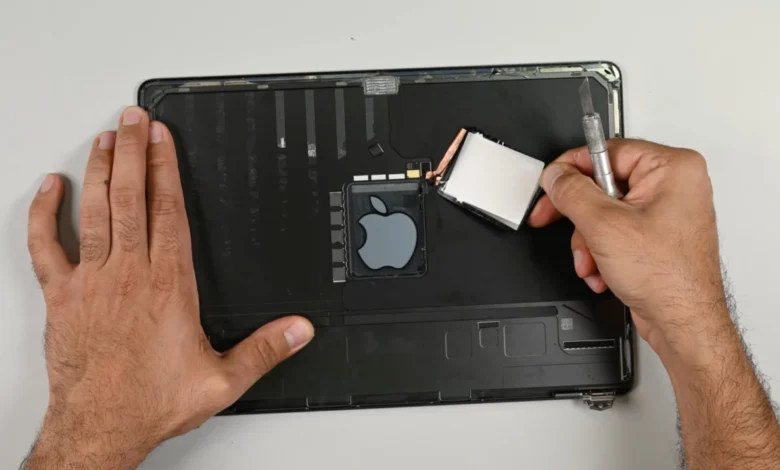
The latest iteration of Apple’s flagship laptop, the PROLED MacBook Pro, has officially hit the teardown table at iFixit, providing a granular look at the engineering feats required to integrate a touch-enabled display and a nostalgic, glowing rear logo into a thinner, lighter chassis. Following its October 28, 2026, unveiling at a high-profile event in Los Angeles, the device has been a subject of intense scrutiny regarding its build quality and long-term serviceability. The teardown confirms that while Apple has successfully reduced the physical footprint of its pro-grade hardware, these aesthetic and functional upgrades come with significant implications for independent repair and component accessibility.
Chronology of the PROLED Launch
The arrival of the PROLED MacBook Pro marks a pivotal moment in Apple’s 2026 product cycle. Throughout the summer and early autumn of 2026, rumors circulated regarding a potential "MacBook Ultra" branding shift. However, industry analysts and supply chain leaks correctly pivoted toward the "PROLED" designation, suggesting that Apple intended to reserve the "Pro" moniker for its most premium mobile workstations.
The timeline began in mid-October when invitations for an experience-based event in Los Angeles surfaced with the "Pro and tell" tagline. On October 28, 2026, Apple formally announced the new 14-inch and 16-inch MacBook Pro models, officially transitioning the lineup to PROLED XDR display technology. This launch occurred concurrently with the introduction of the M6-powered 14-inch MacBook Pro, creating a distinct bifurcation in the product lineup between the standard high-performance M6 machines and the premium, touch-enabled PROLED variants.
Engineering the Glow: Behind the Iconic Apple Logo
One of the most distinct visual departures from recent years is the return of the glowing rear Apple logo, a feature that had been absent since the 2015 MacBook Pro models. Unlike the original implementations which relied on the laptop’s display backlight to illuminate the logo, the PROLED model utilizes a sophisticated, independent lighting array.
iFixit’s investigation reveals that the logo is powered by four individual LEDs. To ensure a uniform glow, the assembly includes a specialized reflective layer and a precision-engineered diffuser. When the system is powered down, the logo transitions into a two-way mirror coating, providing a sleek, metallic finish that matches the chassis.
However, the integration of this feature introduces a repair bottleneck. Because the logo assembly is embedded behind the display panel, it is virtually inaccessible without risking catastrophic damage to the screen. During the teardown process, iFixit technicians reported that attempting to access the logo resulted in the separation of the display glass from the underlying layers, effectively destroying the OLED panel. This underscores a design philosophy where aesthetic integration takes precedence over modular repair access.
Structural Adjustments and Weight Reduction
A primary focus of the engineering team for the PROLED MacBook Pro was the pursuit of a lighter chassis without sacrificing structural integrity. According to the teardown data, Apple achieved significant weight savings through material optimization.
The lower chassis of the new PROLED model weighs 364 grams, a notable reduction from the 456 grams found in the standard M6 MacBook Pro chassis. Even more impressive is the display assembly, which is 101 grams lighter than the previous generation, despite the added hardware required for touch-sensitive input and the LED logo array. Furthermore, the battery saw a marginal weight reduction of two grams.
These reductions are balanced by a redesigned hinge mechanism. Because the screen is now a primary input device, the hinge must withstand the repeated pressure of physical interaction. iFixit noted that while the hinge geometry appears identical to that of the M6 MacBook Pro, it is significantly stiffer, ensuring that the display maintains its orientation when subjected to direct taps at the top edge of the panel.
Internal Layout and Repairability Analysis
The internal architecture of the PROLED MacBook Pro reflects Apple’s ongoing transition toward high-density, integrated component design. The logic board remains the central hub, housing the M6-series silicon. While the Thunderbolt/USB-C ports and cooling fans are modular and replaceable, other critical components are less forgiving.
Key findings regarding internal modularity include:
- Soldered Components: The SSD and system memory remain soldered directly to the logic board, precluding user-led upgrades or local hardware recovery in the event of board failure.
- Port Integration: The HDMI port and SDXC card slot are integrated into the logic board, significantly complicating repairs for these high-wear components compared to modular designs.
- Component Pairing: A positive development in this year’s model is the lack of additional "parts pairing" restrictions for the new touchscreen. iFixit successfully swapped logic boards between two units and confirmed that the touchscreen and Touch ID remained fully functional after running the standard Apple Repair Assistant software. This suggests that while Apple has tightened its grip on physical hardware access, the software-level calibration requirements have not become increasingly exclusionary for the touchscreen interface itself.
Repairability Score and Broader Implications
The PROLED MacBook Pro received a repairability score of 5 out of 10 from iFixit. This rating places the device one point above the M5-series MacBook Pro, reflecting improvements in the Repair Assistant software and minor internal layout optimizations. However, it remains one point below the "MacBook Neo," suggesting that while progress is being made, the transition to touch-enabled OLED technology adds a layer of complexity that inherently limits repair accessibility.
The implications of this design are twofold. For the consumer, the device offers a premium experience, blending the long-requested touchscreen functionality with the beloved aesthetic of the glowing logo. For the repair industry, the design highlights a persistent trend: as devices become thinner and more sophisticated, the threshold for "consumer-serviceable" repairs continues to rise.
Industry Context and Future Outlook
The release of the PROLED MacBook Pro provides a case study in Apple’s current hardware strategy. By keeping the "Pro" branding focused on high-end performance while simultaneously integrating "Ultra"-level display features like touch, Apple is attempting to consolidate its market position. The decision to stick with the "MacBook Pro" name for these models—rather than adopting the rumored "Ultra" branding—indicates a desire to avoid segmenting the professional market too thin, opting instead to offer a spectrum of capability within the established Pro umbrella.
As the industry moves into the late 2026 cycle, the success of the PROLED line will likely hinge on the longevity of these components. With the touchscreen now a core component of the user experience, the durability of the display panel—and the difficulty of its repair—will be a critical metric for long-term ownership. For now, the PROLED MacBook Pro stands as a testament to Apple’s ability to refine its industrial design, even as it navigates the increasingly complex intersection of user-requested features and modular repairability.