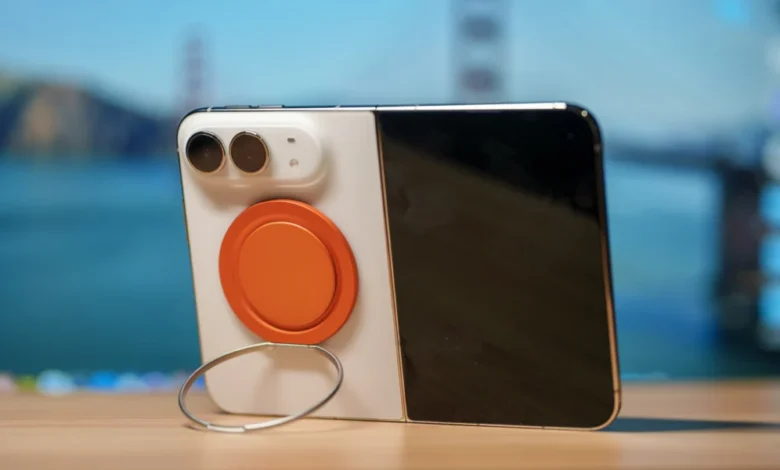
The launch of the iPhone Duo earlier this year marked a significant shift in Apple’s mobile hardware strategy, introducing a dual-screen, foldable-style experience that has captured the attention of power users. However, this architectural departure from the traditional slab-style smartphone has created a niche but frustrating problem for owners: the lack of reliable, ergonomic, and aesthetic support solutions. While Apple’s proprietary $129 folio case was designed to serve as a multifunctional kickstand, user feedback and independent reviews have highlighted structural limitations, including a flimsy build quality and an intrusive design that obscures the outer display when the device is folded.
As the market for third-party accessories catches up to the unique form factor of the iPhone Duo, owners have been left searching for a viable alternative. Recent testing indicates that the most effective solution for propping up the device is not a bespoke case engineered specifically for the Duo, but rather the PopSocket Low-Pro, a universal MagSafe accessory. This discovery highlights the ongoing challenge manufacturers face when introducing radical hardware changes that outpace the surrounding ecosystem of third-party peripherals.
The Evolution of the iPhone Duo and the Accessory Gap
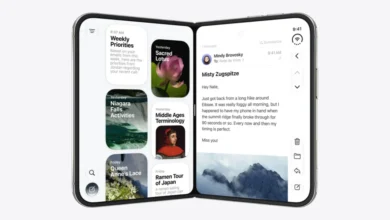
The iPhone Duo was introduced to address a growing consumer demand for increased screen real estate without sacrificing the portability of a standard smartphone. With its dual-hinge mechanism and synchronized display software, the device offers a tablet-like experience that fits into a pocket. However, the device’s physical footprint—measuring 11.3mm in thickness when closed—presents a challenge for traditional stands.

In the months following the release, the accessory market struggled to provide a balanced solution. Most MagSafe-compatible wallets and kickstands currently on the market were optimized for the iPhone 16 and 17 series, which maintain a consistent, thinner profile. When applied to the iPhone Duo, these accessories often prove too tall, disrupting the device’s center of gravity. Furthermore, many existing kickstand solutions are not rated to handle the weight distribution of the Duo when it is fully unfolded, leading to "slippage," where the weight of the extended screen causes the phone to slide down from its magnetically attached mount.
Technical Performance of the PopSocket Low-Pro
The PopSocket Low-Pro, originally marketed for the standard iPhone lineup, has emerged as a functional remedy for the Duo’s support issues. The accessory utilizes a low-profile, circular magnetic base that snaps onto the MagSafe array on the back of the phone. Its primary advantage is its structural integrity; the ring mechanism, which flips out to create a tripod-like support, is engineered with enough tension to stabilize the weight of the unfolded Duo.
Data collected during recent usage tests shows that the Low-Pro significantly mitigates the slippage issue commonly reported by users of standard MagSafe stands. By lowering the center of gravity, the accessory allows the Duo to remain in an upright, unfolded position for longer durations without the magnetic connection failing. While minor, incremental movement can still occur over extended periods of use—a consequence of the physics involved in holding a dual-screen device—the stability is markedly improved compared to traditional wallet-stand hybrids.
Beyond its utility as a stand, the Low-Pro addresses the aesthetic concerns of the iPhone Duo’s design. Because the accessory is significantly thinner than the device’s native camera bump, it remains flush against the chassis. This allows users who prefer to use the device without a protective case to maintain a sleek, minimal profile. For many, this is a crucial factor, as the Duo’s build is already substantial; adding a bulky case can render the phone uncomfortable for one-handed operation.

Chronology of the Accessory Market Shift
The trajectory of the iPhone Duo’s accessory ecosystem has followed a distinct path:
- Late Q3 2026: The iPhone Duo hits the market. Early adopters identify a lack of high-quality kickstand options, citing the prohibitive cost and design flaws of the official Apple folio.
- October 2026: Third-party manufacturers attempt to bridge the gap with generic MagSafe stands, most of which fail due to the increased weight and unique dimensions of the foldable device.
- November 2026: Consumer sentiment analysis shows a rise in dissatisfaction regarding the stability of existing stands. Independent testers begin evaluating universal accessories, such as the PopSocket series, to find a makeshift solution.
- Late November 2026: The PopSocket Low-Pro is identified as the most effective "off-label" solution, gaining traction on enthusiast forums and social media platforms for its compatibility and low-profile design.
Market Implications and Manufacturer Responses
The success of a universal accessory like the Low-Pro for a flagship device like the iPhone Duo underscores a broader trend in the tech industry: the "ecosystem lag." When a company releases a device with an unconventional form factor, it often takes several quarters for the accessory market to iterate enough to provide specialized protection and utility.
While Apple has not issued an official response regarding the limitations of its first-party folio case, industry analysts suggest that the company’s focus on the initial release of the hardware often leaves the peripheral market to solve secondary ergonomic issues. Historically, this has created opportunities for third-party brands to capture significant market share by providing more specialized, cost-effective solutions. The PopSocket Low-Pro currently retails between $36 and $40, representing a significant value proposition compared to the $129 price tag of the official Apple alternative.
Broader Impact on Mobile Ergonomics
The reliance on accessories to fix fundamental design limitations raises questions about the future of mobile ergonomics. As foldable devices continue to gain market share, the industry may see a shift in design philosophy. If users consistently find that first-party solutions fail to meet their needs, Apple and its competitors may be forced to integrate more robust physical support features—such as integrated kickstands or more powerful magnetic locking systems—directly into the chassis of future iterations.

Furthermore, the "slippage" issue highlighted by the Duo’s weight distribution serves as a reminder of the physical constraints of MagSafe technology. While magnetic mounting is convenient, it was originally designed for lightweight, single-screen devices. The adoption of foldable technology may eventually necessitate a revision of the MagSafe standard, potentially increasing the strength of the magnets or introducing mechanical locking mechanisms to support the added mass of folding screens.
Consumer Considerations
For current iPhone Duo owners, the decision to adopt the PopSocket Low-Pro involves weighing the benefits of stability against the necessity of a case. For those who prefer a "naked" phone experience, the Low-Pro offers a functional, low-profile, and aesthetically consistent option.
The range of color options—including Navy, Gun Metal, Black, Electric Fuschia, Teal, Carbon Lattice, Mint, and Tortoise—suggests that manufacturers are attempting to cater to a diverse consumer base. The availability of these products at a lower price point compared to premium branded folios indicates a market shift toward utility-focused accessories.
As the iPhone Duo matures in the market, consumers can expect an influx of more specialized, purpose-built accessories. However, for the present, the intersection of legacy accessories and new hardware innovations remains the primary pathway for users seeking to optimize their mobile experience. The situation serves as a practical case study in how consumers navigate the limitations of high-end technology, often finding that the most effective solutions are not those marketed alongside the device, but those that have been adapted to meet its specific, unforeseen requirements.