AWS upgrades Amazon Bedrock AgentCore to drive enterprise AI scalability with enhanced compute capacity and cost-efficient memory management

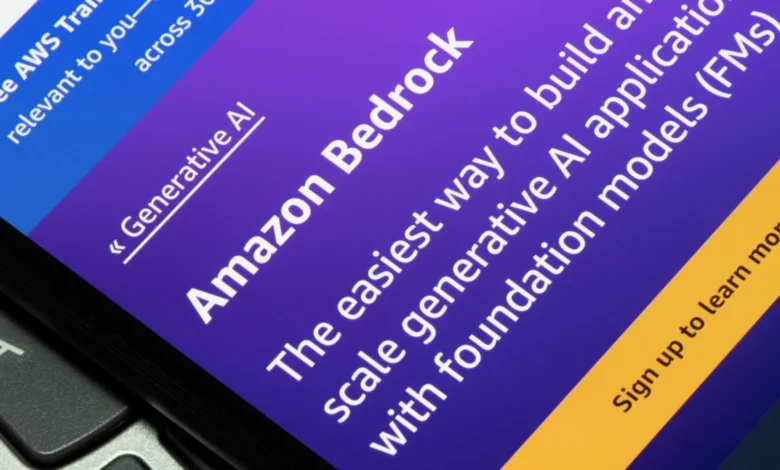
Amazon Web Services (AWS) has announced a significant architectural overhaul of its Amazon Bedrock AgentCore runtime layer, a move designed to address the growing operational complexities enterprises face when deploying autonomous AI agents at scale. By introducing substantial compute upgrades, optimized memory reclamation processes, and new pricing models, AWS is signaling a strategic shift toward making agentic workflows—which often involve complex reasoning, tool usage, and long-running processes—more performant and economically viable for large-scale production environments.
The updates, which have been rolled out across 19 global AWS regions, include support for up to eight virtual CPUs (vCPUs) and 32GB of memory per session. This represents a fourfold increase in compute capacity compared to the previous iteration of the platform. Furthermore, the runtime now supports container images of up to 10GB, a critical threshold for developers who need to package complex dependencies, large libraries, or even local language models within the secure, isolated execution environment of an AI agent.
The Evolution of Agentic Infrastructure
The transition toward agentic AI—where software programs are tasked with executing multi-step goals rather than simply responding to single queries—has created a new set of infrastructure demands. Early iterations of agent frameworks were often limited by "sandbox" environments that struggled to handle the overhead of modern AI applications.
Historically, developers attempting to build agents that performed tasks such as compiling massive codebases, executing browser-based automation, or running local model inference were often forced to break tasks into smaller, less efficient chunks or move them outside of secure, isolated environments. This created a friction-heavy development cycle where security and performance were often at odds.
The introduction of these enhancements follows a period of rapid iteration for AWS in the generative AI space. Since the initial preview of Amazon Bedrock AgentCore—a service designed to simplify the orchestration of AI agents—AWS has been collecting feedback from enterprise customers who reported that the "cold start" latency and limited memory ceilings were the primary bottlenecks preventing them from moving beyond experimental pilot programs into full-scale production.
Technical Breakthroughs in Performance and Efficiency
One of the most notable improvements is the dramatic reduction in startup latency. Previously, provisioning an isolated execution environment could take nearly a minute, forcing developers to maintain "warm pools" of pre-provisioned capacity. This practice was inherently inefficient, as it required enterprises to pay for resources that were not being actively used, simply to avoid the performance penalty of a slow startup.
The new runtime architecture achieves startup times of under two seconds, regardless of the container image size. This capability enables a "just-in-time" provisioning model, where resources are only consumed the moment they are requested.
Complementing this is a new, aggressive memory reclamation protocol. The AgentCore runtime can now reclaim unused memory within minutes of an agent completing a task. When combined with the ability to scale idle agents down to zero, this update provides a significant cost-mitigation tool for enterprises managing hundreds or thousands of concurrent sessions. For multi-turn agents—those that operate over extended periods with natural pauses for human intervention or external data retrieval—AWS estimates that these memory optimizations can reduce per-session consumption by up to 68%.
Strategic Integration of Data and Security
Beyond raw performance, AWS has addressed the "data gravity" problem that often plagues agentic workflows. Previously, moving files, credentials, and tool outputs between an isolated agent environment and external storage required complex, bespoke middleware.
With the latest update, AWS has introduced FUSE (Filesystem in Userspace) support, allowing developers to dynamically mount and save agent work directly to external filesystems, including Amazon S3 buckets. This creates a seamless bridge between the agent’s execution environment and the enterprise’s persistent data lake, ensuring that stateful information is maintained without compromising the security of the isolation boundary.
Industry Perspective and Analyst Analysis
The implications of these updates for Chief Information Officers (CIOs) and lead architects are substantial. According to Ashish Chaturvedi, an executive research leader at HFS Research, the primary value proposition lies in the ability to keep complex logic within a secure, managed boundary. "Coding agents that compile large codebases or browser agents that load full web pages previously outgrew the session size," Chaturvedi noted. "By stretching the capacity to 8 vCPUs and 32GB of memory, these complex, high-compute workloads can now reside entirely within the secure, isolated boundary, which significantly simplifies governance and security audits."
Stephanie Walter, the practice leader of the AI stack at HyperFRAME Research, emphasizes the potential for significant cost reductions. "Agents typically should not need the same resources while waiting for human approval as they do while executing code. The ability to scale to zero is a game-changer for enterprise budgets, especially when those enterprises are running massive fleets of concurrent agents," Walter explained.
However, industry experts are also advising caution regarding the transition to these new models. While the "scale-to-zero" feature is attractive, it introduces potential latency when an agent is triggered from an idle state. Furthermore, there is the risk of "idle bloat," where organizations might inadvertently keep thousands of agents in an inactive state, still consuming minor resources and maintaining persistent permissions that could lead to security vulnerabilities if not regularly audited.
Navigating the New Pricing Landscape
The introduction of "baseline pricing" represents a nuanced change in how AWS intends to monetize agentic workloads. Under this model, enterprises set a minimum memory allocation, which allows them to burst up to four times that amount during peak processing.
This model provides a level of financial predictability that is highly sought after by large organizations. However, it requires a sophisticated understanding of workload patterns. If an organization sets their baseline too high, they risk paying for overhead they don’t use; set it too low, and they risk the higher costs associated with frequent, unpredictable bursting. CIOs are encouraged to treat this as a balancing act, where historical usage data must dictate the baseline settings for each specific agent tier.
Regional Availability and Strategic Rollout
The new capabilities are currently available across 19 key AWS regions, including North America (N. Virginia, Ohio, Oregon, Canada), South America (São Paulo), Europe (Frankfurt, Ireland, London, Milan, Paris, Spain, Stockholm), and Asia-Pacific (Malaysia, Mumbai, Seoul, Singapore, Sydney, Thailand, Tokyo).
This broad rollout suggests that AWS is prioritizing the global adoption of agentic AI. By standardizing these tools, the company is attempting to establish Amazon Bedrock as the de-facto operating system for the next generation of enterprise AI applications.
Looking Ahead: The Future of Agentic Governance
As enterprises move toward a future where autonomous agents manage everything from customer support to complex software engineering tasks, the infrastructure requirements will only grow more stringent. The updates to AgentCore reflect a maturation of the market; the initial "hype" phase of generative AI is giving way to a "utility" phase, where the focus shifts from simply making models work to making them work reliably, securely, and within defined fiscal constraints.
Moving forward, the success of these updates will likely be measured by how easily developers can bridge the gap between experimental agent prototypes and robust, production-grade systems. As organizations continue to scale their AI initiatives, the ability to manage resource utilization through intelligent, automated runtime environments will remain a critical differentiator for both cloud providers and their customers. The industry will be watching closely to see if the new baseline pricing model and improved memory management strategies succeed in turning high-compute agentic workloads into a sustainable, long-term enterprise utility.
Related posts: