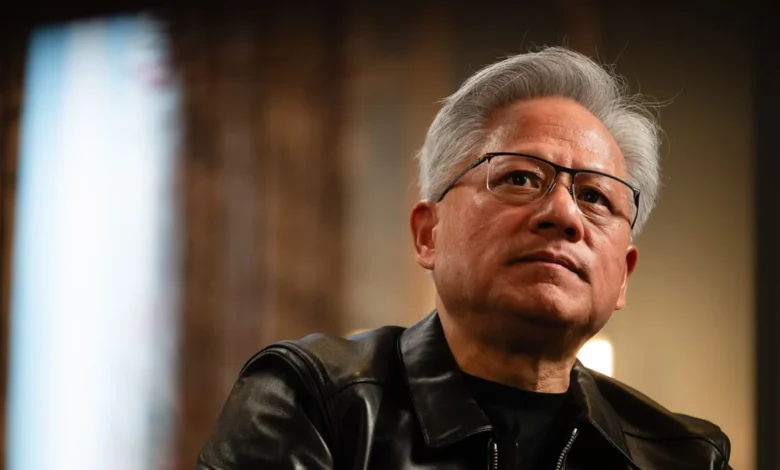
The sudden departure of Jensen Huang, who co-founded Nvidia in 1993 and served as its face for three decades, represents a seismic shift in the semiconductor industry. On November 12, Nvidia officially announced that Huang would step down from all executive and board roles, triggering an immediate leadership transition. CFO and Executive Vice President Colette Kress has been appointed interim CEO, a move designed to maintain stability within the firm’s operations as the board initiates a global search for a permanent successor.
A Legacy of Silicon Innovation
The resignation brings to a close a tenure that transformed Nvidia from a niche gaming hardware manufacturer into the bedrock of the global artificial intelligence economy. When Huang, Chris Malachowsky, and Curtis Priem founded the company in 1993, the primary focus was on graphics processing for the burgeoning PC gaming market. Under Huang’s leadership, the company pivoted toward general-purpose computing, most notably through the development of the CUDA parallel computing platform in 2006.
This strategic pivot allowed Nvidia to dominate the market for high-performance GPUs, which eventually became the essential hardware for training and deploying large-scale AI models. By the time of his departure, Huang had overseen the company’s meteoric rise, culminating in October 2025, when Nvidia became the first publicly traded company to surpass a market capitalization of $5 trillion. This achievement followed a rapid climb through the $4 trillion threshold, solidifying the company’s status as the most valuable entity in the history of the technology sector.
Chronology of the Transition
The transition process, while sudden, has been formalized with specific governance changes. Following Huang’s exit, the Nvidia board of directors appointed Harvey Jones, a seasoned executive who previously served as the CEO and executive chairman at Synopsys, as the company’s first-ever Chair of the Board. This structural change is intended to bolster corporate oversight during a period of leadership uncertainty.
Nvidia has stated that its search for a permanent CEO will be comprehensive, evaluating both internal and external candidates. The firm emphasized that Colette Kress, who has been instrumental in managing the company’s financial trajectory during its recent periods of explosive growth, will retain her responsibilities as CFO while managing the CEO transition.
National Security and Political Scrutiny
The departure of Huang is inextricably linked to mounting scrutiny regarding his personal life and potential conflicts of interest. In early November, reports emerged detailing an extramarital affair between Huang and a Chinese national, a disclosure that triggered immediate alarm among U.S. lawmakers. Given Nvidia’s central role in the development of sensitive AI technologies—many of which are subject to stringent U.S. export controls aimed at limiting China’s military-technological advancement—the connection raised significant national security questions.
On November 5, the U.S. House Committee on Foreign Affairs issued a formal request for Huang to appear before the committee for a joint, closed-door briefing. The committee’s leadership, including Chairmen Mast, Moolenaar, and Crawford, expressed profound concerns regarding the potential for Chinese intelligence to gain access to proprietary U.S. technology via these personal channels.
"Recent reports raise significant national security concerns regarding the PRC’s access to sensitive U.S. technology and information," the committee stated in its press release. While Huang has publicly expressed his commitment to cooperating with internal and government investigations, the political pressure surrounding the company’s relationship with Chinese markets appears to have reached an unsustainable threshold.
Official Responses and Internal Sentiment
The official messaging from Nvidia’s board remains focused on business continuity. Harvey Jones, in his new capacity as Board Chair, sought to reassure shareholders and customers that the transition would not affect the firm’s strategic direction.
"Colette has helped lead Nvidia through a period of extraordinary growth and has a deep understanding of our business, customers, operations, and financial position," Jones stated. He further noted that the company’s existing leadership team remains unified in executing the current technology roadmap. "The board has full confidence in Colette and the leadership team, and we expect the company’s operations, customer commitments, and product roadmap to continue without interruption."
For his part, Huang’s final public statements regarding the matter focused on his loyalty to the United States. "I support the investigation and will cooperate fully," Huang wrote in a statement released shortly before his resignation. "I love our country and our company. I am committed to protecting Nvidia and supporting America’s national security. I am proud and grateful to be an American."
Market Implications and Future Outlook
The resignation of a founder-CEO who has become synonymous with his company is rarely a frictionless event. Investors and industry analysts are now tasked with evaluating whether Nvidia’s momentum can persist in the absence of Huang’s visionary leadership.
The market impact of this departure is twofold. First, there is the immediate challenge of succession. Nvidia is currently in a "super-cycle" of AI hardware demand. Replacing a leader who has defined the company’s culture for 30 years is a monumental task. The board’s decision to consider external candidates suggests they are looking for a leader who can manage the complexities of being a $5 trillion global enterprise, balancing the demands of Wall Street, the U.S. government, and the global AI research community.
Second, the security implications are significant. The scrutiny from the House Committee on Foreign Affairs suggests that Washington’s oversight of Nvidia is unlikely to diminish simply because of a change in leadership. The incoming CEO will likely face a more hostile regulatory environment, particularly regarding the company’s presence in international markets that the U.S. government considers strategic rivals.
Operational Stability
Despite the leadership turbulence, Nvidia’s underlying business model remains robust. The company currently holds an estimated 80% to 90% share of the market for AI-capable chips. The "hardware moat" that Huang built—a combination of the CUDA software ecosystem and state-of-the-art GPU architecture—remains the primary barrier to entry for competitors such as AMD, Intel, and emerging custom silicon efforts by hyperscalers like Google, Amazon, and Microsoft.
The continuity of the management team is a key factor here. By keeping Kress in a dual role, the board is signaling that the fiscal discipline that characterized the last decade will remain the priority. However, the loss of Huang, who was known for his hands-on involvement in engineering decisions and product design, may alter the company’s innovation velocity.
Broader Industry Context
Nvidia’s situation reflects a broader trend in the tech industry where the CEOs of "Big Tech" firms have become geopolitical actors as much as corporate executives. The intersection of semiconductor supply chains, artificial intelligence, and national security has placed these leaders at the center of global power dynamics.
Huang’s departure serves as a reminder of the fragility of corporate leadership in an age of intense geopolitical polarization. As companies grow to unprecedented valuations, their executive suites are increasingly subject to the same level of security vetting and political oversight as high-ranking government officials.
Conclusion
The resignation of Jensen Huang marks the end of a transformative era in silicon history. While his legacy is secure—having guided Nvidia through the evolution of computing from gaming to artificial intelligence—the company now faces an uncertain future. The immediate challenge for the interim leadership and the eventual permanent successor will be to maintain the company’s market dominance while navigating a complex regulatory landscape that increasingly views advanced computing hardware as a vital national security asset. Whether Nvidia can sustain its growth trajectory without its founding architect will be the primary question facing the technology sector in the coming years.