Amazon Aurora PostgreSQL Gains Direct Querying Capabilities for Data Lakes Using Embedded DuckDB Technology

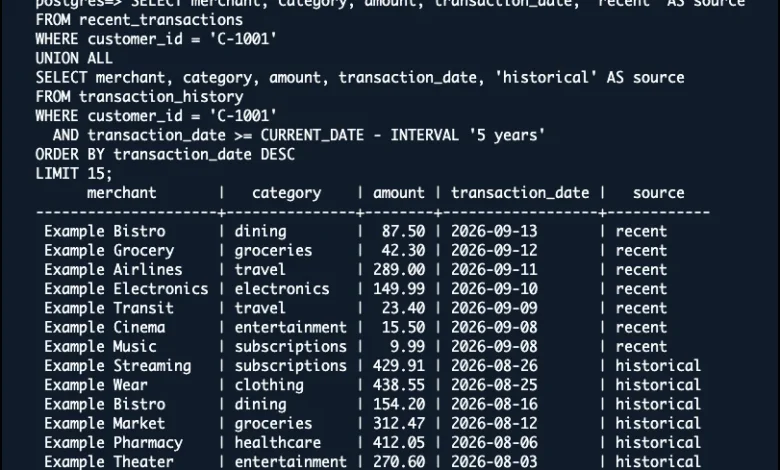
Amazon Web Services has introduced a powerful new feature for Amazon Aurora PostgreSQL, enabling database administrators and developers to directly query operational data alongside archival and analytical data stored in data lakes without the traditional friction of Extract, Transform, Load (ETL) pipelines. By embedding the high-performance analytical engine DuckDB directly into the database architecture, AWS has bridged the long-standing gap between transactional databases and modern cloud storage formats like Apache Iceberg and Apache Parquet. This development allows engineering teams to execute unified queries across live operational tables and vast, historical datasets residing in Amazon S3 using standard, familiar PostgreSQL syntax and existing tooling.
The Architectural Shift: Eliminating Reverse ETL and Data Duplication
Historically, enterprise application architectures forced a strict boundary between operational data stores—optimized for low-latency transactional throughput—and analytical data lakes, which are engineered for massive parallel scans and historical reporting. When applications required a holistic view combining real-time user activity with years of archived records, architects were compelled to construct complex reverse ETL pipelines.
These legacy pipelines routinely duplicated terabytes or petabytes of data, inflated cloud infrastructure costs, and demanded continuous engineering oversight to manage schema drift, synchronization lags, and pipeline failures. Furthermore, as organizations increasingly deploy artificial intelligence agents capable of autonomous reasoning, pre-replicating and predicting every conceivable dataset an AI might need has become practically impossible.
The integration of DuckDB into Amazon Aurora PostgreSQL directly addresses this operational bottleneck. DuckDB’s columnar vector-engine technology is embedded natively within the database process space. When a query targets both live operational rows—including uncommitted writes—and external Iceberg or Parquet files, Aurora processes the request locally without requiring additional network hops or intermediate data staging environments.

Integration Timeline and Strategic Background
The foundation of this capability traces back to strategic engineering developments and talent acquisitions by Amazon, notably the integration of the DuckLabs team, the primary maintainers of the DuckDB project. Recognizing the need to unify transactional and analytical processing (HTAP) without forcing customers into expensive and rigid monolithic data warehouses, AWS engineers set out to bring analytical execution speed directly to the transactional edge.
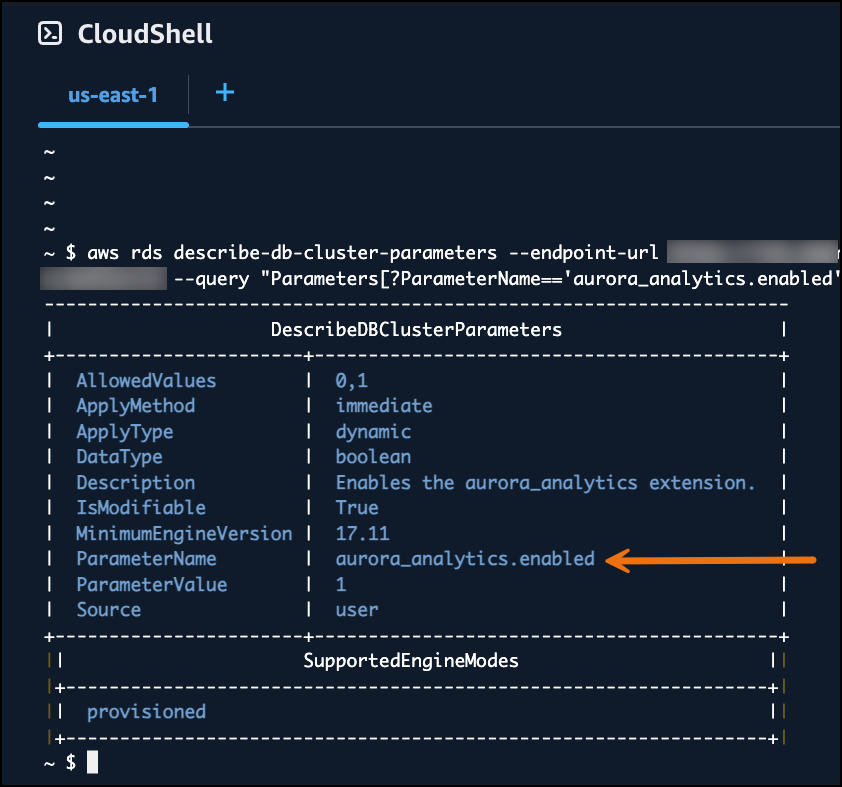
This functionality rolls out broadly across supported major database versions, specifically targeting Amazon Aurora PostgreSQL Version 17 (starting with release 17.11) and Version 18 (starting with release 18.6). Available immediately across all commercial AWS Regions and AWS GovCloud (US) Regions at no additional software license cost, the feature marks a significant milestone in how relational databases interact with open table formats.
Implementation Mechanics and Technical Workflow
Deploying and interacting with the new analytics capability relies on standard PostgreSQL extension frameworks. Database administrators initiate the process by associating an AWS Identity and Access Management (IAM) role with their Aurora PostgreSQL cluster, assigning the necessary permissions under the AuroraAnalytics feature profile. This role grants secure, read-only access to Amazon S3 buckets and the AWS Glue Data Catalog.
Once permissions are established, administrators run a simple command within any standard PostgreSQL client, such as psql or the Amazon RDS console:
CREATE EXTENSION aurora_analytics;Rather than manually defining column schemas for external files, Aurora leverages automatic schema inference from Parquet file metadata or Apache Iceberg catalog definitions. For instance, pointing a foreign table to a historical financial repository requires minimal configuration:

CREATE FOREIGN TABLE transaction_history ()
SERVER aurora_analytics_server
OPTIONS (
    location 's3://<my-bucket>/finance/transaction_history.parquet',
    format 'parquet'
);
For large-scale data lake environments containing hundreds of tables, engineers can bypass individual table definitions entirely. The IMPORT FOREIGN SCHEMA command bulk-creates foreign tables for every asset registered within an AWS Glue Data Catalog database.
Furthermore, external Iceberg REST Catalog (IRC)-compatible catalogs are supported via AWS Glue Data Catalog federation. By registering an external catalog once with Glue, queries can seamlessly join local operational tables with distributed Iceberg tables spanning multiple external data repositories.
Performance Optimization and Query Execution
Direct querying over network object storage naturally introduces latency concerns if not properly managed. To mitigate performance degradation as underlying data scales, Aurora incorporates advanced query optimization techniques, including predicate pushdown and column pruning. These mechanisms ensure that only relevant rows and columns are retrieved from Amazon S3, substantially reducing input/output operations and network bandwidth consumption.
Frequently accessed data lake segments are cached locally within the Aurora instance memory architecture, accelerating subsequent read operations. Developers can audit and tune these performance metrics using the built-in diagnostic function aurora_analytics_stat_statements(), which reports granular execution data such as total rows scanned, bytes read from Amazon S3, and cache hit ratios.
When sub-millisecond query latency is an absolute operational requirement, administrators retain the flexibility to materialize data lake content directly into native Aurora PostgreSQL tables using standard commands like CREATE TABLE AS SELECT, INSERT INTO ... SELECT, or MERGE INTO. This hybrid approach ensures that hot analytical datasets can be permanently cached inside the operational database, while cold or archival data remains efficiently stored in inexpensive S3 storage. Read queries can also be distributed across any read replica in the Aurora cluster, effectively shielding the primary writer instance from heavy analytical workloads.
Industry Implications and Expert Analysis
Data architecture analysts view the integration of DuckDB into Aurora PostgreSQL as a validation of the open table format ecosystem, particularly Apache Iceberg, which has rapidly become the industry standard for cloud data lakes. By allowing relational databases to act as intelligent gateways to object storage, AWS is empowering developers to build sophisticated applications—such as real-time fraud detection systems, contextual recommendation engines, and autonomous AI agents—without duplicating data infrastructure.
The financial model of the feature further lowers the barrier to entry. Because AWS levies no additional markup on the direct querying capability beyond standard incremental compute consumption and foundational Amazon S3 request fees, organizations can experiment with hybrid transactional and analytical workloads cost-effectively.
As enterprises continue to decentralize their data strategies while demanding unified application experiences, native query federation between transactional databases and object storage represents the logical evolution of enterprise data management. Amazon Aurora PostgreSQL’s adoption of embedded analytical engines sets a new benchmark for database interoperability, promising reduced operational overhead and streamlined software development for engineering teams worldwide.