Apple CEO John Ternus Defends Company’s AI Strategy Amid Growing Industry Scrutiny

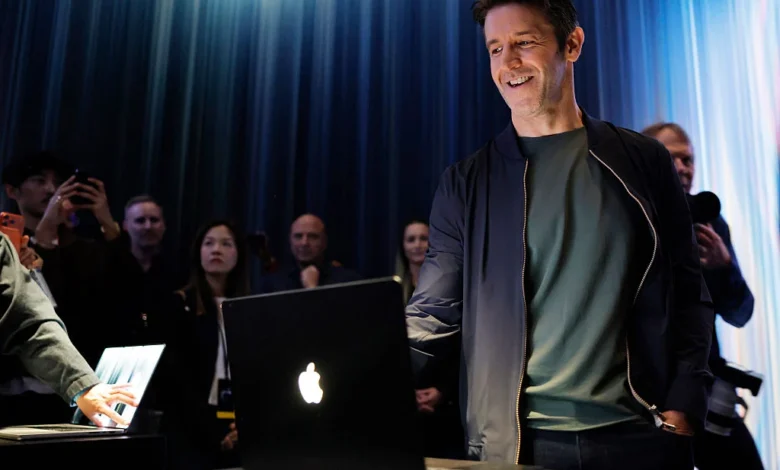
Apple Inc. finds itself at a fascinating crossroads in its illustrious technological history. Following a high-profile leadership transition that saw longtime hardware engineering chief John Ternus ascend to the role of Chief Executive Officer at the beginning of September 2026, the Cupertino-based tech giant is facing relentless questions regarding its positioning in the artificial intelligence sector. In a wide-ranging and candid interview with veteran technology journalist Steven Levy for Wired, Ternus addressed these industry narratives head-on, offering a robust defense of Apple’s measured, deliberate approach to artificial intelligence while outlining a philosophy that prioritizes user experience over rapid deployment.
The dialogue sheds light on a company trying to balance its reputation for meticulous product integration with a fast-moving market that has increasingly measured success through aggressive generative AI rollouts. As Apple continues to digest the rollout of its upgraded, long-awaited Siri capabilities this past summer—a release that faced initial skepticism regarding its timing—the leadership under Ternus is eager to chart a distinct path forward that distinguishes genuine utility from technological gimmickry.
The Evolution of Apple’s AI Landscape: A Timeline of Delays and Deployments
To understand Apple’s current posture in the artificial intelligence race, it is necessary to examine the chronology of recent developments that have shaped public perception. For much of 2024 and 2025, competitors across Silicon Valley engaged in a high-stakes arms race, rushing to market with standalone chatbots, autonomous agents, and cloud-heavy generative models. Apple, historically known for valuing ecosystem cohesion over being first to market, appeared to stumble or stall.
The most prominent bottleneck in Apple’s AI strategy centered on the modernization of Siri, its proprietary virtual assistant. Originally promised as a deeply integrated, context-aware engine capable of operating across personal user data and third-party applications, the advanced version of Siri faced a series of internal development delays. Industry analysts frequently pointed to these postponements as evidence that Apple was falling behind rivals like Microsoft, Google, and OpenAI.
However, the narrative shifted slightly in the summer of 2026 when Apple officially deployed the long-awaited architecture overhaul to the public. While early reactions characterized the launch as somewhat anticlimactic—largely because the features were introduced smoothly rather than with disruptive fanfare—it marked a crucial foundational step. The deployment proved that Apple was focusing its computational efforts on on-device processing and privacy-centric machine learning frameworks, setting the stage for Ternus’s ascension to the CEO chair just weeks later in September.
John Ternus Steps Up: The New CEO’s Vision
John Ternus took over the reins at Apple bearing the heavy mantle of leadership traditionally held by visionaries like Steve Jobs and Tim Cook. With an engineering background that previously saw him oversee the development of groundbreaking hardware lines, Ternus brings a deeply pragmatic perspective to the executive suite.
In his first major memo to employees in early September, Ternus hinted at a massive slate of product initiatives designed to showcase Apple’s next generation of engineering. Yet, when confronted by Steven Levy regarding the persistent industry critique that Apple is trailing behind in the AI race, Ternus refused to be defensive, opting instead for a confident reframing of the company’s core philosophy.
“Everyone has an opinion,” Ternus remarked during the interview, acknowledging the chorus of external commentary from Wall Street analysts, tech bloggers, and competitors. “I really like where we’re at.”
This sentiment underscores a broader institutional belief within Apple Park: that premature adoption of unrefined technologies compromises the premium user experience the brand has spent decades cultivating. Ternus emphasized that Apple is “absolutely going to leverage AI” in its upcoming product pipelines, but drew a sharp line in the sand regarding how those features will be presented to the end consumer.
The Philosophy of Invisible Technology: AI for Utility, Not Spectacle
At the heart of Ternus’s defense is a distinction between functional integration and superficial feature-padding. In an era where many technology firms rush to slap an "AI-powered" label onto every minor software update, Apple is deliberately pivoting toward an ethos of invisibility.
“We don’t want to ship AI for AI’s sake,” Ternus explained to Wired. “When we’re doing it right, people won’t have to think about whether it was AI that made this happen or more traditional software. What matters is, did we build something that they really love?”

This philosophy mirrors Apple’s historical playbook. When the company introduced graphical user interfaces, multi-touch capacitive screens, or custom silicon processors like the M-series chips, the emphasis was rarely on the raw underlying complexity. Instead, the focus remained squarely on how those advancements enabled smoother workflows, superior battery efficiency, and intuitive interactions.
By framing artificial intelligence as an underlying medium rather than a standalone product category, Ternus is attempting to decouple Apple from the frantic feature-matching game played by competitors. The goal is not to win benchmarks in cloud-based language generation, but to ensure that device-level intelligence enhances everyday tasks—such as photo organization, notification triage, and predictive typing—without users ever questioning the machinery behind it.
The App Ecosystem Dilemma: Human Creativity vs. Autonomous Agents
One of the most provocative lines of questioning during the interview touched upon the existential future of software architecture itself. As generative AI advances toward sophisticated autonomous agents capable of executing multi-step workflows across the web and operating systems, industry observers have increasingly questioned whether traditional apps will eventually become obsolete. If an AI agent can book a flight, reserve a table, and draft an email directly through natural language prompts, the traditional grid of application icons on a smartphone screen loses its central utility.
When pressed by Levy on whether such a paradigm shift could drastically disrupt Apple’s lucrative App Store ecosystem and hardware-software synergy, Ternus offered a philosophical and human-centric counter-perspective.
“That could make life really easy, I suppose,” Ternus conceded, before pivoting to the foundational ethos of product creation. “But the creation of products is a deeply human and personal thing, something that we love to do.”
This response highlights a fundamental tension in modern consumer technology. On one side lies the hyper-efficient, agent-driven automation favored by software-first companies, where interfaces dissolve entirely into conversational prompts. On the other side stands Apple’s enduring belief in physical-digital craftsmanship—the tactile satisfaction of hardware design paired with curated software environments that celebrate human-made applications.
For Apple, the App Store is not merely a utility distribution channel; it is a vibrant economic and creative marketplace that supports millions of developers worldwide. Dismantling that ecosystem in favor of a purely autonomous, agent-run operating model would represent a radical departure from Apple’s business model, which relies heavily on hardware sales and services revenue generated within its tightly controlled ecosystem.
Industry Implications and Market Analysis
As the tech sector digests Ternus’s remarks, financial analysts and industry observers are divided on what Apple’s measured strategy means for its long-term market valuation and competitive moat.
On one hand, critics argue that Apple’s cautious pace risks ceding the high ground in enterprise productivity and conversational computing to aggressive first-movers. The rapid consumer adoption of generative tools has conditioned users to expect immediate, dramatic transformations in how they interact with digital devices. If Apple’s integrated AI features are perceived as too subtle or conservative, the company could face headwinds in upgrade cycles, particularly among tech-forward demographics.
On the other hand, proponents of Apple’s strategy suggest that the company’s focus on privacy, on-device processing, and seamless UX integration provides a distinct competitive advantage that cloud-dependent competitors cannot easily replicate. By keeping sensitive user data local—leveraging Apple Silicon’s advanced neural engines rather than routing every query through third-party data centers—Apple addresses growing consumer anxieties surrounding data privacy and security. Furthermore, the company’s massive active installed base of over two billion active devices provides an enormous distribution platform. When Apple does deploy a feature broadly, it reaches a scale that few rivals can match overnight.
Conclusion
John Ternus’s inaugural major media defense as Apple CEO paints a picture of a company comfortable in its own skin, even amid external pressure to accelerate its AI ambitions. By prioritizing human-centric product creation, dismissing technological spectacle for its own sake, and defending the enduring value of the app ecosystem, Ternus has signaled that Apple will chart its own distinct course through the artificial intelligence era.
As the technology continues to mature, the ultimate verdict will not be rendered by industry critics or quarterly earnings reports, but by everyday consumers. Whether Apple’s philosophy of invisible, highly integrated intelligence proves superior to the flashy, agent-driven disruption championed by Silicon Valley will define the tenure of John Ternus and shape the next chapter of personal computing.