Apple Enters the Foldable Market with the iPhone Duo and Challenges Android Supremacy


The release of Apple’s long-anticipated foldable device, officially named the iPhone Duo, marks a monumental shift in the mobile technology landscape. While the device does not entirely reinvent the physical form factor pioneered by competitors over the past half-decade, it successfully executes the foundational mechanics of a foldable smartphone. By prioritizing hardware refinement, ecosystem integration, and software optimization, Apple has introduced a device that not only captures the attention of consumers but also presents a formidable challenge to established Android foldable manufacturers.
For years, the foldable market has been dominated by companies such as Samsung, Google, and various Chinese OEMs like OnePlus, Oppo, and Vivo. These brands iterated through numerous generations of book-style and clamshell foldables, gradually solving early hardware issues such as fragile ultra-thin glass displays, visible screen creases, and subpar hinge durability. Apple’s entry into this specialized market segment validates the form factor for mainstream consumers and signals that the technology has matured past its experimental phase.
Main Facts of the Apple iPhone Duo Launch
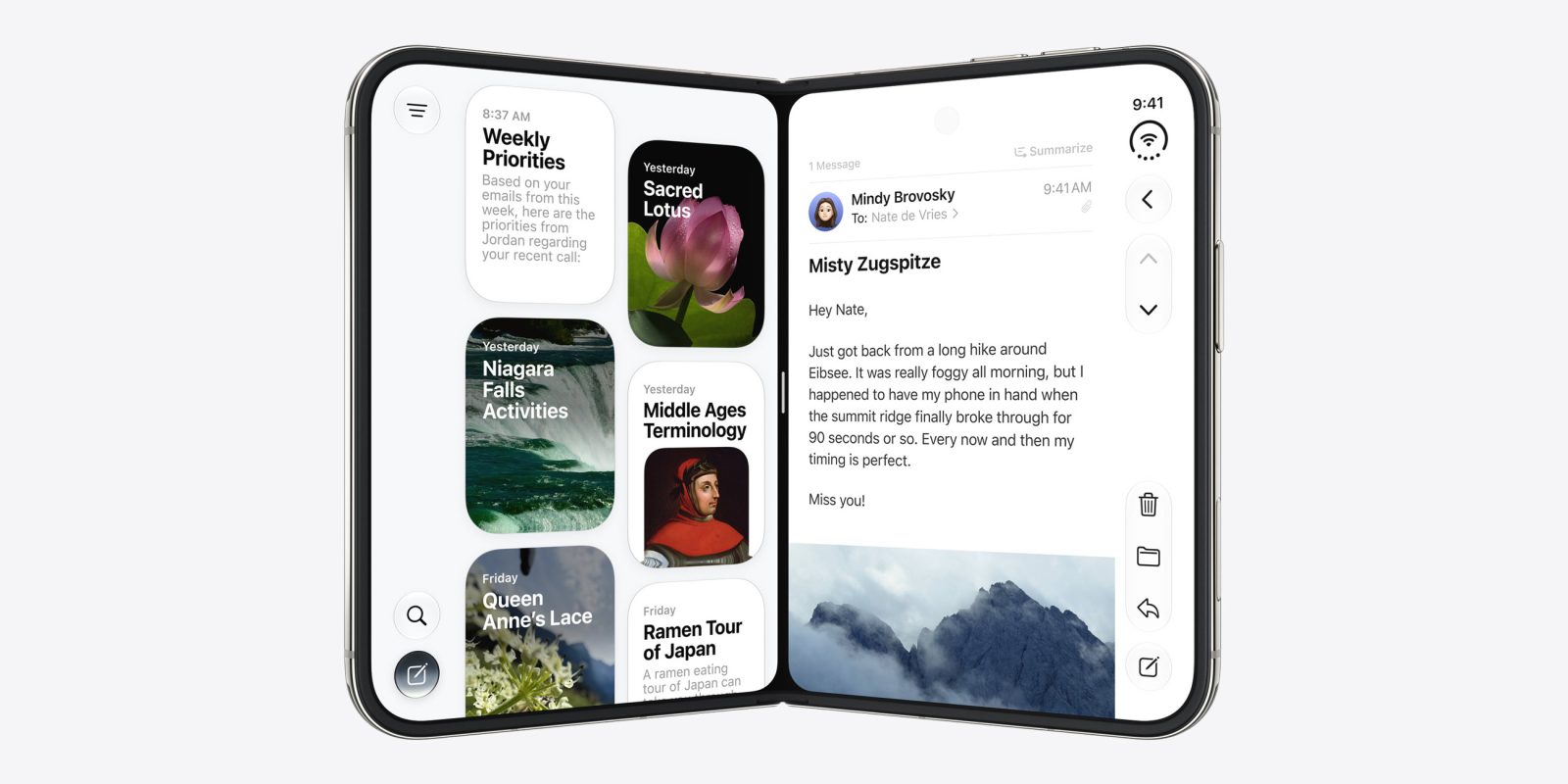
The iPhone Duo arrives with a set of specifications and design choices aimed at competing directly with current-generation Android foldables. The device features an outer cover display that mimics the proportions of a standard flagship smartphone, avoiding the overly narrow or awkwardly wide aspect ratios that plagued early Android foldables. When unfolded, the internal flexible OLED display provides a tablet-sized workspace optimized for multitasking, split-screen application management, and media consumption.
Apple has heavily emphasized the engineering of the hinge mechanism, utilizing a custom-designed multi-cam gear system that allows the device to fold completely flat while minimizing the visibility and tactile feel of the central screen crease. Under the hood, the iPhone Duo is powered by Apple’s latest silicon architecture, paired with an enhanced thermal dissipation system designed to handle the sustained workloads of running multiple demanding applications simultaneously. Furthermore, iOS has been updated to include specialized layout adjustments, gesture controls, and continuity features tailored specifically to the dual-screen form factor.
A Chronology of the Foldable Market Leading to the iPhone Duo
To understand the significance of the iPhone Duo, it is necessary to examine the historical trajectory of the foldable smartphone market. The modern era of commercial foldables began in earnest in late 2018 and early 2019, when companies like Royole and Samsung first showcased commercial hardware capable of bending a display.
- 2019: Samsung released the original Galaxy Fold, suffering from initial durability setbacks that prompted a temporary recall and redesign before its commercial relaunch later that year. Concurrently, Huawei announced the Mate X, establishing the two primary physical design philosophies: inward-folding book-style devices and outward-folding wraparound devices.
- 2020–2021: Competitors entered the fray with second and third-generation devices. Motorola revived the Razr brand as a clamshell foldable, while Samsung launched the Galaxy Z Flip and refined the Z Fold line, successfully capturing early adopter market share and improving structural integrity.
- 2022–2023: The market expanded rapidly as Chinese manufacturers entered the global stage with thinner hinges and less noticeable display creases. Google joined the market in mid-2023 with the Pixel Fold, bringing its stock Android software ecosystem and Tensor processing capabilities to the foldable conversation.
- 2024–2025: Foldables transitioned from niche luxury items to mainstream productivity tools. Durability standards improved significantly, water-resistance ratings became standard, and multi-window software capabilities matured across both Android and competing operating systems. Industry analysts consistently pointed to Apple’s conspicuous absence as the final hurdle for absolute mainstream adoption.
- 2026: Apple officially unveils the iPhone Duo, immediately reshaping market forecasts and pressuring competing brands to accelerate their research and development pipelines.
Supporting Data and Market Metrics
Market research firms have tracked the gradual expansion of the foldable smartphone segment over the past several years. Prior to the launch of the iPhone Duo, foldable devices accounted for a small single-digit percentage of global smartphone shipments, largely constrained by high retail pricing, consumer hesitancy regarding long-term durability, and competition from traditional slab-style flagships.
However, historical data from previous Apple product category expansions—such as the introduction of the iPad in 2010 or the Apple Watch in 2015—demonstrates that Cupertino’s entry into a nascent market frequently acts as a catalyst for exponential growth. According to preliminary industry projections released following the iPhone Duo announcement, global foldable device shipments are anticipated to experience a double-digit compound annual growth rate over the next five years. This surge is expected to be driven primarily by enterprise adoption and upgrade cycles among existing iPhone users who previously declined to switch to Android ecosystems solely to access foldable hardware.
Industry Reactions and Competitor Responses
The announcement of the iPhone Duo has elicited swift reactions across the technology sector. Executives and lead engineers at rival Android companies have publicly acknowledged the significance of Apple’s arrival, noting that the Cupertino-based giant’s design choices validate several key hardware philosophies while simultaneously establishing new benchmarks for software integration.
Competitors are reportedly reassessing their upcoming product pipelines. While Android manufacturers have traditionally held an advantage in hardware experimentation—such as pioneering under-display cameras, ultra-thin chassis designs, and rapid charging speeds—they have frequently struggled with software fragmentation and third-party app optimization for foldable aspect ratios. Apple’s rigorous control over its developer ecosystem gives the iPhone Duo an inherent advantage in ensuring that major applications natively support the expanded screen real estate from day one.

Analyst consensus suggests that Google, in particular, will face unique pressures. As the developer of the Android operating system and a hardware manufacturer via the Pixel line, Google must continue to refine Android’s native foldable features to maintain its differentiation. Features introduced or popularized by Apple in iOS for the iPhone Duo—such as advanced window management and seamless continuity between the cover and inner displays—will likely serve as design targets for future iterations of Android.
Broader Impact and Technological Implications
The introduction of the iPhone Duo extends far beyond sales figures and ecosystem rivalry; it represents a fundamental shift in user expectations regarding mobile computing form factors. For years, the debate surrounding foldables centered on whether they were a passing gimmick or the definitive future of mobile devices. Apple’s financial and strategic commitment to the category effectively resolves that debate, cementing foldables as a permanent and vital segment of the consumer electronics market.
From a supply chain perspective, Apple’s entry is already causing ripples among component manufacturers. The demand for ultra-thin glass, specialized hinges, and high-efficiency flexible OLED panels will strain existing manufacturing capacities, leading to increased capital expenditure in component fabrication plants across East Asia. This scaling effect is expected to eventually drive down production costs across the entire industry, potentially leading to more competitive pricing for foldable devices across both iOS and Android ecosystems in the years to come.
Furthermore, software developers must now adapt their development paradigms to accommodate a dual-form-factor future. With Apple officially supporting a foldable display, the economic incentive for developers to optimize their applications for variable screen sizes has increased exponentially. This collective industry focus will likely accelerate the creation of adaptive user interfaces that function seamlessly regardless of whether a device is held in a compact pocketable state or expanded into a productivity-focused tablet format.
Conclusion
The iPhone Duo may not have completely rewritten the physics of flexible display technology, but its arrival is undeniably the most important milestone in the history of the foldable smartphone market. By executing the core fundamentals of hardware durability, software continuity, and ecosystem synergy with characteristic precision, Apple has delivered a device that commands respect from its competitors and redefines what consumers can expect from mobile technology. As the Android ecosystem responds to this new competitive reality, the ultimate winner will be the consumer, who stands to benefit from accelerated innovation, refined software experiences, and the maturation of a truly transformative device category.