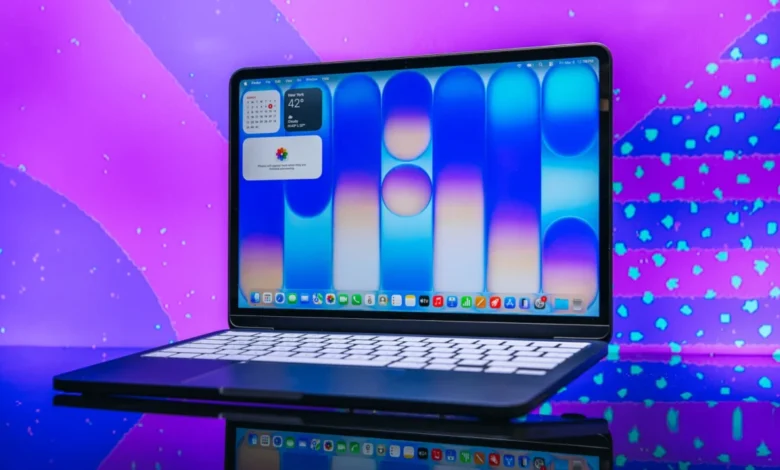
Amidst the usual fervor surrounding the impending September launches of the iPhone 18 and a rumored foldable iPhone, Apple is reportedly gearing up for an even more comprehensive overhaul of its entire Mac and MacBook product lines. According to a detailed report from Mark Gurman, managing editor of the consumer technology team at Bloomberg News, nearly every computer model in Apple’s stable is slated for a significant refresh, promising a wave of new features, performance upgrades, and design innovations. This ambitious roadmap underscores Apple’s sustained commitment to its computing ecosystem, strategically positioning its hardware for the evolving demands of productivity, creativity, and the burgeoning field of artificial intelligence.
The Gurman Report: An Overview of Apple’s Ambitious Refresh
Gurman’s report, a highly anticipated dispatch from a consistently reliable source on Apple’s internal plans, paints a picture of a company investing heavily in its macOS-powered devices. The scope of these planned updates is remarkably broad, touching everything from the budget-friendly MacBook Neo to the professional-grade MacBook Pro, the versatile MacBook Air, and the powerful desktop solutions, the Mac Mini and Mac Studio, with even the iMac line receiving attention. This extensive refresh signals Apple’s intent to reinforce its competitive edge across diverse market segments, leveraging its proprietary Apple Silicon architecture to deliver enhanced performance and efficiency. The updates are expected to roll out over the next few years, with some significant introductions anticipated as early as late 2026.
Next-Generation MacBook Neo: Evolution of an Entry-Level Success
Leading the charge in this refresh cycle is the MacBook Neo, Apple’s acclaimed entry-level laptop that has carved out a substantial niche since its introduction. The Neo quickly became a breakout hit, lauded for its compelling blend of performance, portability, and an aggressive price point that set it apart from many budget Windows laptops. Its initial launch saw units rapidly sell out, indicating strong consumer demand for an affordable Apple computing experience.
The upcoming MacBook Neo is poised to build on this success. Gurman’s report indicates that the next iteration will feature an updated A19 Pro chip, an interesting designation given Apple’s traditional use of M-series chips for Macs, suggesting a potentially unique architectural approach for this particular budget-focused device. This new chip is expected to deliver substantial performance improvements, enhancing the Neo’s capability for everyday tasks, light creative work, and media consumption. Furthermore, the refresh will include an increase in memory, addressing a common constraint in entry-level machines and improving multitasking capabilities. In a move that harks back to Apple’s playful design heritage, Gurman also reports that additional color options will be introduced. Color has historically been a key element in Apple’s marketing campaigns for devices like the original iMac and more recently the MacBook Neo itself, providing a distinctive aesthetic appeal.
However, the MacBook Neo has also been subject to Apple’s recent wave of price adjustments. Launched at an attractive $599, and even available for as low as $499 through educational discounts, its current starting price has risen to $699. This $100 increase has been a point of contention for some, as its low price was a significant part of its appeal. The upgraded specifications, including the more powerful A19 Pro chip and increased memory, could serve to justify this price hike, making the new $699 price point more palatable for consumers seeking enhanced value. There is also optimistic speculation among market watchers that the introduction of the new model might lead to occasional discounts on the original MacBook Neo, potentially returning it to its initial price during promotional events, thereby catering to an even broader budget-conscious audience.
The Long-Awaited Touchscreen MacBook Pro with OLED Displays
Perhaps the most anticipated and transformative development in Apple’s upcoming lineup is the introduction of a long-rumored high-end touchscreen MacBook Pro. This move would represent a significant paradigm shift for Apple, which has historically resisted integrating touchscreens directly into macOS, preferring to keep the touch interface exclusive to its iPad line. Gurman’s report confirms that these touchscreen MacBook Pro models will also be the first Macs to feature vibrant OLED displays.

Rumors regarding a touchscreen MacBook Pro have circulated for years, fueled by patents and industry speculation. The integration of OLED technology would bring unparalleled contrast ratios, deeper blacks, and more vivid colors to the MacBook Pro, aligning it with the visual fidelity already enjoyed by users of Apple’s high-end iPhones and iPad Pros. Coupled with the touchscreen functionality, this would redefine the user experience, potentially opening up new avenues for creative professionals and enhancing productivity for a wide range of tasks that benefit from direct manipulation.
Apple is reportedly in the testing phase for these innovative MacBooks, with an eye toward an October 2026 launch for models powered by the M5 Pro chip. This timing places the M5 Pro as a direct successor to the M4 series, likely offering significant performance and efficiency gains tailored for demanding professional workflows. Furthermore, Gurman hints at even more advanced versions of these MacBooks arriving in 2027 or early 2028, suggesting a staggered rollout of cutting-edge technology. The introduction of touch capability on a Mac would inevitably blur the lines between Apple’s tablet and laptop ecosystems, prompting questions about the future convergence of macOS and iPadOS, though Apple has traditionally maintained distinct operating system identities.
Broader MacBook Portfolio: Air and Pro Expansions
Beyond the Neo and the revolutionary touchscreen Pro, Apple is also planning substantial updates across its broader MacBook portfolio. The popular MacBook Air is slated for its first major redesign in over four years. The MacBook Air, known for its iconic wedge shape and later its sleek, uniform design, has been a cornerstone of Apple’s laptop sales due to its balance of portability, performance, and price. A significant redesign could introduce a fresh aesthetic, potentially thinner profiles, and new functional elements, further solidifying its appeal to students, casual users, and business professionals alike. This refresh is expected to incorporate a new M6 chipset, positioning it with the latest generation of Apple Silicon.
Concurrently, Apple is reportedly developing a "low-end" entry-level MacBook Pro, also powered by the new M6 chipset. This move could be a strategic effort to offer professional-grade features and performance at a more accessible price point than the high-end OLED touchscreen models. It suggests a segmentation of the "Pro" line, allowing Apple to cater to a broader spectrum of professional users, from those requiring maximum power and cutting-edge display technology to those seeking robust performance for demanding applications without the premium cost of the absolute top tier. This expansion could also serve to better differentiate the MacBook Air from the Pro line, clarifying each product’s target audience and capabilities.
Desktop Powerhouses: Mac Mini and Mac Studio Geared for AI
Apple’s desktop computers, the Mac Mini and Mac Studio, have become increasingly popular choices, particularly among users looking to leverage powerful processing for advanced computational tasks, including the burgeoning field of agentic AI technology. The rapid expansion of AI applications, from complex data analysis to advanced creative workflows, has driven significant demand for high-performance hardware, leading to major shortages in key components.
Recognizing this trend, Apple is refreshing both the Mac Mini and Mac Studio lines with these AI-focused users squarely in mind. Gurman’s report indicates that Apple is currently testing Mac Mini models powered by both the M5 Pro and the next-generation M6 chipsets. This dual-chip strategy suggests that Apple aims to offer varying tiers of performance for its compact desktop, catering to different professional needs and budget considerations. Similarly, the Mac Studio, positioned as a more powerful desktop solution for creative professionals and developers, is also expected to receive updates featuring the M5 Pro and M6 chips.
These refreshes are critical for Apple to maintain its competitive edge in the professional desktop market. The enhanced processing power of the M5 Pro and M6 chips, coupled with Apple Silicon’s optimized neural engines, will significantly boost the capabilities of these machines for machine learning tasks, video rendering, 3D modeling, and other computationally intensive applications that are increasingly central to AI development. By directly addressing the demands of the AI boom, Apple aims to solidify its position as a preferred hardware provider for developers and researchers pushing the boundaries of artificial intelligence.
The iMac Line: Completing the Ecosystem Refresh

Beyond laptops and dedicated desktops, the comprehensive refresh extends to Apple’s iconic all-in-one computer, the iMac. While Gurman’s report provides fewer specific details on the iMac updates compared to other lines, it confirms that refreshes are indeed in the works. The iMac has historically been a strong performer in the consumer and educational markets, offering a powerful and elegant desktop experience. Updates to the iMac line would likely include new Apple Silicon chips (potentially M5 or M6 series, depending on the timing), and possibly design refinements or display enhancements, ensuring that Apple’s all-in-one offering remains competitive and appealing. This holistic approach ensures that no part of Apple’s computing ecosystem is left behind in this extensive upgrade cycle.
Economic Headwinds: The Global Memory Crisis and Pricing Concerns
While the prospect of these advanced new Macs is exciting, the global economic climate, particularly the ongoing memory crisis, presents a significant challenge. Supply chain experts, including those who have consulted with Mashable, have consistently warned that the shortage and corresponding price increases for crucial components like RAM and flash storage are likely to worsen before they improve. This "RAMageddon" scenario has already impacted pricing across the tech industry, and Apple’s recent price adjustments, such as the $100 hike for the MacBook Neo, are a direct consequence.
The introduction of new MacBooks featuring cutting-edge technologies like OLED screens, next-generation M-series chips, and touchscreen functionality could lead to intimidating price tags. The cost of advanced display panels, particularly OLED, combined with the inflated prices of memory and the inherent premium associated with new Apple Silicon, will likely translate into higher retail prices for consumers. Even products slated for 2027 or 2028 could feel the pinch of these persistent supply chain issues. Apple will need to carefully balance innovation with affordability, especially for its more mainstream products, to maintain strong sales momentum amidst these economic headwinds. Industry analysts will be closely watching Apple’s pricing strategy, particularly for the new "low-end" MacBook Pro and the refreshed MacBook Air, to see how the company navigates these complex market conditions.
Strategic Implications and Market Outlook
This widespread refresh of Apple’s Mac and MacBook lines carries profound strategic implications. It signals Apple’s unwavering commitment to its computing platform, leveraging the power and efficiency of Apple Silicon to differentiate its products from the competition, primarily Windows-based PCs running Intel or AMD processors. The introduction of touchscreens on the MacBook Pro could unlock new creative workflows and interactive experiences, potentially drawing users from other platforms or even from Apple’s own iPad Pro line for certain tasks.
The focus on M5 Pro and M6 chips across various models highlights a clear generational leap in performance. These chips are expected to deliver significant improvements in CPU, GPU, and neural engine capabilities, further cementing Apple’s lead in custom silicon design. For the professional market, the enhanced Mac Mini and Mac Studio models, explicitly geared towards AI, underscore Apple’s intent to capture a larger share of the burgeoning high-performance computing segment driven by artificial intelligence.
This comprehensive update also serves to harmonize Apple’s product ecosystem, ensuring that users moving between iPhones, iPads, and Macs experience a consistent level of performance and technological advancement. While the September iPhone launches typically grab headlines, this extensive Mac refresh demonstrates that Apple views its computing platform as equally vital to its long-term growth and innovation strategy. As the tech industry continues to evolve rapidly, particularly with the acceleration of AI integration, Apple’s aggressive update cycle for its Mac lineup positions the company strongly for the challenges and opportunities of the coming years. Consumers and industry observers alike will be keenly anticipating the official announcements and subsequent reviews of these potentially game-changing devices.