AWS Elastic Beanstalk Enters a New Era With Fully Managed Cluster Mode Powered by Amazon EKS

Fifteen years after its initial debut in 2011, Amazon Web Services (AWS) has announced a transformative evolution of its flagship application management service, AWS Elastic Beanstalk. Designed originally to abstract the complexities of infrastructure provisioning for developers working across diverse technology stacks—including Java, .NET, Python, Node.js, PHP, Ruby, and Go—Elastic Beanstalk has earned a reputation as a reliable workhorse for full-stack deployment. Over a decade and a half, the expectations of enterprise engineering teams have shifted dramatically toward containerization, microservices architectures, and shared infrastructure models. To meet this paradigm shift, AWS has rebuilt the operational engine of Elastic Beanstalk from the ground up, introducing a fully managed feature known as Cluster Mode.
This new capability allows development organizations to deploy, scale, patch, monitor, and upgrade complex application portfolios continuously throughout their lifecycle. By leveraging Amazon Elastic Kubernetes Service (Amazon EKS) as the underlying orchestration engine, Cluster Mode addresses long-standing challenges associated with resource utilization, multi-tenant efficiency, and operational overhead. As enterprises look to rationalize their cloud expenditure while maintaining strict reliability and security standards, the introduction of Cluster Mode marks a significant milestone in modern application management.
Background and Context: The Evolution of Application Management
When AWS first launched Elastic Beanstalk in 2011, the prevailing architectural pattern for web applications relied heavily on monolithic designs hosted on dedicated Amazon Elastic Compute Cloud (EC2) instances. Developers uploaded their source code, and Elastic Beanstalk provisioned the underlying compute, storage, and networking layers, automating tasks such as load balancing, autoscaling, and health monitoring. While this model drastically reduced the time-to-market for new applications, it introduced inefficiencies as organizations scaled to dozens or hundreds of distinct workloads. Each application typically demanded its own isolated infrastructure stack, resulting in idle compute capacity and fragmented management planes.
Over the subsequent years, the industry witnessed a massive migration toward containers and Kubernetes. While Kubernetes provided unmatched flexibility and resource density, its steep learning curve and operational complexity often overwhelmed teams that preferred the simplicity of platform-as-a-service (PaaS) offerings. Recognizing this tension, AWS spent recent years modernizing Elastic Beanstalk’s foundation. Recent enhancements included the integration of AI-powered environment analysis for automated health diagnostics, native GitHub Actions integration for streamlined CI/CD pipelines, OpenTelemetry-based observability, traffic-splitting deployments with automated rollbacks, event-driven autoscaling, and robust secrets management via AWS Secrets Manager and AWS Certificate Manager.
The culmination of these technological investments is the release of Cluster Mode, which bridges the gap between the frictionless developer experience of traditional Beanstalk and the raw power and scalability of modern Kubernetes infrastructure.

Architectural Mechanics of Cluster Mode
The core innovation of Elastic Beanstalk Cluster Mode lies in its ability to pool infrastructure resources across multiple applications. Rather than operating each application in an isolated virtual private cloud or compute environment, engineering teams can now run a portfolio of applications that share a single underlying EKS-powered infrastructure baseline.
This multi-tenant resource-sharing model directly addresses the economic realities of large-scale software engineering. As an enterprise’s application portfolio grows, the per-application infrastructure cost decreases, eliminating the waste associated with provisioning dedicated clusters for minor microservices. Furthermore, whether an organization manages ten applications or a hundred, the administrative interface remains unified, providing consistent operational guarantees across disparate technology stacks.
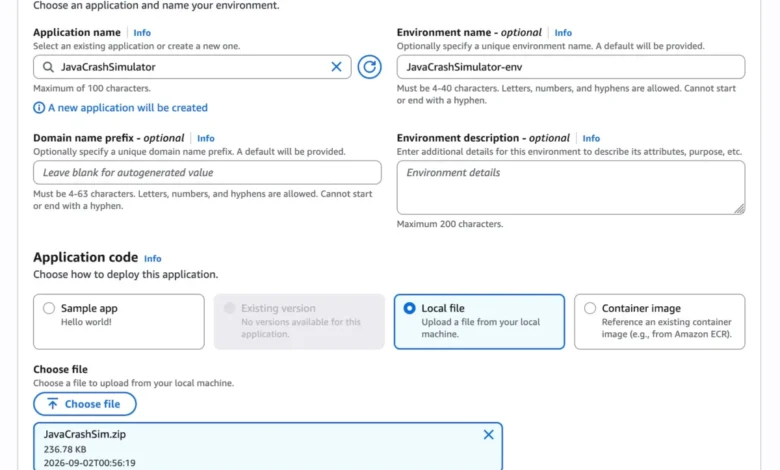
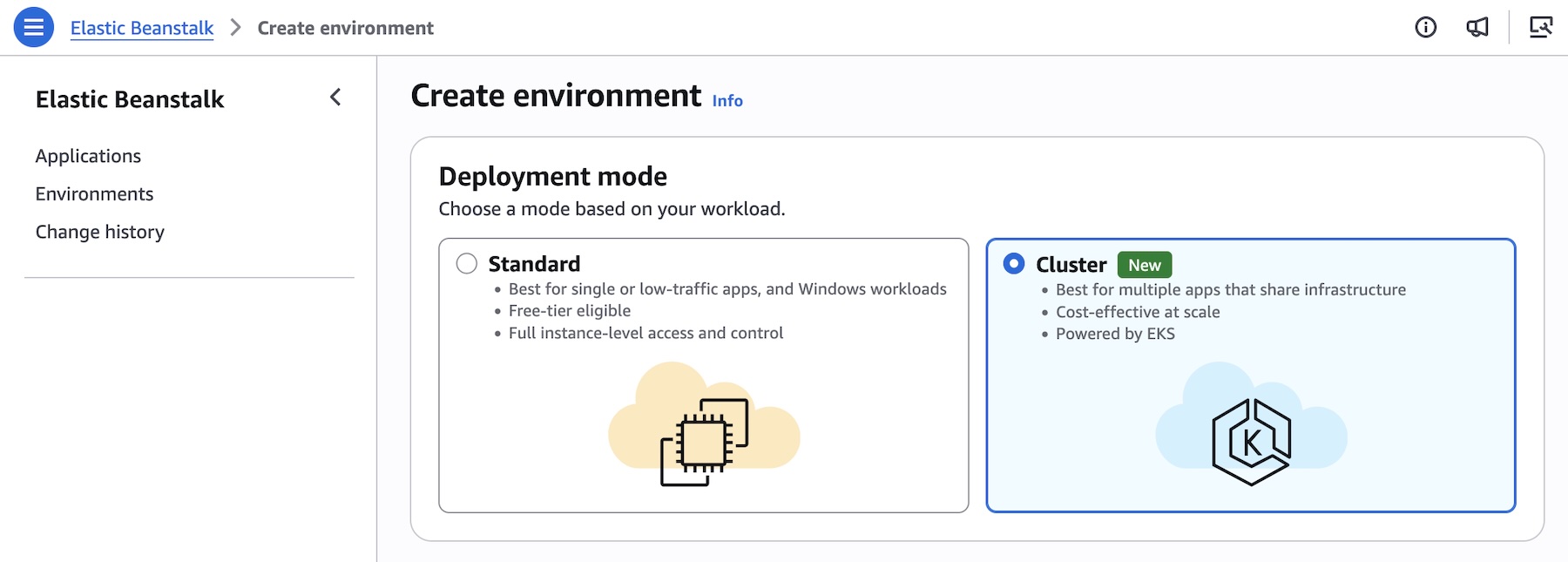
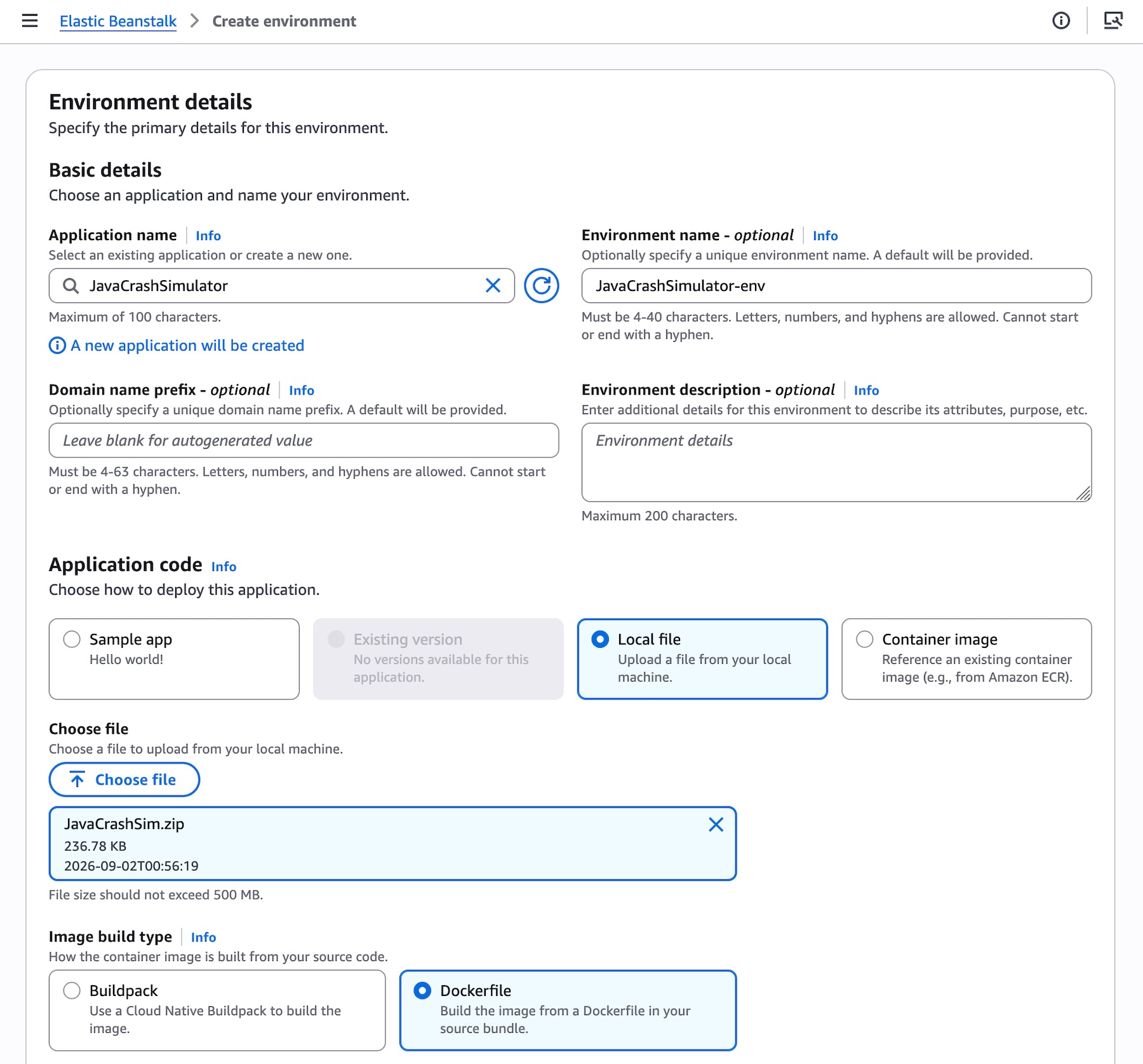
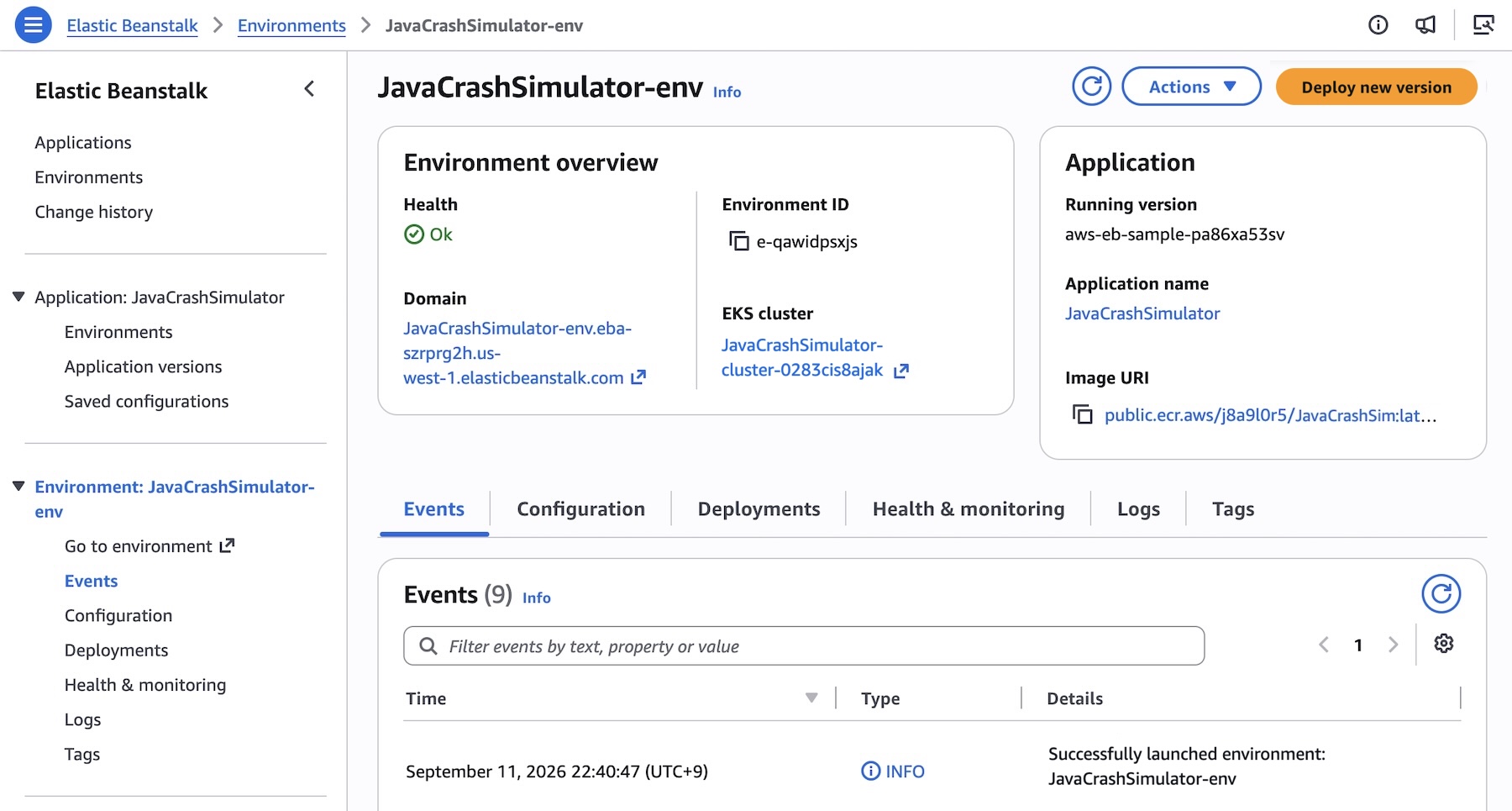
Deploying applications within Cluster Mode maintains the flexibility that developers expect. Teams can bring their workloads in whatever format they exist today—whether raw source code, Dockerfiles, or pre-built container images. Through the Elastic Beanstalk console, AWS CLI, EB CLI, or programmatic AWS SDKs, administrators select "Cluster" as the deployment type within the EKS deployment tier.
For microservices architectures, the process is streamlined through declarative configuration. For instance, teams can register pre-built images residing in Amazon Elastic Container Registry (Amazon ECR) as distinct application versions. They can then define specific runtime parameters—such as CPU allocations, memory limits, health check paths, and autoscaling thresholds—via structured JSON configuration files. Notably, features such as internet-facing Application Load Balancers (ALBs) can be selectively assigned to public-facing frontend services, while internal microservices remain securely isolated within the cluster network.
Migration Pathways and Coexistence with Standard Mode
Understanding that enterprise application portfolios cannot be overhauled overnight, AWS has architected Cluster Mode to operate seamlessly alongside the legacy deployment paradigm. Elastic Beanstalk Standard Mode, which relies on Amazon EC2 instances, remains fully supported and operational.
Crucially, Standard Mode and Cluster Mode environments can run side by side within the same overarching Elastic Beanstalk application construct. This side-by-side compatibility empowers engineering teams to execute migrations incrementally, moving one environment at a time at their own operational pace. To prevent unintended disruptions, the platform includes built-in validation checks that confirm compatibility before any structural changes are applied, ensuring that legacy workloads are never forcibly migrated.
Industry analysts note that Standard Mode will continue to serve as an optimal fit for specific legacy workloads, monolithic applications requiring direct OS-level access, or environments where containerization offers no immediate operational benefit. Conversely, modern, stateless microservices represent prime candidates for immediate migration to Cluster Mode.
Financial Structure and Resource Consumption
AWS has structured the pricing model for Elastic Beanstalk Cluster Mode to ensure transparency and cost alignment. There is no additional software surcharge or licensing fee imposed directly by Elastic Beanstalk for utilizing Cluster Mode. Instead, customers pay strictly for the underlying AWS resources consumed by their applications.
This usage-based billing includes the standard EKS control plane fee, EKS Auto Mode compute resources, Amazon ECR storage and data transfer, and Amazon CloudWatch monitoring metrics. Prospective users should note that Cluster Mode environments are not eligible for the AWS Free Tier, reflecting the enterprise-grade nature of the underlying Kubernetes infrastructure. Organizations evaluating the financial impact are encouraged to review the official AWS Elastic Beanstalk Pricing documentation to model projected costs based on their anticipated container density and traffic volumes.
Industry Implications and Future Outlook
The release of Elastic Beanstalk Cluster Mode arrives at a pivotal juncture in cloud computing, where organizations face mounting pressure to optimize operational efficiency without sacrificing agility. By abstracting the complexities of Kubernetes cluster management behind a familiar PaaS interface, AWS is positioning Elastic Beanstalk as a compelling solution for enterprises seeking the benefits of container orchestration without the associated administrative burden.
Early reactions from the developer community suggest that Cluster Mode will significantly lower the barrier to entry for teams looking to adopt microservices architectures or transition legacy web applications to containerized runtimes. By automating routine lifecycle tasks—including continuous patching, monitoring, rolling upgrades, and autoscaling—AWS allows engineering organizations to reallocate valuable human capital toward core product development and business logic rather than infrastructure maintenance.
AWS Elastic Beanstalk Cluster Mode is generally available today across all AWS Regions where Elastic Beanstalk is currently supported. Developers and system administrators can begin provisioning cluster-backed environments immediately through the AWS Management Console or explore detailed API integration guidelines via the official AWS documentation and associated developer tooling plugins.
Related posts: