B.AI Emerges as a Dominant Force in Global AI Infrastructure Following Unprecedented Trillion-Token Milestone

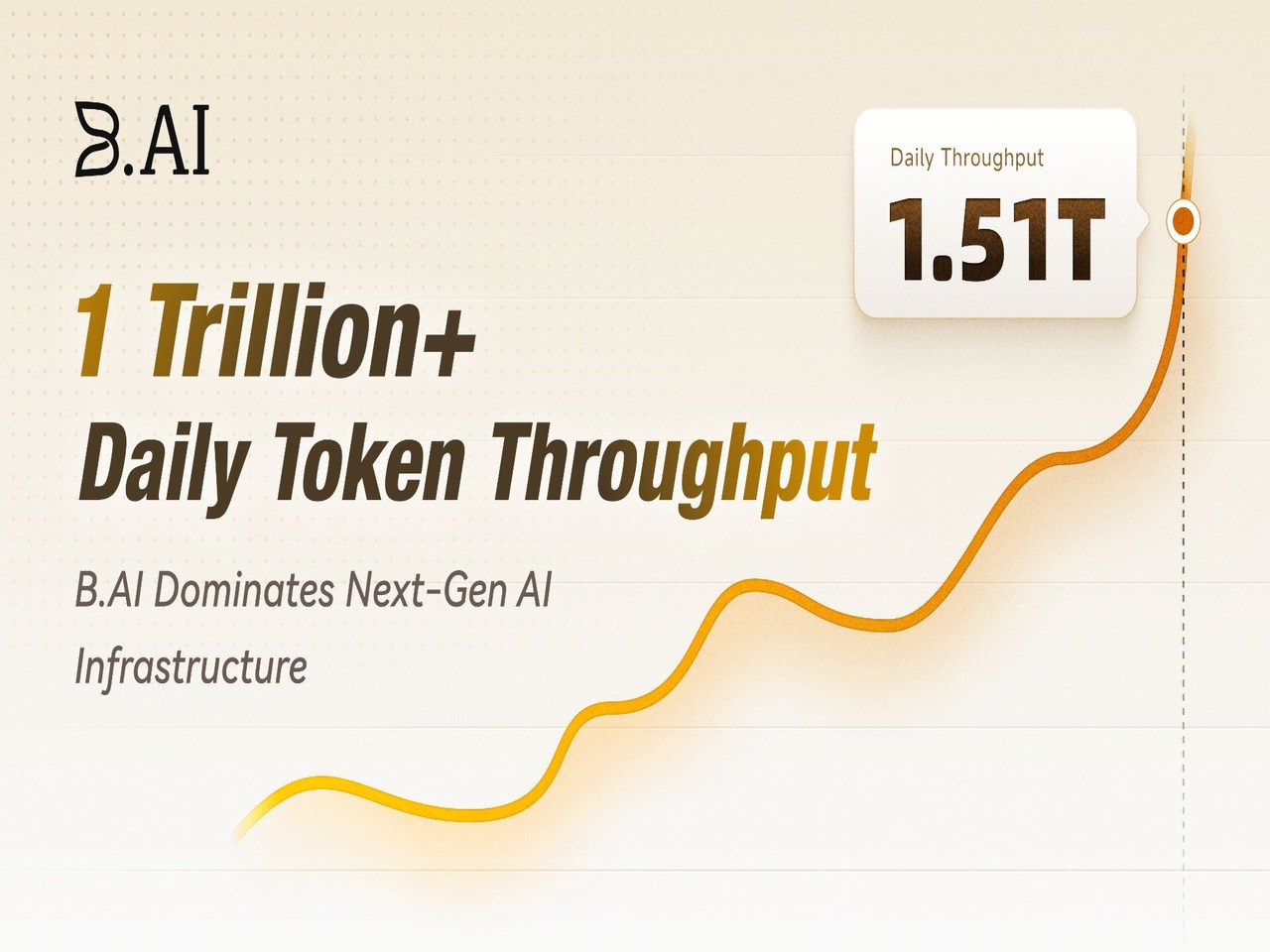
In a remarkable demonstration of rapid scaling, B.AI, an emerging leader in artificial intelligence infrastructure, has officially crossed the threshold of 1.51 trillion tokens in daily throughput. This milestone, achieved just five months after the platform’s public launch, represents an extraordinary growth trajectory of over 71,500 times its initial capacity. By positioning itself as a hybrid bridge between foundation models and autonomous AI agents, B.AI is effectively redefining the architecture of the "agent economy," combining decentralized settlement layers with high-performance compute routing to facilitate a new era of machine-to-machine commerce.
The Chronology of a Market Disruptor
The ascent of B.AI has been characterized by aggressive technical integration and strategic partnerships. Co-incubated by TRON and YZi Labs, the project was designed from its inception to solve the fragmentation inherent in the AI development ecosystem. In the approximately 100 days following its initial deployment, B.AI achieved a scale that previously took industry incumbents, such as OpenRouter, nearly two years to reach.
This rapid expansion can be traced to a dual-pronged strategy: the aggregation of cost-efficient Chinese Large Language Models (LLMs) and the creation of a seamless, cross-border payment architecture. By providing a unified interface for models including DeepSeek, Kimi, Qwen, and GLM, B.AI has positioned itself as the primary gateway for international developers seeking access to high-performance, low-cost Asian AI models. The platform’s ability to synthesize these disparate resources into a singular, high-throughput pipeline has allowed it to capture significant market share in a highly competitive sector.
Analyzing the Infrastructure Growth
The shift toward high-throughput, low-cost inference is a direct response to a fundamental change in developer behavior. As global enterprises and individual developers grapple with the rising costs of AI implementation, the cost-performance advantage offered by Chinese LLMs has become impossible to ignore. Models such as DeepSeek-V4-Flash and Qwen3.8-Flash have consistently outperformed expectations, matching global benchmarks while offering significantly lower API costs.
B.AI has capitalized on this by acting as a distribution hub. Through a combination of tiered API pricing, which features discounts of up to 90%, and time-limited free access to select models, the platform has successfully converted interest into sustained, high-volume usage. Furthermore, the partnership with YZi Labs has provided a secondary, robust distribution engine, ensuring that early-stage developer communities have a streamlined path to integrating these LLMs into their production environments. This ecosystem-driven growth has transformed B.AI from a simple aggregator into a critical nexus for the commercialization of AI.
Bridging Web2 and Web3 for Seamless Settlement
One of the most profound innovations introduced by B.AI is its dual-track payment infrastructure. Recognizing that the future of the agent economy requires a closed financial loop, the platform has integrated Web3-based settlement channels with traditional Web2 payment gateways such as WeChat Pay, Alipay, and Visa.
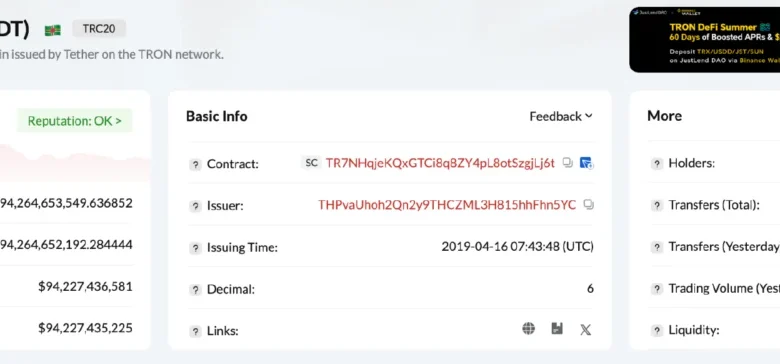
This architecture is deeply rooted in the TRON blockchain ecosystem, which provides the necessary high-frequency transaction capacity. By leveraging the TRC-20 USDT stablecoin—which has seen its supply exceed 94.2 billion as of September 2024—B.AI ensures that cross-border compute scheduling and micropayments occur with minimal friction and maximum liquidity. This capability is essential for autonomous agents that must perform thousands of micro-transactions per second to complete complex, multi-step tasks.

The Architecture of the Agent Economy
The long-term vision of B.AI extends well beyond simple model routing. The platform is currently deploying a full-stack runtime environment specifically designed for AI agents. This environment addresses the "last mile" of the agent economy: the ability for agents to not only process information but to execute actions and settle payments autonomously.
The architecture comprises three distinct layers:
- The Scheduling Layer: Utilizing a tiered API system, B.AI allows developers to allocate compute resources dynamically. This ensures that business-critical applications receive priority while non-essential tasks are routed through more cost-effective channels, optimizing overall operational expenditure.
- The Execution Layer: By providing native toolchains—including "Skills" and "Agent Wallet"—as well as integrated assistants like BAIclaw and BAI code, the platform equips agents with the necessary operational autonomy. These tools allow agents to act as digital workers, performing tasks ranging from data acquisition to code deployment without human intervention.
- The Protocol Layer: Perhaps the most significant development is the integration of standardized protocols for agent-to-agent (A2A) commerce. By adopting the x402 payment protocol and the 8004 identity authentication protocol, B.AI provides a framework for mutual trust. In a decentralized environment, these standards are vital for ensuring that agents can verify the identity of their counterparts and settle transactions in a verifiable, immutable manner.
Broader Implications and Industry Outlook
The transition into the "trillion-token era" signals that the infrastructure for AI is maturing. As autonomous agents become more prevalent, the demand for a standardized, reliable, and high-performance "middle layer" will only increase. By establishing itself as this central hub, B.AI is effectively building the rails upon which the future of AI-driven commerce will travel.
Market analysts observe that this approach solves a significant pain point: the lack of interoperability between different AI models and payment systems. Traditionally, a developer wanting to use multiple models and automated payment systems would need to manage fragmented APIs and disparate banking relationships. B.AI consolidates these processes, reducing the barrier to entry for complex AI applications.

Furthermore, the focus on A2A synergy reflects an industry-wide pivot. While early AI development focused on single-model accuracy, the current focus is on agentic workflows. These workflows require constant, low-latency communication and rapid, small-value transactions. By building a native runtime environment that bridges perception (LLMs), reasoning (agent logic), action (toolchains), and settlement (blockchain), B.AI has created a vertical integration that is difficult for standalone aggregators to replicate.
Conclusion
B.AI’s rapid growth is indicative of a broader shift toward infrastructure-heavy AI solutions. By balancing the need for cost-efficient compute with the requirement for secure, automated financial settlement, the platform has established a blueprint for the next generation of AI services.
As the platform continues to scale, its role as a facilitator of global compute value exchange will likely become even more pronounced. The integration of TRON’s liquidity, combined with the performance of top-tier Chinese and international LLMs, provides a solid foundation for the continued expansion of the agent economy. For developers and enterprises, B.AI represents more than just a model provider; it is an emerging utility for the machine-led economy, setting standards that may soon become the industry norm for high-frequency, autonomous digital commerce.
Moving forward, the industry will watch closely to see if B.AI can maintain this momentum while scaling its governance and protocol standards. If successful, the platform will have cemented its place as the definitive infrastructure layer for an era where intelligence is a tradeable, liquid, and automated commodity.
Related posts: