BellSoft Hardened Images Builder Enhances Paketo Buildpacks Security and Compliance

The integration of BellSoft’s Hardened Images builder into the Paketo Buildpacks project marks a significant advancement in enhancing the security and compliance posture for users within the Cloud Native Computing Foundation (CNCF) ecosystem. This innovative solution aims to streamline the creation of production-ready container images, offering continuous vulnerability management and alleviating common pain points associated with traditional Dockerfile workflows.
Automating Security and Compliance in Containerization
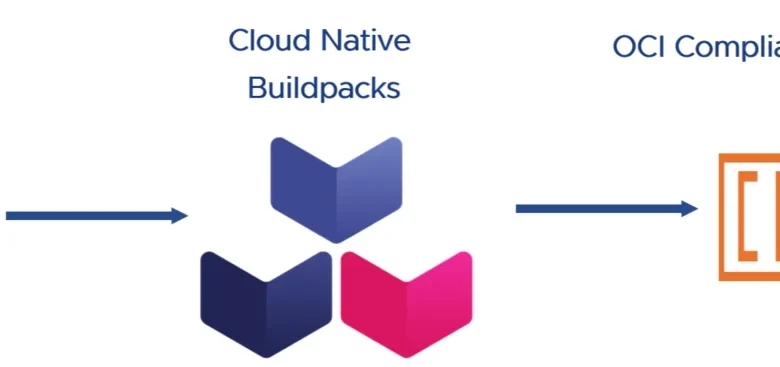
Paketo Buildpacks, an open-source project under the CNCF umbrella, provides a mechanism for automatically transforming application code into container images without the need for manual Dockerfile creation. The core principle of a buildpack involves inspecting application code, identifying and downloading necessary dependencies, compiling code where required, and ultimately producing a runnable OCI (Open Container Initiative) image. This process is designed to be highly automated, simplifying the developer workflow and promoting best practices.
BellSoft’s Hardened Images builder extends this automation by integrating a robust security layer directly into the build process. Traditionally, a buildpack builder bundles a build environment, the buildpacks themselves, and a runtime. BellSoft’s enhancement replaces the standard build environment and runtime with its own Hardened Images. These hardened images are constructed upon BellSoft’s Alpaquita Linux, an operating system specifically engineered for minimal attack surface and maximum security, aiming to be largely CVE (Common Vulnerabilities and Exposures)-free. Consequently, every container image produced using BellSoft’s builder automatically inherits this enhanced security and compliance framework.
Addressing the Dockerfile Vulnerability Crisis
The introduction of BellSoft’s solution comes at a critical juncture, as the industry grapples with the security implications of widespread Dockerfile usage. A recent survey conducted by BellSoft revealed a stark reality: over 60% of developers remain unaware that a poorly written Dockerfile can introduce significant security vulnerabilities into their applications. This lack of awareness, coupled with the inherent complexity of managing numerous Dockerfiles at scale, creates a significant compliance and maintenance burden for organizations.
The proliferation of Dockerfiles, often referred to as "Dockerfile sprawl," leads to a fragmented and error-prone environment. Updating base images or applying security patches becomes a manual, labor-intensive, and often delayed process. Each repository requires individual attention, and the speed of security updates is ultimately dictated by the slowest-acting team. This manual approach not only consumes valuable engineering resources but also leaves systems susceptible to known exploits for extended periods.

BellSoft argues that the buildpack approach fundamentally shifts this paradigm. By abstracting away the complexities of Dockerfile management, developers can focus on writing code. The buildpack tooling automatically detects the programming language, resolves dependencies, and generates a minimal, reproducible OCI image. Crucially, these images are delivered with an integrated Software Bill of Materials (SBOM), providing a transparent and auditable list of all components, libraries, and dependencies included in the image.
The Compounding Advantage of Continuous Vulnerability Management
The true power of BellSoft’s Hardened Images builder lies in its ability to provide continuous vulnerability management. When a vulnerability is identified and patched within BellSoft’s Hardened Images, which are built on Alpaquita OS, the fix is automatically propagated to all applications built using the builder. This seamless update mechanism ensures that every service and team across an organization benefits from the security patch with their next build, regardless of their individual deployment schedules or oversight. This contrasts sharply with the manual patching required for traditional Dockerfile-based workflows, where updates can be missed or delayed.
This automated approach to vulnerability management directly addresses the growing challenge of "scanner fatigue" and the associated costs of inaction. Security and platform engineering teams are often overwhelmed by the sheer volume of vulnerability alerts, the time-consuming process of triaging which vulnerabilities affect which base images, and the complex coordination required to implement patches across disparate teams. BellSoft’s solution aims to offload this burden, allowing these teams to rely on a consistently maintained and secure image baseline.
Official Statements and the Business Case for Security
Alex Belokrylov, CEO of BellSoft, emphasized the business implications of their solution, stating, "Vulnerability management is a business problem, not an engineering one. It deserves a business answer, not the silent accumulation of toil on already-stretched internal teams. Scanner fatigue is real, and so is the cost of ignoring it." He further elaborated on the benefits: "Rather than tracking CVE feeds, triaging which vulnerabilities affect which base images, and coordinating patches across teams, security and platform engineering teams can rely on BellSoft to maintain a clean image baseline. Each published image comes with a full Software Bill of Materials and a verifiable provenance record, making compliance audits straightforward and transparent, and providing the documented evidence that regulators and enterprise procurement teams increasingly demand."
This perspective highlights a shift in how organizations should approach container security. Instead of treating it as solely an engineering challenge, BellSoft positions it as a strategic business imperative that requires scalable, automated solutions. The demand for verifiable provenance and transparent SBOMs is also a growing trend, driven by regulatory pressures and the increasing scrutiny from enterprise clients and procurement departments.
Background and Chronology
The development of BellSoft’s Hardened Images builder builds upon the foundational work of the Paketo Buildpacks project, which has been actively developed and adopted within the cloud-native community. Paketo emerged from the Pivotal and Google collaboration, aiming to provide a more secure and opinionated way to build container images compared to traditional methods. The project officially joined the Cloud Native Computing Foundation in 2020, signaling its growing importance and community support.

BellSoft, a company specializing in Java runtimes and cloud-native solutions, has been a significant contributor to the Paketo ecosystem. Their expertise in building secure and performant Java runtimes, such as Liberica JDK, naturally led to an interest in enhancing the security of the build process itself. The launch of their Hardened Images builder represents a logical extension of their commitment to providing secure and reliable software components for cloud-native environments.
While a specific timeline for the development of the Hardened Images builder isn’t detailed in the provided content, its integration with Paketo Buildpacks suggests a phased rollout and collaboration with the Paketo maintainers. The reference to a "recent BellSoft survey" indicates that this initiative is a current and active development, aimed at addressing immediate industry needs.
Supporting Data and Analysis of Implications
The implications of BellSoft’s Hardened Images builder extend beyond just improved security.
- Reduced Operational Overhead: By automating vulnerability management and eliminating manual Dockerfile maintenance, organizations can significantly reduce the operational burden on their engineering and security teams. This frees up valuable resources to focus on innovation and core business objectives.
- Enhanced Compliance: The provision of detailed SBOMs and verifiable provenance records simplifies compliance audits. This is particularly critical for industries with stringent regulatory requirements, such as finance and healthcare, where demonstrating the security posture of deployed applications is paramount.
- Faster Time-to-Market: Streamlined build processes and automated security updates can accelerate the development lifecycle. Developers can deploy applications with greater confidence, knowing that their container images are built on a secure and continuously managed foundation.
- Mitigation of Supply Chain Risks: The increasing focus on software supply chain security makes solutions like BellSoft’s critical. By providing a hardened and verifiable base image, they help mitigate risks associated with compromised dependencies or insecure build environments.
- Standardization and Interoperability: As a contributor to the Paketo Buildpacks project, BellSoft’s solution aligns with broader industry trends towards standardization in container image creation. This promotes interoperability and reduces vendor lock-in.
The data point from the BellSoft survey, stating that over 60% of developers are unaware of Dockerfile vulnerabilities, underscores a significant knowledge gap. This highlights the educational aspect of BellSoft’s offering, as it not only provides a technical solution but also implicitly raises awareness about critical security best practices.
Broader Impact on the Cloud-Native Landscape
The adoption of BellSoft’s Hardened Images builder within the Paketo Buildpacks ecosystem has the potential to set a new standard for container image security. As more organizations embrace containerization for their applications, the need for robust, automated security solutions will only grow. BellSoft’s approach, which integrates security directly into the build process rather than treating it as an afterthought, is a forward-thinking strategy that aligns with the principles of DevSecOps.
The emphasis on a CVE-free base image and continuous vulnerability management directly addresses the evolving threat landscape. With attackers increasingly targeting software supply chains, having a trusted and well-maintained foundation for container images is no longer a luxury but a necessity. By leveraging open-source projects like Paketo Buildpacks and enhancing them with specialized security features, BellSoft is contributing to a more secure and resilient cloud-native future. The demand for transparent and auditable software components, as highlighted by the mention of SBOMs and provenance, will likely drive further innovation in this space, encouraging other vendors to adopt similar practices. The ongoing development and adoption of such solutions are crucial for the continued growth and trustworthiness of cloud-native technologies.