DoltHub Unveils Dolt 2.0: Revolutionizing Version-Controlled SQL Databases with Enhanced Performance and Storage Optimization

DoltHub has officially launched Dolt 2.0, a landmark release for its open-source, version-controlled SQL database. This significant update introduces a suite of advanced features, most notably automatic storage optimization mechanisms including garbage collection and compression, alongside robust enhancements for managing large and vector data types. The release marks a substantial leap forward for developers and organizations seeking sophisticated data management capabilities that mirror the version control paradigms of software development.
A New Era of Data Versioning: The Evolution of Dolt
Dolt, at its core, is a MySQL-compatible SQL database that integrates Git-style version control directly into its architecture. This unique combination allows users to perform familiar operations like branching, merging, cloning, and diffing on their data. Unlike traditional databases that typically overwrite or append data, Dolt stores information in content-addressed Prolly Trees. This underlying technology is critical for enabling granular, row-level versioning, facilitating efficient structural sharing of data across different versions, and accelerating the processes of diffing and merging datasets.
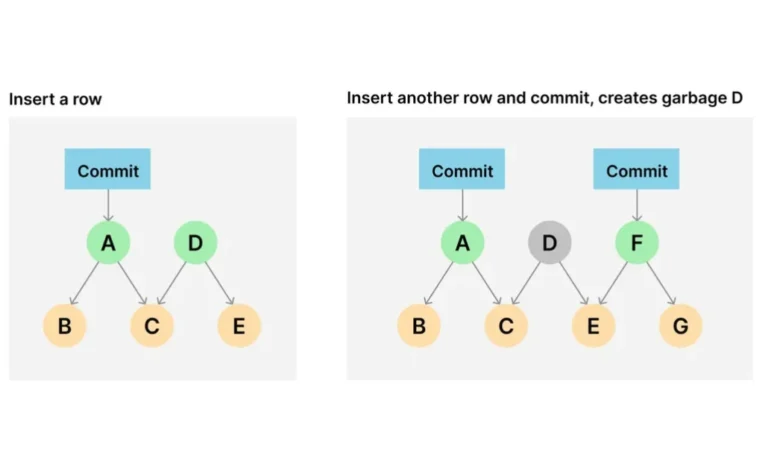
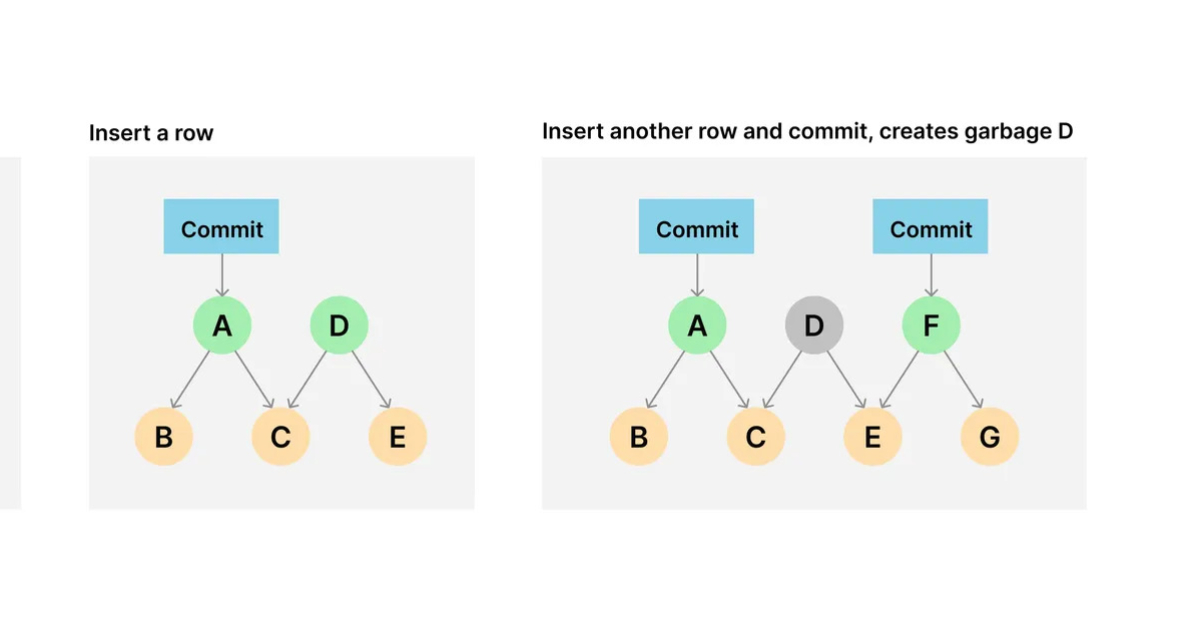
The journey to Dolt 2.0 began three years after the initial major version release. This latest iteration brings a host of improvements designed to address performance bottlenecks and storage inefficiencies that can arise with extensive data versioning. Key among these are the introduction of automated garbage collection and archive compression, both enabled by default. These features are crucial for managing the disk space consumed by version control systems. Dolt’s copy-on-write nature, while powerful for preserving history, can generate significant intermediate data that becomes "garbage" if not properly managed.
Tim Sehn, founder and CEO of DoltHub, elaborated on the critical importance of garbage collection in a statement: "Dolt makes a lot of disk garbage, especially during import. Dolt is copy-on-write so all intermediate committed transaction state is preserved to disk. Any intermediate state that is not in a Dolt commit is garbage and can be collected. Dolt already must preserve all history in the commit graph on disk. Adding extra garbage can eat through your disk very quickly." This highlights a fundamental challenge in version-controlled systems and underscores the necessity of robust garbage collection to maintain operational efficiency and prevent uncontrolled storage growth.
Optimizing Storage and Boosting Performance
A significant technical advancement in Dolt 2.0 is the introduction of a novel on-disk format called "archives." This new format is engineered to drastically reduce storage footprint, with estimates ranging from a 30% to 50% reduction. This is achieved through sophisticated dictionary compression techniques that effectively deduplicate storage across different data versions. The implications for organizations dealing with vast datasets are substantial, potentially leading to significant cost savings in infrastructure and storage management.
The performance enhancements in Dolt 2.0 are equally impressive. Sehn detailed the rigorous benchmarking process undertaken by the DoltHub team, utilizing sysbench, a popular database benchmarking tool. He explained the journey from the initial release to the current state: "We started at about 10X slower on reads and 20X slower on writes than MySQL. We’ve worked tirelessly to improve Dolt’s performance and we are now 13% faster than MySQL on writes and 5% faster on reads." This remarkable turnaround, moving from a performance deficit to a competitive advantage over a widely adopted standard like MySQL, is a testament to the engineering efforts behind Dolt 2.0. These improvements are critical for adoption in performance-sensitive applications.
Embracing the Future of Data: Vector Support and Broader Implications
Dolt 2.0 also marks a significant step into the realm of modern data science with the introduction of beta support for version-controlled vector indexes. Leveraging MariaDB’s Vector type, Dolt aims to be the first database to offer version control capabilities specifically for vector data. Vector databases and vector search are becoming increasingly crucial for applications involving artificial intelligence, machine learning, and natural language processing, enabling efficient similarity searches and complex pattern recognition. The ability to version these vector datasets provides an unprecedented level of control and auditability for AI/ML workflows.
The announcement states that Dolt is the only database currently offering version control for vectors. The beta status is expected to be lifted once any remaining read-path gaps are addressed, signaling a strong commitment to maturing this feature. This positions Dolt as a potentially indispensable tool for organizations developing and deploying AI-powered applications, where tracking the evolution of data used for training and inference is paramount.
The Competitive Landscape of Data Versioning
While Dolt offers a unique approach by integrating version control directly into a SQL database, it operates within a growing ecosystem of data versioning solutions. Other prominent projects are also tackling the challenge of managing data without incurring massive duplication. LakeFS, for example, provides a data version control solution specifically designed for data lakes, offering Git-like semantics for object storage. Nessie, another significant player, functions as a transactional catalog for data lakes, also adopting Git-like operational models.
Dolt’s advantage lies in its direct SQL interface and MySQL compatibility, making it readily accessible to a broad range of developers and database administrators. For those who prefer the PostgreSQL ecosystem, DoltgreSQL offers a PostgreSQL-compatible version of Dolt. While sharing the same underlying storage engine and version control interfaces, DoltgreSQL is currently in beta.
The broader trend towards Git-like workflows in data management has been explored by thought leaders. Simon Späti, in a series of articles, has articulated the benefits of such an approach. He argues that "Git-like workflows are becoming table stakes. Maybe not today or tomorrow, but with the right tools and changes in workflow we can achieve significantly better change management, testing on production data, fast rollbacks, isolated experiments, and most importantly, peace of mind when deploying changes." This perspective highlights the strategic value of version control beyond mere data backup, emphasizing its role in improving development agility, data governance, and operational confidence.
Availability and Licensing
Dolt 2.0 is now available on GitHub under the permissive Apache 2.0 license. This open-source licensing model encourages widespread adoption and community contributions, further accelerating the development and evolution of the platform. The availability of Dolt on GitHub allows developers to inspect the code, contribute to its development, and integrate it seamlessly into their projects.
Looking Ahead: The Impact of Dolt 2.0
The release of Dolt 2.0 represents a significant advancement in the field of data management. By combining the power of SQL databases with the robust version control capabilities of Git, Dolt addresses a critical need for better data governance, reproducibility, and agility. The emphasis on automatic storage optimization, coupled with substantial performance gains and the introduction of beta vector support, positions Dolt as a compelling solution for a wide range of applications, from traditional business intelligence to cutting-edge AI development.
The implications of Dolt 2.0 extend to various industries. In finance, it can provide auditable transaction histories and facilitate rapid rollbacks. In scientific research, it enables reproducible experiments by versioning datasets and analysis parameters. For software development teams, it allows for testing changes on production-like data without risking live systems. The ability to manage data with the same confidence and control as code is a paradigm shift that Dolt 2.0 is actively driving.
As data volumes continue to explode and the complexity of data-driven applications grows, tools like Dolt will become increasingly indispensable. The focus on user experience, performance, and advanced features like vector support ensures that Dolt is not just a niche tool but a significant contender in the database and data management landscape. The open-source nature of Dolt further democratizes access to these advanced capabilities, empowering a global community of developers and data professionals to build more reliable, transparent, and efficient data systems. The journey from a novel concept to a high-performance, feature-rich database like Dolt 2.0 underscores the rapid innovation occurring in the data infrastructure space.