Google Unveils Free Industry-Specific AI Training Bundles for Financial and Legal Professionals to Master Gemini and Autonomous Agents

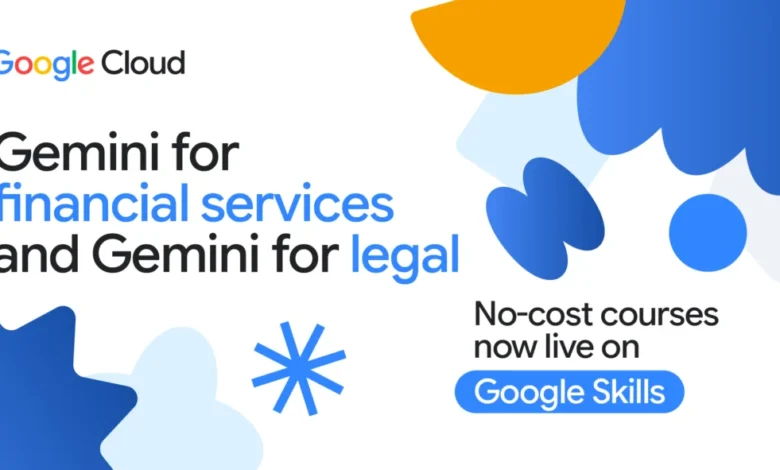
The modern workplace is undergoing a profound transformation driven by rapid advancements in artificial intelligence, pushing professionals across all sectors to adapt or risk obsolescence. In response to this shifting landscape, Google Skills has announced the immediate release of new, industry-tailored video learning bundles designed to help workers integrate Gemini and autonomous AI agents into their daily routines. Aimed specifically at the financial services and legal sectors, these comprehensive educational resources are available entirely free of charge on the Google Skills platform. As corporations increasingly look toward generative artificial intelligence to streamline operations, reduce human error, and handle massive data influxes, this initiative provides a crucial bridge between theoretical AI capabilities and practical, day-to-day execution.
The rollout comes at a pivotal moment for knowledge workers who face mounting pressure to produce higher outputs under tighter deadlines. Whether managing complex global market portfolios, navigating rigorous regulatory compliance reviews, or drafting intricate legal agreements, professionals are often bogged down by administrative and repetitive tasks. Google’s new bite-sized video courses are strategically structured to address these exact pain points. By demonstrating how agentic AI can shoulder the burden of heavy data processing, the tech giant aims to empower workers to focus on higher-level strategic decision-making.
Bridging the Knowledge Gap in High-Stakes Industries
The introduction of these specialized learning modules reflects a broader strategy by technology leaders to democratize access to advanced artificial intelligence tools. Historically, specialized AI applications required extensive technical training, custom programming knowledge, or substantial corporate budgets to deploy effectively. By packaging these capabilities into accessible, use-case-driven video formats, Google is attempting to lower the barrier to entry for non-technical professionals operating in highly regulated and complex fields.
The curriculum is built around familiar, real-world scenarios rather than abstract technological concepts. This pedagogical approach ensures that learners can immediately connect the lessons to their professional responsibilities. For instance, a financial analyst struggling to parse hundreds of pages of Securities and Exchange Commission (SEC) filings or a corporate attorney reviewing dense regulatory updates can quickly learn how to leverage Gemini to synthesize this information in a fraction of the traditional time.
Transforming Financial Services Through Real-Time AI Integration
Financial analysts, portfolio managers, and advisors operate in an environment defined by volatility, enormous volumes of real-time market data, and unforgiving time constraints. The margin for error is razor-thin, and the speed at which information is processed can dictate the success or failure of an investment strategy or client relationship.
To illustrate the practical application of the new financial services bundle, Google highlights a common high-pressure scenario: a financial advisor preparing for an introductory meeting with a high-net-worth client with only twenty minutes to spare. Traditionally, thoroughly reviewing hundreds of pages of compliance documents, historical market performance data, and regulatory disclosures within that timeframe would be functionally impossible. However, by utilizing Gemini for financial services, professionals can ingest, analyze, and summarize vast quantities of complex textual and numerical data in mere minutes.
The financial services learning bundle covers three primary operational pillars designed to turn market complexity into clarity:
- Rapid Document Synthesis: Automating the review of lengthy financial reports, earnings transcripts, and regulatory filings to extract key insights instantly.
- Market Trend Analysis: Leveraging natural language prompts to synthesize macroeconomic indicators and fluctuating risk profiles into actionable intelligence.
- Client Preparation and Communication: Streamlining the creation of personalized briefing documents, portfolio summaries, and compliance-checked advisory notes.
By embedding these capabilities into everyday workflows, financial institutions can potentially accelerate decision-making cycles, reduce operational bottlenecks, and enhance the overall quality of client advisory services without expanding headcount.
Equipping the Legal Profession for the Age of Agentic AI
Parallel to the financial sector, the legal profession is uniquely positioned to benefit from the advent of generative artificial intelligence and agentic workflows. Legal practitioners spend a significant portion of their billable hours conducting exhaustive case research, reviewing voluminous discovery documents, performing contract analysis, and ensuring strict adherence to evolving regulatory frameworks.
The legal-focused learning bundle on Google Skills is meticulously crafted to address these labor-intensive processes. While legal professionals cannot afford errors, the sheer volume of documentation associated with modern litigation and corporate transactions often stretches human teams to their absolute limits. Agentic AI—systems capable of not just answering queries, but executing multi-step workflows autonomously—represents a paradigm shift for law firms and corporate legal departments.
Through the newly released video modules, legal professionals learn how to deploy Gemini to cross-reference legal precedents, summarize deposition transcripts, draft initial contract clauses, and conduct preliminary compliance checks. Crucially, the training emphasizes how lawyers can maintain rigorous oversight while leveraging AI to handle the heavy lifting of document discovery and synthesis. This allows attorneys to dedicate more time to core legal reasoning, client advocacy, and strategic negotiation.
The Evolution and Chronology of Google’s Educational Initiatives
Google’s latest move is part of a multi-year, strategic effort to upskill the global workforce in response to the generative AI boom that accelerated dramatically following the public launch of foundational models in late 2022. Over the past twenty-four months, technology providers, academic institutions, and enterprise organizations have recognized that software deployment alone is insufficient; human capital must evolve concurrently with the technology.
In 2023, as businesses began experimenting with early-stage generative AI tools, the primary focus was on basic prompt engineering and general productivity enhancements, such as drafting emails or summarizing short texts. By 2024, the industry matured rapidly, shifting toward multimodal capabilities, enterprise-grade security, and specialized domain models.
The introduction of industry-specific training bundles in early 2026 marks the next logical phase in this evolution. Recognizing that a generic approach to AI education no longer satisfies the nuanced demands of specialized sectors like finance and law, Google has pivoted toward verticalized learning paths. This chronology highlights a deliberate transition from generalized awareness campaigns to targeted, competency-based workforce transformation programs.
Industry Data and the Macroeconomic Imperative for AI Literacy
The push toward specialized AI training is heavily backed by macroeconomic data and enterprise demand. According to recent workforce studies by leading global management consultancies, a vast majority of corporate leaders view artificial intelligence literacy as a top hiring and retention priority. However, a corresponding "skills gap" persists, with many employees reporting that they lack formal training on how to effectively integrate these tools into their specific job functions.

In the financial sector, studies indicate that professionals spend up to 30% of their working hours searching for and processing unstructured data. Automating even a fraction of this administrative overhead through generative AI tools translates to billions of dollars in reclaimed productivity globally. Similarly, in the legal sector, technology adoption surveys reveal that firms actively utilizing AI-assisted document review tools report substantial reductions in turnaround times for routine filings and due diligence projects.
Despite these promising figures, adoption rates have occasionally stalled due to employee intimidation, concerns over data privacy, and a lack of structured guidance on how to begin. By offering free, bite-sized, and industry-tailored video courses, Google Skills aims to dismantle these psychological and educational barriers, encouraging widespread experimentation and adoption across organizations of all sizes.
Broader Implications for the Future of Knowledge Work
The widespread availability of free, high-quality training for tools like Gemini carries profound implications for the future of knowledge work. As artificial intelligence systems evolve from passive assistants into proactive, autonomous agents capable of executing complex, multi-step workflows, the definition of core professional competencies is shifting.
For financial analysts and legal practitioners, technical proficiency with AI is rapidly transitioning from a nice-to-have resume bullet to an essential core competency. Educational institutions, professional certification bodies, and continuing education programs will likely need to incorporate similar curricula into their standard offerings to remain relevant.
Furthermore, this democratization of advanced technological training helps level the playing field between large enterprises with dedicated internal training divisions and smaller firms or solo practitioners. A boutique law firm or an independent financial advisory practice now has access to the same foundational educational resources as a multinational corporation, enabling them to harness agentic AI to scale their operations efficiently.
Accessing the Resources and Looking Ahead
The newly released video learning bundles are accessible immediately through the Google Skills platform at no financial cost. By visiting the platform, professionals can navigate directly to the dedicated financial services or legal paths, where the curated video courses are organized for seamless self-paced learning.
As Google and other technology leaders continue to refine their artificial intelligence ecosystems, the educational landscape will undoubtedly continue to expand. Future updates to the Google Skills platform are expected to incorporate additional industry verticals—such as healthcare, retail, and manufacturing—as agentic AI capabilities mature and penetrate deeper into various segments of the global economy.
Ultimately, the success of the artificial intelligence revolution will not be measured solely by the raw computational power of the underlying models, but by how effectively human workers can collaborate with these systems to solve complex problems. By providing free, targeted education that addresses the unique pressures of the financial and legal professions, Google’s latest initiative represents a significant step forward in preparing the global workforce for an increasingly automated and intelligent future.
Related posts: