Microsoft Foundry Powers Production-Ready AI Agents with General Availability of Key Updates


Microsoft is accelerating the adoption of artificial intelligence in enterprise environments with the general availability of significant updates to Microsoft Foundry, its end-to-end platform for building, running, governing, and distributing AI agents. These enhancements aim to bridge the gap between AI experimentation and tangible business value by enabling organizations to deploy reliable, observable, and business-outcome-aligned AI systems. Over 100,000 organizations are already leveraging Microsoft Foundry, with prominent companies like Adobe, Telefónica, and Tata Consultancy Services actively running agents in production.
The advancements, announced at the recent Microsoft Build conference, address a core promise for the emerging agentic era: empowering developers to build agents within their existing workflows, deploy them on trusted infrastructure, and seamlessly integrate them with end-users, all without the need for complex integrations between disparate platforms. This strategic move transitions Microsoft Foundry’s vision from roadmap to reality, offering a unified platform for frontier AI models, robust production agent runtimes, enterprise-grade identity and security controls, and broad distribution across Microsoft 365.
Foundry’s Pillars: Building, Running, and Governing AI Agents
Microsoft Foundry positions itself as the premier platform for developing AI agents, built upon three foundational pillars:
- Build: Enabling developers to craft AI agents using familiar tools and frameworks, seamlessly integrating with existing development environments like GitHub Copilot and Microsoft Visual Studio Code. The platform supports a variety of agent development frameworks, including Microsoft Agent Framework and the GitHub Copilot SDK.
- Run: Providing a robust and scalable infrastructure for deploying and operating AI agents in production. This includes access to a wide range of leading AI models, flexible deployment options across global regions and data zones, and built-in capabilities for managing runtime environments.
- Govern: Ensuring that AI agents are deployed responsibly and ethically, with comprehensive controls for security, compliance, observability, and cost management. This pillar focuses on providing organizations with the tools to monitor agent performance, optimize resource utilization, and demonstrate return on investment.
These pillars are integrated within Microsoft Foundry, offering a cohesive experience that allows organizations to move from initial concept to scaled production deployment without the friction of piecing together disconnected services.
Empowering Development with Flexible Model and Framework Integration
The agent development process is designed to be intuitive, starting within established developer environments. The Foundry Toolkit for VS Code and the Foundry skill facilitate the deployment of agents directly to Foundry. Whether development leverages the Microsoft Agent Framework, the GitHub Copilot SDK (now generally available), or the Claude Agent SDK, Foundry serves as the ultimate production destination.
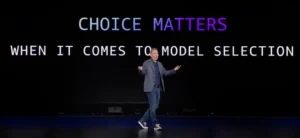
A critical aspect of agent capability lies in the underlying reasoning model. Microsoft Foundry provides access to a diverse portfolio of industry-leading frontier, open-source, and task-specific models through a single, unified platform. This allows teams to select the most appropriate model for each specific workload, optimizing for performance, cost, and specialized functionalities.
General Availability of GPT-5.6 Series in Microsoft Foundry
A significant highlight of the recent updates is the general availability of OpenAI’s GPT-5.6 series within Microsoft Foundry Models and Microsoft Foundry Agent Service. This latest iteration of OpenAI’s powerful language models offers enhanced capabilities, including:
- Advanced Reasoning and Contextual Understanding: GPT-5.6 demonstrates improved ability to comprehend complex instructions and maintain context over longer interactions, crucial for sophisticated agent applications.
- Multimodal Capabilities: The series introduces enhanced support for processing and generating information across various modalities, opening doors for agents that can interact with and understand richer data inputs.
- Fine-tuning and Customization: Developers can further tailor GPT-5.6 models to their specific business needs through advanced fine-tuning options, ensuring agents are precisely aligned with organizational objectives.
The GPT-5.6 series provides organizations with the flexibility to match model capabilities, cost structures, and performance requirements to distinct business scenarios, moving away from a one-size-fits-all approach.
Global Deployment and Data Sovereignty with APAC Data Zone
Microsoft is committed to making cutting-edge AI accessible where businesses operate. The GPT-5.6 series is now available across 28 global regions through Global Standard, Global Priority Processing, Data Zones Standard, and Global Provisioned deployment options. This ensures customers can adopt the latest AI innovations within their existing infrastructure, adhering to their regional deployment and scalability strategies.
Complementing this global reach, Microsoft Foundry is also announcing the general availability of the Asia-Pacific (APAC) Data Zone. This crucial development allows organizations in the APAC region to run frontier OpenAI models while ensuring that data processing remains within regional boundaries. This eliminates the need for complex environment stitching and addresses growing concerns around data sovereignty and compliance in the region.
The availability of Global, Data Zone, and Regional deployment options within Foundry empowers organizations to align their AI adoption strategies with their specific sovereignty, compliance, performance, and scale requirements, all while maintaining a consistent development and operational experience.
Hongsoo Kim, Chief Data and AI Officer (CDAO) at Viva Republica (Toss), commented on the significance of the APAC Data Zone: "As financial institutions adopt AI, responsible data handling becomes foundational to trust. Microsoft Foundry’s APAC Data Zone allows us to keep data processing regionally anchored while accessing advanced AI models at scale. This gives us the confidence to accelerate AI innovation responsibly and reinforces our ambition to be a leading AI-powered financial platform in Asia."
From Capable Models to Actionable Agents
A powerful AI model is merely the foundation. To deliver tangible value in production, an agent requires a robust operational framework. Microsoft Foundry addresses this by providing integrated capabilities for:
- Production Runtime: A stable and scalable environment for agents to execute their tasks.
- Business Knowledge Integration: The ability for agents to access and utilize an organization’s proprietary data and knowledge bases.
- Tool Governance: Secure and managed access to a comprehensive suite of tools that agents can leverage to perform actions.
- Persistent Memory: Mechanisms for agents to retain context and learning across multiple interactions, enabling more sophisticated and personalized user experiences.
- Event-Driven Action: The capability for agents to respond to and act upon real-world events, automating workflows and driving proactive engagement.
- User Distribution: Seamless integration with user-facing applications and platforms, including Microsoft 365, to ensure agents reach the intended audience.
These built-in capabilities are designed to work in concert, simplifying the process of transforming a conceptual AI model into a fully functional and impactful production agent.
Governing and Optimizing the AI Lifecycle
The ability to see, improve, and secure an AI agent is paramount for production deployment. Microsoft Foundry prioritizes trust as a core platform tenet, shifting responsibility from individual developers to a comprehensive platform approach. Recent updates focus on enhancing the post-build lifecycle of agents, providing critical insights into their performance, facilitating continuous improvement, and demonstrating their value.
Key enhancements in this release include:
- Observability and Telemetry: Comprehensive logging and monitoring of agent interactions, performance metrics, and resource utilization. This allows teams to gain deep insights into how agents are functioning in real-world scenarios.
- Evaluation Frameworks: Tools for systematically assessing agent performance against predefined metrics and business objectives. This enables data-driven decision-making for agent refinement and optimization.
- Cost Management and Optimization: Integrated tools to track and manage AI spending. As agents scale, Foundry provides levers to maintain predictable costs without requiring migration to separate cost management platforms. This includes features like:
- Model Router: Intelligently matches each request to the most suitable model based on predefined criteria, balancing performance and cost.
- Prompt Caching: Reduces redundant computations by storing and reusing results of frequently encountered prompts.
- PTU Spillover and Quota Optimization: Ensures service continuity during usage spikes by dynamically managing provisioned throughput units and optimizing quota allocation.
- Toolboxes: A feature that ensures agents only access the specific tools required for a given request, enhancing efficiency and security.
- Agent Optimizer: A tool designed to fine-tune prompts, skills, tools, and model choices against an organization’s specific evaluators, leading to improved performance and cost-effectiveness.
- Return on Investment (ROI) Tracking: A unified view that connects business value, usage data, and operational costs. This provides clear visibility into whether production agents are generating more value than they consume, identifying areas where cost optimization or value enhancement is needed.
A detailed exploration of token economics for agents is available in a new Microsoft Mechanics episode, offering practical insights into optimizing AI spend.
Real-World Impact: Organizations Deploying Agents on Foundry
The adoption of Microsoft Foundry extends beyond experimentation, with a diverse range of organizations actively deploying agents to drive business outcomes. From digital-native startups to established global enterprises, the common thread is a significant acceleration in deployment timelines. Teams that previously spent weeks integrating, securing, and deploying agents are now achieving these milestones in days, leveraging infrastructure that meets stringent compliance requirements and reaching users through trusted, familiar tools.
Getting Started with Microsoft Foundry
All the capabilities discussed are now live and accessible within Microsoft Foundry. Developers can begin their journey by consulting the comprehensive documentation and Microsoft Learn courses. A quickstart guide is available to walk through the setup, testing, and end-to-end deployment of a production-ready hosted agent, enabling developers to get started in minutes.
For a structured learning path, the "AI Agents for Beginners" curriculum offers 12 lessons, complemented by guided labs such as "Develop AI Agents in Azure," "Hosted Agents Workshop (.NET)," the "Foundry Toolkit for VS Code and hosted agents workshop," and the "ZavaShop Supply Chain Workshop." To ensure the quality of deployed agents, the guide "Evaluating AI Agents: A Practical Guide with Microsoft Foundry" provides valuable insights.
A deep dive into operationalizing AI agents from deployment to real-world impact is presented in the "Foundry Agent Service + Microsoft Agent Framework Explained" video featuring Jeff Hollan. This resource offers a comprehensive walkthrough of the end-to-end agent lifecycle within the Microsoft Foundry ecosystem.
Related posts: