Microsoft Foundry Unveils General Availability of GPT-5.6, APAC Data Zone, and Hosted Agents, Ushering in a New Era of Production AI


Microsoft Foundry, the company’s comprehensive platform for building, running, governing, and distributing AI agents, has officially launched the general availability of GPT-5.6 models, the Asia-Pacific (APAC) Data Zone, and hosted agents within its Agent Service. This significant expansion aims to empower over 100,000 organizations already leveraging Foundry to move AI initiatives from experimentation to robust production environments with enhanced reliability, observability, and alignment to business outcomes. Industry leaders such as Adobe, Telefónica, and Tata Consultancy Services are already utilizing agents in production through the platform, underscoring the growing demand for enterprise-grade AI solutions.
The announcement, made in conjunction with the ongoing evolution of AI development, directly addresses a core promise made at Microsoft Build: enabling developers to build agents within their existing workflows, deploy them on trusted infrastructure, and seamlessly integrate them with end-users without the need for complex, disconnected platform integrations. This latest suite of updates transforms that vision into a tangible reality, consolidating frontier models, production agent runtimes, and enterprise-grade security and compliance controls into a single, cohesive platform. The integration extends across Microsoft 365, promising a streamlined path to AI deployment and adoption.
Foundry: The Premier Platform for Production AI Agents
Microsoft Foundry is architected around three fundamental pillars designed to support the entire lifecycle of AI agent development and deployment:
- Build: Providing developers with familiar tools and flexible frameworks to create sophisticated AI agents.
- Run: Offering a reliable and scalable infrastructure for agent execution, integrated with enterprise-grade security and compliance.
- Distribute: Enabling seamless integration of agents into existing workflows and applications, reaching end-users where they work.
These pillars are now further strengthened by the newly available capabilities, allowing organizations to not only develop but also effectively run and scale production AI agents from a unified platform.
Empowering Development: Frameworks, Models, and Developer Tools
The agent development process within Foundry begins where developers are most comfortable, leveraging tools like GitHub Copilot and Microsoft Visual Studio (VS) Code. The Foundry Toolkit for VS Code and the Foundry skill streamline the deployment process, ensuring a smooth transition from code to production. Foundry supports a diverse range of development frameworks, including Microsoft Agent Framework, the GitHub Copilot SDK (now generally available), and the Claude Agent SDK, positioning itself as the ultimate production destination for agents built with any of these technologies.
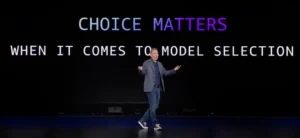
Crucially, the capability of an agent is intrinsically linked to the sophistication of its underlying model. Microsoft Foundry addresses this by providing access to a broad spectrum of industry-leading models, encompassing frontier AI, open-source options, and specialized task-specific models. This allows organizations to select the most appropriate model for each unique workload, optimizing for performance, cost, and specific business needs.
Introducing GPT-5.6: A New Benchmark in Model Performance and Accessibility
The general availability of OpenAI’s GPT-5.6 series within Microsoft Foundry Models and Microsoft Foundry Agent Service marks a significant milestone. This new generation of models is designed to offer unparalleled flexibility, enabling businesses to precisely match model capabilities to their specific operational requirements. The GPT-5.6 series includes:
- GPT-5.6 Sol: Positioned as the most advanced iteration, offering peak performance for complex and demanding tasks.
- GPT-5.6 Terra: A balanced option providing strong performance and cost-effectiveness for a wide range of applications.
- GPT-5.6 Luna: Optimized for efficiency and speed, ideal for high-throughput scenarios and cost-sensitive operations.
This tiered approach liberates organizations from the constraint of using a single, monolithic model for all tasks, fostering more agile and cost-efficient AI deployment strategies. Microsoft’s commitment to model accessibility is further demonstrated by making GPT-5.6 available across 28 global regions through Global Standard and Global Priority Processing options, alongside Data Zones Standard and Global Provisioned deployments from day one. This ensures that customers can immediately leverage the latest AI innovations in their existing deployed infrastructures.
GPT-5.6 Pricing Structure (USD per million tokens):
| Model | Deployment | Input | Output |
|---|---|---|---|
| GPT-5.6 Sol | Standard Global | 5.00 | 30.00 |
| GPT-5.6 Terra | Standard Global | 2.50 | 15.00 |
| GPT-5.6 Luna | Standard Global | 1.00 | 6.00 |
This transparent pricing model allows businesses to forecast and manage their AI expenditures effectively.
Expanding Global Reach: The Asia-Pacific Data Zone
Complementing the advancements in model availability is the general availability of the Asia-Pacific (APAC) Data Zone for Microsoft Foundry. This strategic expansion addresses the critical need for regional data sovereignty and compliance, allowing organizations within the APAC region to deploy and utilize frontier OpenAI models while ensuring that data processing remains within designated Asia-Pacific boundaries. This eliminates the complexities of managing separate environments or waiting for regional feature parity, providing a seamless and compliant AI experience.
With global, data zone, and regional deployment options, Foundry empowers organizations to align their AI strategies with specific sovereignty, regulatory, performance, and scalability mandates. This flexibility is crucial for businesses operating in diverse regulatory landscapes.
Hongsoo Kim, Chief Data and AI Officer (CDAO) at Viva Republica (Toss), commented on the impact of the APAC Data Zone: "As financial institutions adopt AI, responsible data handling becomes foundational to trust. Microsoft Foundry’s APAC Data Zone allows us to keep data processing regionally anchored while accessing advanced AI models at scale. This gives us the confidence to accelerate AI innovation responsibly and reinforces our ambition to be a leading AI-powered financial platform in Asia."
From Capable Models to Actionable Intelligence: The Agent Runtime
A powerful model is only one component of a production-ready AI agent. Foundry provides a robust runtime environment that includes essential capabilities for enterprise deployment:
- Secure Execution: Agents run within a trusted, managed infrastructure, ensuring data security and operational integrity.
- Contextual Awareness: Agents can maintain memory across interactions, enabling more sophisticated and personalized user experiences.
- Action Orientation: Agents are designed to act on real-world events and integrate with business processes.
- Tool Integration: Secure and governed access to a wide array of tools and services that agents can leverage.
- Distribution Channels: Seamless integration with Microsoft 365 and other enterprise applications for broad user reach.
These built-in functionalities, designed to work harmoniously, are crucial for transforming raw AI capabilities into tangible business value.
Governance and Optimization: Ensuring Trust and Efficiency
Putting AI agents into production necessitates robust governance, observability, and optimization capabilities. Foundry prioritizes trust as a core platform tenet, shifting responsibility from individual developers to the platform itself. The latest updates enhance the post-development lifecycle by providing:
- Observability: Deep insights into agent performance, behavior, and usage patterns, enabling continuous improvement.
- Security and Compliance: Enterprise-grade controls that ensure agents operate within defined security policies and regulatory frameworks.
- Cost Management: Tools to monitor and control AI spending, ensuring predictable costs even at scale.
- Performance Optimization: Features designed to enhance agent efficiency and responsiveness.
Key Optimization Features:
Foundry offers a suite of tools to manage and optimize AI agent costs and performance:
- Model Router: Dynamically directs requests to the most suitable model based on predefined criteria, balancing cost and performance.
- Prompt Caching: Reduces redundant computations by storing and reusing frequently encountered prompts, saving processing time and cost.
- PTU Spillover and Quota Optimization: Ensures service continuity during peak usage periods by intelligently managing request flow and resource allocation.
- Toolboxes in Foundry: Enables agents to access only the specific tools required for a given request, minimizing overhead.
- Agent Optimizer: Allows fine-tuning of prompts, skills, tools, and model choices against custom evaluators to maximize agent effectiveness and efficiency.
Beyond cost control, Foundry provides ROI for Agents, a comprehensive view that links business value, usage metrics, and operational costs. This allows organizations to quantify the impact of their AI investments and identify areas where cost may be outpacing value.
A recent Microsoft Mechanics episode delves deeper into the "token economics" of agents, offering practical guidance on optimizing AI spending.
Real-World Impact: Organizations Building with Foundry
The adoption of Microsoft Foundry extends beyond experimentation, with numerous organizations actively deploying AI agents to drive tangible business results. From agile digital natives to established global enterprises, the common thread is a significantly accelerated deployment cycle. Teams that previously spent weeks integrating, securing, and deploying agents are now achieving these milestones in mere days. This rapid deployment, coupled with adherence to stringent compliance standards and integration with familiar user tools, is transforming how businesses leverage AI.
Prominent examples of organizations actively building and deploying on Foundry include:
- Adobe: Leveraging Foundry to enhance its suite of creative and marketing solutions with intelligent automation.
- Telefónica: Utilizing Foundry to streamline operations and improve customer experiences within its telecommunications network.
- Tata Consultancy Services (TCS): Integrating Foundry into its service offerings to accelerate AI adoption for its global enterprise clients.
- Viva Republica (Toss): Demonstrating the power of regional data compliance with the APAC Data Zone for its financial platform.
These deployments highlight the platform’s versatility across various industries and use cases, from customer service and operational efficiency to complex data analysis and creative workflows.
Getting Started with Microsoft Foundry
All the capabilities discussed are currently live and accessible within Microsoft Foundry. Microsoft provides extensive resources for developers looking to get started:
- Documentation and Microsoft Learn: Comprehensive guides and courses are available to facilitate learning and adoption.
- Quickstart Guides: Developers can begin building, testing, and deploying production-ready hosted agents within minutes through guided quickstart tutorials.
- Learning Curricula and Workshops: A 12-lesson curriculum, "AI Agents for Beginners," alongside guided labs like "Develop AI Agents in Azure" and specific workshops for the Foundry Toolkit for VS Code, offer structured learning paths.
- Practical Guides: Resources such as "Evaluating AI Agents: A Practical Guide with Microsoft Foundry" provide best practices for ensuring AI quality.
- Explanatory Videos: Content like "Foundry Agent Service + Microsoft Agent Framework Explained" offers in-depth walkthroughs of operationalizing AI agents from deployment to real-world impact.
The continuous evolution of Microsoft Foundry, marked by the general availability of GPT-5.6, the APAC Data Zone, and hosted agents, signifies a pivotal moment in enterprise AI. By providing a unified, secure, and scalable platform, Microsoft is empowering organizations worldwide to unlock the full potential of AI agents and drive significant business value.
Related posts: