New Dolphin X Remote Access Trojan Leverages AI Profiling to Prioritize High-Value Victims

A sophisticated new remote access trojan (RAT) dubbed "Dolphin X" has emerged on cybercrime forums, distinguished by its alleged "AI-powered profiling" feature designed to score and rank infected users, thereby enabling cybercriminals to efficiently identify and target the most lucrative victims. This development marks a significant escalation in the use of artificial intelligence within malicious software, shifting AI’s role from content generation to strategic operational intelligence for threat actors.
Unveiling a Potent Threat: Dolphin X’s Extensive Capabilities
The Dolphin X malware was brought to light following an in-depth analysis by Daniel Kelley, a researcher at Varonis Threat Labs. Kelley discovered the RAT being actively advertised and promoted on a prominent cybercrime forum by a vendor operating under the pseudonym "Kontraktnik." The vendor positioned Dolphin X as an "all-in-one remote access trojan," indicating a comprehensive suite of functionalities aimed at maximizing data exfiltration and control over compromised systems.
According to Varonis’s examination of the Dolphin X operator panel, the malware boasts an alarming array of 329 distinct features, meticulously categorized across ten functional areas. Among its core capabilities is an aggressive credential-stealing module, which claims to target an extensive list of over 300 different applications. This broad targeting spectrum includes critical software widely used by individuals and organizations alike, such as various Chromium and Gecko-based web browsers (estimated to be at least nine different types), a vast collection of approximately 100 cryptocurrency wallet extensions, 65 desktop cryptocurrency wallets, at least 10 popular password managers, and more than 30 cloud command-line tools. Beyond these applications, Dolphin X is also designed to pilfer sensitive files like .env files, SSH keys, cloud access tokens, comprehensive browser login data, and a wide array of other developer credentials, presenting a significant threat to intellectual property and critical infrastructure access.
The Dawn of AI-Driven Victim Prioritization
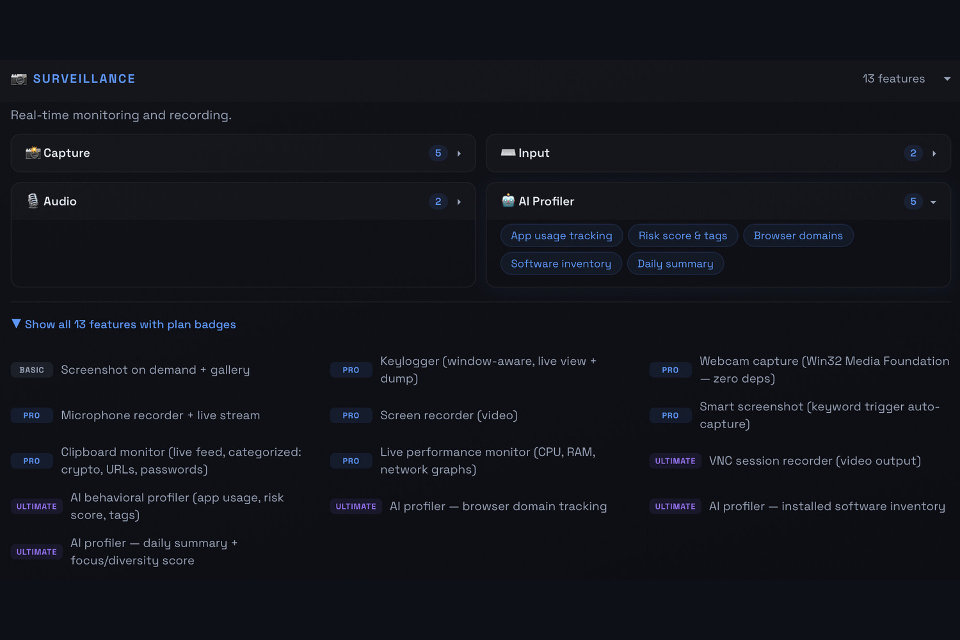
While its extensive credential-stealing capabilities alone would make Dolphin X a formidable threat, its most noteworthy and innovative feature is the "AI Profiler." This module represents a new frontier in malware functionality, moving beyond indiscriminate data collection to intelligent victim assessment. Positioned within the operator panel’s "surveillance tab," the AI Profiler is described by its seller as an "AI behavioral profiler with app usage tracking, risk score, and daily summary."

The primary function of this AI Profiler is to automate the daunting task of sifting through the massive volumes of data typically stolen by credential-stealing malware. In a typical large-scale infection, attackers might acquire credentials for hundreds, if not thousands, of online accounts. Manually reviewing each compromised account to identify high-value targets is an arduous and time-consuming process. Dolphin X’s AI Profiler purports to solve this operational challenge by acting as a sophisticated sorting system. It analyzes the information gathered from infected computers, assigning each victim a "risk score," categorizing them, and ultimately ranking them according to their perceived value to the attacker.
The operator panel claims the AI Profiler processes several key data points to construct these ranked profiles. These include detailed analyses of victims’ application usage patterns, existing risk scores and associated tags, browsing history (specifically browser domains visited), and a comprehensive inventory of installed software. The output of this profiling process is delivered to attackers in the form of daily summaries, which present the ranked victim profiles. This crucial information allows cybercriminals to prioritize machines that offer the most direct pathways to valuable assets, such as high-balance cryptocurrency accounts, access to critical corporate networks, sensitive cloud environments, or vital production systems. As Daniel Kelley from Varonis aptly explains, "In practice, the feature appears designed to help operators triage victims."
Varonis Threat Labs: The Discovery and Analysis
The insights into Dolphin X were derived from a meticulous investigation conducted by Varonis Threat Labs. The research team, led by Daniel Kelley, obtained and analyzed the Dolphin X operator panel in a controlled, isolated laboratory environment. Their methodology focused on examining the malware builder and its associated network traffic, rather than executing a live Dolphin X agent on an infected computer. This approach allowed them to understand the malware’s advertised capabilities and the infrastructure it relies upon without risking real-world infections.
Kelley confirmed the presence of the AI Profiler within the operator panel and discovered a series of technical strings that lend strong credence to the profiling workflow described by the vendor. These strings include Auto-Start AI Profiler, ProfilerStart, ProfilerGetData, risk_score, risk_factors, and categoryusage. The presence of these specific indicators suggests that the profiling functionality is indeed integrated into the malware’s design, and the panel is equipped to process the necessary data for victim ranking. However, without analyzing a live Dolphin X malware sample in execution, Varonis could not definitively ascertain the specific artificial intelligence engine or algorithms being utilized to produce these rankings. Furthermore, the malware’s extensive advertised collection capabilities were not independently confirmed by the researcher due to the nature of the analysis focusing on the panel and builder rather than a live sample.
The Broader Context: AI’s Expanding Role in Cybercrime
The emergence of Dolphin X’s AI Profiler is not an isolated incident but rather a clear indication of a rapidly evolving trend: the increasing integration of artificial intelligence into the arsenal of cybercriminals. In recent years, AI has transitioned from a theoretical tool to a practical asset for threat actors, enabling more sophisticated and efficient attacks.

Initially, AI’s role in cybercrime was predominantly observed in areas like content generation. Platforms such as "SpamGPT," for instance, leveraged large language models to create highly convincing phishing emails, social engineering messages, and other malicious content at scale, making it harder for recipients to distinguish genuine communications from fraudulent ones. This marked a significant improvement over previous, often grammatically flawed or generic, phishing attempts.
More recently, AI has begun to permeate the operational aspects of cyberattacks, leading to the development of "AI agents" capable of conducting autonomous cyberattacks. The "JadePuffer" ransomware, for example, reportedly utilized an AI agent to automate significant portions of its attack chain, from initial reconnaissance to payload deployment, drastically reducing the time and manual effort required by human operators. These AI agents can adapt to network defenses, exploit vulnerabilities dynamically, and navigate complex environments with a level of speed and precision that human attackers often cannot match.
Dolphin X’s AI Profiler represents another critical step in this evolution. Instead of automating the attack execution itself, it uses AI to solve a critical operational problem: the efficient processing and strategic utilization of vast amounts of stolen data. By automatically sorting and ranking infected users, Dolphin X transforms raw data into actionable intelligence, allowing attackers to focus their resources on targets that promise the highest return. This capability not only enhances the profitability of cybercrime but also increases the danger to high-value individuals and organizations, as they become more readily identifiable and targeted.
Implications for Cybersecurity and Organizations
The advent of AI-powered profiling tools like Dolphin X carries profound implications for cybersecurity defenses and organizational risk management.
For victims, the immediate impact is a heightened risk of targeted follow-up attacks. If an individual or organization is identified as "high-value" by the AI Profiler, they are far more likely to experience concentrated and sophisticated efforts to extract further data, financial assets, or network access. This could manifest as more tailored phishing campaigns, direct ransomware deployment, or prolonged espionage, leading to significantly greater financial losses, reputational damage, and operational disruptions.
For cybersecurity professionals and organizations, Dolphin X presents a new and complex challenge. The traditional approach of defending against mass credential theft, while still vital, must now evolve to account for intelligent victim prioritization. This necessitates:
- Enhanced Threat Intelligence: Organizations need to stay abreast of the latest AI-driven malware capabilities and understand how threat actors are leveraging these tools.
- Proactive Data Protection: A renewed focus on identifying and securing "high-value" data points that could feed profiling algorithms is crucial. This includes meticulously protecting cloud access tokens, developer credentials, SSH keys, and comprehensive records of application usage within corporate environments.
- Advanced Detection and Response: Security systems (SIEM, EDR, XDR) must be capable of detecting not only the initial infection but also the exfiltration of profiling-relevant data and any subsequent targeted activities. Behavioral analytics, which can spot anomalies in user or system behavior indicative of profiling, will become increasingly important.
- User Awareness Training: Employees must be educated about the evolving tactics of cybercriminals, including the potential for highly personalized social engineering attacks that might follow an initial compromise.
Protecting Against Sophisticated Threats
In light of the increasing sophistication demonstrated by malware like Dolphin X, cybersecurity experts emphasize a multi-layered defense strategy. Organizations should:
- Implement Strong Authentication: Multi-factor authentication (MFA) should be universally applied, especially for critical accounts, cloud services, and developer tools. This significantly mitigates the impact of stolen credentials.
- Regular Software Updates: Keeping operating systems, browsers, applications, and security software updated is fundamental to patching known vulnerabilities that malware exploits.
- Network Segmentation: Segmenting networks can limit the lateral movement of attackers, even if an initial compromise occurs, thereby reducing the scope of data that can be collected for profiling.
- Endpoint Detection and Response (EDR): Advanced EDR solutions can monitor endpoint activity for suspicious behaviors indicative of malware infection and data exfiltration.
- Data Loss Prevention (DLP): DLP tools can help prevent sensitive information from leaving the organization’s network, even if an attacker has gained access to it.
- Security Awareness Training: Regular and comprehensive training for employees on phishing, social engineering, and safe computing practices remains a cornerstone of defense.
The Future of Cyber Attacks
The emergence of Dolphin X serves as a stark reminder that the landscape of cybercrime is continually evolving, driven by technological advancements. The integration of AI into malware for operational intelligence, such as victim profiling, represents a significant leap. It signifies a future where cyberattacks are not just widespread but also highly precise and efficient, maximizing the impact on the most valuable targets. This trend is likely to continue, with future iterations of malware potentially incorporating even more sophisticated AI capabilities, such as real-time adaptive attack strategies based on profiling data, or AI-driven decision-making throughout the entire attack kill chain. The cybersecurity community must, therefore, remain vigilant, continuously innovate, and adapt its defenses to counter these increasingly intelligent and autonomous threats.