Sam Altman’s World Project Unveils Ambitious Global Expansion, Integrating Human Verification into Tinder, Concerts, and Enterprise Systems

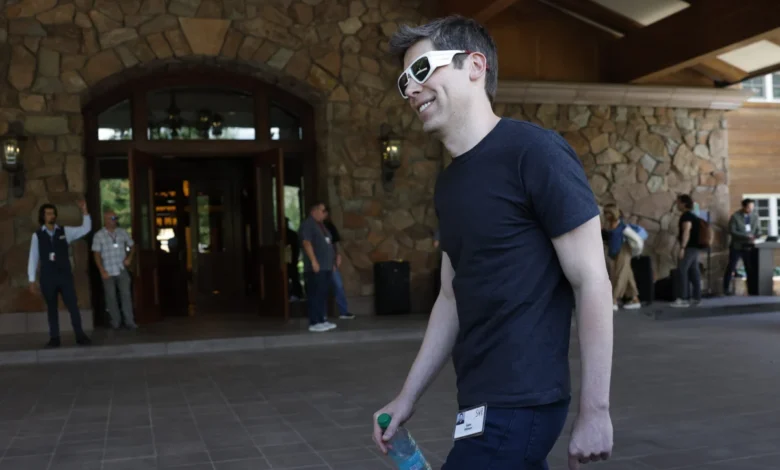
At a vibrant event held at The Midway, a trendy venue situated near the San Francisco pier, Sam Altman’s identity verification project, World, heralded a significant leap forward in its evolution, announcing a rapid and expansive integration of its technology into critical arenas of digital life. Headlining these ambitious plans is a global partnership with Tinder, alongside groundbreaking initiatives in event ticketing with major platforms like Ticketmaster and Eventbrite, and enterprise solutions for business communication and documentation. This strategic pivot underscores World’s commitment to establishing a verifiable "proof of human" amidst the accelerating proliferation of artificial intelligence, which Altman warns is on the verge of generating more content than humans themselves.
The Vision Behind World: Battling the AI Deluge
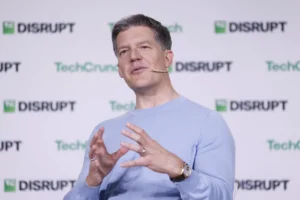
The core impetus behind World, spearheaded by Tools for Humanity (TFH), is a direct response to the profound challenges posed by increasingly sophisticated artificial intelligence. Sam Altman, addressing a packed crowd, articulated a vision where distinguishing human interaction from machine-generated content becomes paramount. "The world is getting close to very powerful AI, and this is doing a lot of wonderful things," Altman stated, acknowledging the transformative potential of AI. However, he swiftly followed with a crucial caveat: "We are also heading to a world now where there’s going to be more stuff generated by AI than by humans. I’m sure many of you [have had moments] where you’re like, ‘Am I interacting with an AI or a person, or how much of each, and how do I know?’" This rhetorical question encapsulates the existential dilemma World aims to solve: how to maintain trust and authenticity in a digital ecosystem saturated with AI agents, bots, and deepfakes. The project’s overarching goal is to provide a reliable, privacy-preserving method for digital services to ascertain that their users are indeed real, living individuals, thereby safeguarding against fraud, misinformation, and the erosion of genuine human connection. The need for such a system has become increasingly urgent as AI generative capabilities make it progressively difficult to differentiate between authentic human-created content and fabricated outputs, impacting everything from social media interactions to critical business communications.
The Technology Core: Orb and Zero-Knowledge Proofs
At the heart of World’s innovative approach lies its proprietary verification technology, which distinguishes it from conventional identity solutions. Unlike systems that often store personal identifiable information, World (formerly Worldcoin) employs a sophisticated method designed for anonymity and privacy. Its chief verification tool is the Orb, a distinctive spherical digital reader that performs an iris scan on a user. This biometric data is then converted into a unique, anonymous cryptographic identifier, known as a verified World ID. Crucially, this process leverages "zero-knowledge proof-based authentication," a complex cryptographic technique that allows one party to prove to another that a statement is true, without revealing any information beyond the validity of the statement itself. In World’s context, this means a user can cryptographically prove they are a unique human without disclosing their actual identity or sensitive biometric data. The resulting World ID serves as a digital passport to World’s services, though the accompanying World app can also be accessed without an Orb-verified ID, offering a more flexible entry point. This "proof of human" mechanism is positioned as a foundational layer for a future where discerning between human and AI activity is not just a convenience but a necessity for maintaining societal trust and individual agency. The commitment to privacy through zero-knowledge proofs aims to address the widespread concerns often associated with biometric data collection, presenting a novel solution to a complex problem.
Event Context and Chronology of Expansion
The event at The Midway, a pivotal moment for Tools for Humanity, served as a platform to unveil these advancements and delineate the project’s future trajectory. Held in the vibrant setting near the San Francisco pier, the atmosphere was charged with anticipation, reflecting the growing industry interest in solutions addressing AI’s impact on digital identity. Sam Altman’s remarks were notably concise, setting the stage for the detailed presentations that followed. He informed the audience that Alex Blania, co-founder and CEO of TFH, was absent due to a last-minute hand surgery, underscoring the team’s dedication even in unforeseen circumstances.

The bulk of the presentation was then handed over to Tiago Sada, World’s chief product officer, and his team, who walked attendees through the latest version of the World app – an update following its previous launch at an event in December. This progression from previous milestones, including the app’s initial release and a pilot program with Tinder in Japan last year, highlights a deliberate and accelerated expansion strategy. From initial conceptualization and preliminary testing, World is now moving towards broad market deployment across diverse sectors, marking this event as the "next evolution and rapid expansion of its ambitions." The chronology demonstrates a calculated scale-up, moving from proof-of-concept to practical, widespread application.
Expanding Reach: From Dating to Concerts and Corporate Boards
Dating Apps: Tinder’s Global Rollout
One of the most anticipated announcements centered on the global expansion of World ID integration with Tinder, the world’s leading dating application. The partnership follows a successful pilot program launched last year in Japan, which provided invaluable insights into the efficacy and user acceptance of biometric verification in the realm of online dating. The positive outcomes of the Japanese pilot have paved the way for Tinder to roll out its World ID verification across global markets, including the crucial U.S. market. This integration introduces a World ID emblem into user profiles, serving as a clear indicator that the individual has undergone World’s rigorous verification process, thus authenticating them as a real, living person. The implications for online dating are significant. In an environment frequently plagued by catfishing, fake profiles, and AI-generated personas – which have become increasingly sophisticated with generative AI – World ID offers a tangible layer of trust and security. Users can engage with greater confidence, knowing that the person on the other side of the screen is genuinely human, fostering more authentic connections and a safer dating experience. This move by Tinder, a subsidiary of Match Group, reflects a broader industry recognition of the need for robust identity solutions to combat the deceptive practices enabled by evolving AI technologies, responding directly to user demand for greater authenticity.
Revolutionizing Live Events: The Concert Kit
Beyond personal connections, World is also stepping into the entertainment industry with its innovative "Concert Kit." This feature directly addresses one of the most persistent frustrations for music fans: ticket scalping. Scalpers often employ sophisticated automated bots to rapidly purchase large quantities of tickets, denying legitimate fans access and driving up resale prices exorbitantly. The scale of the ticket bot problem is enormous, costing fans billions annually and creating immense frustration. Concert Kit offers a solution by enabling musical artists to reserve a designated number of concert tickets exclusively for World ID-verified humans. This mechanism ensures that tickets are distributed fairly to genuine fans, circumventing the bot networks that inflate the secondary market. The company announced compatibility with major ticketing systems, including industry giants Ticketmaster and Eventbrite, signaling a significant potential for widespread adoption. To kickstart this initiative, World has secured partnerships with high-profile artists 30 Seconds to Mars and Bruno Mars, both of whom plan to utilize Concert Kit for their upcoming tours. This strategic alliance with artists and ticketing platforms not only enhances the fan experience by making tickets more accessible and fairly priced but also protects the integrity of the live entertainment industry, ensuring that the magic of concerts remains accessible to human enthusiasts.
Securing the Enterprise: Business Integrations
The expansion of World ID extends deeply into the corporate sector, tackling emerging threats to business operations and communication. Recognizing the increasing sophistication of deepfake technology and its potential to compromise virtual meetings and digital transactions, World announced key partnerships aimed at bolstering enterprise security. A significant collaboration with Zoom, the ubiquitous video conferencing platform, will integrate World ID verification to combat the supposed threat of deepfakes in business calls. This integration could allow participants in sensitive meetings to verify their humanity, mitigating risks associated with impersonation and fraudulent activity, which could have severe financial and reputational consequences for businesses. Similarly, a partnership with Docusign, a leader in electronic signature solutions, is designed to ensure that digital signatures originate from authentic, verified users. By tying World ID to these critical business tools, TFH aims to create a more secure and trustworthy digital environment for enterprises, safeguarding intellectual property, financial transactions, and confidential communications against AI-driven deception. These integrations highlight World’s versatility and its potential to become a foundational layer of trust across various digital interactions, from personal social networking to high-stakes corporate dealings, providing a crucial defense in an increasingly complex threat landscape.
Navigating the Agentic Web: Human-AI Collaboration
As the digital landscape evolves towards a more "agentic web" – where AI agents increasingly act on behalf of humans – World is proactively developing features to manage this new paradigm. One such innovation is "agent delegation," a functionality that allows a person to securely delegate their World ID to an AI agent, enabling the agent to carry out online activities on their behalf. This represents a crucial step in maintaining accountability and transparency in a future where AI assistants play a more prominent role in our digital lives. The distinction between a human’s direct action and an agent’s delegated action will be vital for legal, ethical, and practical reasons. To further solidify this framework, World has partnered with authentication firm Okta, resulting in the creation of a system currently in beta, called HumanPrincipal.ai. This system is designed to verify that an AI agent is indeed acting under the explicit instruction and on behalf of a human principal. Gareth Davies, Okta’s chief product officer, explained at the event that this setup ties a World ID to a specific agent. Consequently, when that agent operates on the web for a verified person, websites and services will be able to recognize that the actions are backed by an authenticated human. This forward-thinking approach aims to establish clear boundaries and trusted pathways for human-AI collaboration, ensuring that as AI agents become more autonomous, the ultimate control and accountability remain with the human user, thereby preventing unauthorized or malicious agent activities and fostering a new era of secure digital agency.
Addressing the Scaling Challenge: Evolving Verification Tiers

Despite the ambitious vision and technological sophistication, World has historically faced significant challenges in achieving mass adoption, primarily due to its initial verification process. For much of the company’s existence, attaining the "gold standard" of World ID verification necessitated a physical visit to one of its designated offices, where users would have their eyeballs scanned by an Orb. This method, while highly secure, was widely perceived as inconvenient and, for many, an unusual or even "weird" experience, creating a significant barrier to entry. The logistical complexities of deploying Orbs globally and requiring physical interaction limited its scalability.
Recognizing this hurdle, Tools for Humanity has made concerted efforts to enhance the ease and incentive structure for verification. Early attempts included offering its associated cryptocurrency asset, Worldcoin, to some early adopters who completed the sign-up process, aiming to incentivize participation. More practically, the company has strategically distributed its Orbs into various "big retail chains," allowing users to undergo verification while performing everyday activities like shopping or grabbing a coffee, thereby integrating the process more seamlessly into daily routines.
Building on these efforts, World announced a significant expansion of Orb saturation, particularly in key metropolitan areas such as New York, Los Angeles, and San Francisco. This increased accessibility aims to make the primary verification method more convenient for a larger urban populace. Furthermore, the company promoted a novel service allowing interested users to arrange for a World team to bring an Orb directly to their location for remote verification, addressing geographical limitations and maximizing user convenience.
In a candid conversation with TechCrunch, Tiago Sada elaborated on World’s multifaceted strategy to overcome the scaling problem through the introduction of different tiers of verification, acknowledging that a one-size-fits-all approach was insufficient for broad appeal.
Selfie Check: A Pragmatic Approach with Caveats
The highest tier remains the Orb verification, offering the most robust "proof of human" through its unique biometric scan. Below this, World had previously introduced a mid-level tier, which utilizes an anonymized scan of an official government ID via the card’s Near Field Communication (NFC) chip. This method offers a strong level of assurance without requiring biometric iris scans, balancing security with a more widely accessible form of verification.
Crucially, the company has now introduced a new, low-level tier, dubbed "Selfie Check." Sada described this as a "low friction" option, implying minimal effort for the user, though he also candidly labeled it "low security." This tier involves merely taking a selfie, a method designed for maximum accessibility. Daniel Shorr, one of TFH’s executives, emphasized the privacy-by-design aspect of Selfie Check during the presentation. "Selfie is private by design," Shorr stated, explaining that "we maximize the local processing that’s happening on your device, on your phone, which means that your images are yours." This commitment to local processing aims to alleviate privacy concerns associated with sending biometric data to central servers, keeping the sensitive image data on the user’s device.
However, the inherent limitations of selfie-based verification are well-documented; fraudsters have long managed to spoof such systems using various techniques, from sophisticated masks to deepfake images, often available through readily accessible tools. Sada acknowledged these vulnerabilities, telling TechCrunch, "Obviously, we do our best, and it’s like one of the best systems that you’ll see for this. But it has limits." This pragmatic admission underscores World’s understanding of the security trade-offs. The strategic intent behind offering these distinct tiers is to provide developers integrating World’s