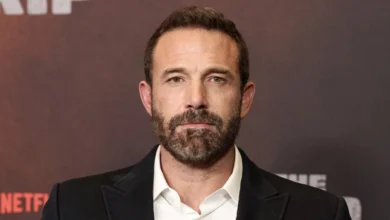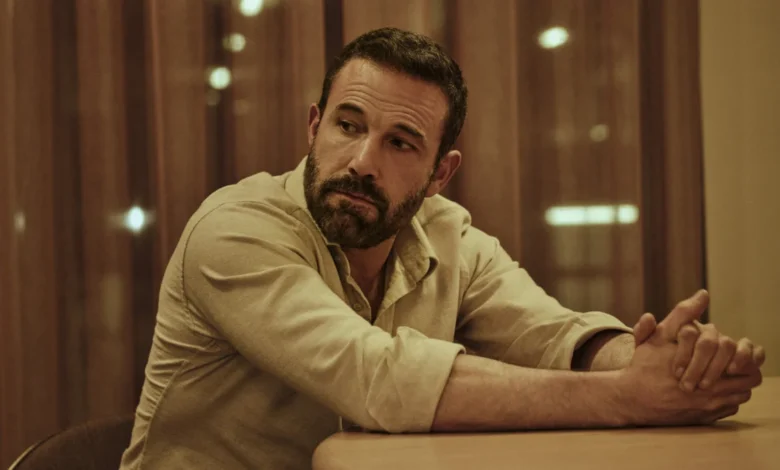
In a landmark transaction signaling a significant acceleration in the integration of artificial intelligence within the entertainment industry, streaming giant Netflix has officially disclosed a $587 million cash payment for InterPositive, a pioneering AI startup co-founded by acclaimed actor and director Ben Affleck. This substantial investment, confirmed through a new regulatory filing, underscores Netflix’s aggressive strategy to leverage advanced technological solutions in its content creation and post-production workflows, aiming to enhance efficiency, reduce costs, and elevate the quality of its vast library of original programming. The acquisition, initially announced in March, has now been fully detailed, revealing the precise financial terms of a deal that has captured considerable attention across Hollywood and the tech sector.
Unveiling the Financial Details and Strategic Rationale
The regulatory filing, specifically referencing a document filed with the U.S. Securities and Exchange Commission, definitively established the cash consideration paid by Netflix. While initial reports, including one from Bloomberg, had speculated the deal could reach up to $600 million, the official figure of $587 million confirms a robust valuation for InterPositive, reflecting the perceived strategic importance of its proprietary AI tools. This all-cash transaction highlights Netflix’s confidence in InterPositive’s technology and its immediate applicability across the streamer’s global production pipeline.
Netflix’s move to acquire InterPositive is not an isolated incident but rather a clear manifestation of a broader, evolving strategy within the company to embrace artificial intelligence. During its most recent earnings report, Netflix revealed that approximately 300 of its titles had already incorporated generative AI technologies within the past year. This statistic illustrates the rapid pace at which AI is being adopted internally, moving beyond experimental phases to become an integral component of content production. The acquisition of InterPositive, therefore, represents a vertical integration of a specialized AI solution, designed to address specific, complex challenges in post-production.
InterPositive’s Vision: AI as a Creative Enabler
At the core of InterPositive’s appeal is its innovative approach to post-production challenges, as articulated by co-founder Ben Affleck. Upon the acquisition’s initial announcement in March, Affleck issued a statement emphasizing his motivation to "protect the power of human creativity." He positioned InterPositive’s AI tools not as a replacement for human artistry, but as powerful aids designed to empower filmmakers. Specifically, the technology aims to assist in overcoming "real-world production challenges such as missing shots, background replacements or incorrect lighting."
This vision resonates with a growing discourse in the creative industries that sees AI as a sophisticated toolkit capable of augmenting human capabilities. InterPositive’s software is understood to employ advanced machine learning algorithms to analyze footage, identify imperfections, and generate seamless corrections or enhancements. For instance, AI can be trained to recognize and replace backgrounds with digital environments, adjust lighting inconsistencies across multiple takes, or even "fill in" missing frames or elements within a shot, potentially saving millions in reshoot costs and extensive manual post-production labor. Such capabilities promise to streamline workflows, allowing creative teams to focus more on narrative and performance, while AI handles the often laborious and time-consuming technical rectifications.
A Timeline of Strategic Integration
The journey of Netflix’s acquisition of InterPositive unfolded rapidly, reflecting the urgency with which major studios are seeking to integrate AI into their operations:
- March 5, 2026: Netflix publicly announces its intent to acquire InterPositive. The announcement includes a statement from Ben Affleck, highlighting the company’s mission to enhance filmmaking through AI by addressing practical production challenges and preserving human creativity. At this stage, the financial terms remained undisclosed. Netflix confirms that the entire InterPositive team, including key technical staff and developers, would transition to the streaming giant, with Ben Affleck assuming a senior advisory role.
- March 11, 2026: A report from Bloomberg surfaces, citing anonymous sources familiar with the deal, suggesting the acquisition could be valued at up to $600 million. This preliminary figure sparked widespread industry discussion about the escalating valuation of AI startups specializing in entertainment technology.
- Q2 2026 Earnings Report (Date TBD but prior to filing): Netflix discloses that approximately 300 of its productions have already utilized generative AI technologies. This data point underscores the company’s existing commitment to AI integration and sets the stage for the formal acquisition of a dedicated AI post-production specialist.
- Recent Regulatory Filing (Specific date not provided, but subsequent to Q2 earnings): Netflix files a detailed report with the U.S. Securities and Exchange Commission, officially revealing the precise cash payment of $587 million for InterPositive. This filing provides transparency and finalizes the financial aspects of the high-profile acquisition.
Broader Context: The AI Revolution in Entertainment
The acquisition of InterPositive by Netflix occurs amidst a rapidly accelerating AI revolution across the entertainment landscape. The past few years have witnessed an explosion in AI applications, ranging from sophisticated visual effects (VFX) tools that can de-age actors or create hyper-realistic digital doubles, to AI-driven script analysis that predicts commercial success, and even generative AI for conceptual art, storyboarding, and voice synthesis.
Historically, technology has always played a pivotal role in filmmaking, from the advent of sound and color to computer-generated imagery (CGI) and digital editing. However, generative AI represents a paradigm shift, moving beyond mere assistance to capabilities that can create or recreate elements with unprecedented autonomy and realism. This has ignited both excitement and apprehension within Hollywood.
The recent WGA (Writers Guild of America) and SAG-AFTRA (Screen Actors Guild – American Federation of Television and Radio Artists) strikes prominently featured AI as a central point of contention. Unions expressed deep concerns about AI’s potential to displace human writers and actors, to be used to create "digital doubles" without fair compensation, or to generate scripts and storylines that could devalue human creative input. While these strikes led to agreements aimed at protecting human labor, the underlying tension regarding AI’s role persists. Netflix, as a major content producer and employer of creative talent, is navigating this complex landscape, and its messaging, like Affleck’s, attempts to position AI as an enhancement rather than a replacement.
Implications for Netflix and the Industry
The InterPositive acquisition carries multifaceted implications for Netflix and the broader entertainment industry:
-
Enhanced Production Efficiency and Cost Savings: The most immediate and tangible benefit for Netflix is the potential for significant improvements in post-production efficiency. By automating tasks like background replacement, lighting correction, and shot reconstruction, InterPositive’s AI can drastically reduce the time and budget typically allocated to these processes. This is crucial for Netflix, which produces an enormous volume of content globally, facing intense competition and pressure to optimize spending. Reduced need for reshoots, faster turnaround times, and less reliance on expensive manual labor in post-production could translate into substantial financial savings over time.
-
Creative Empowerment and Risk-Taking: From a creative standpoint, InterPositive’s technology could empower filmmakers to be more ambitious and experimental. Knowing that certain on-set imperfections or logistical challenges can be seamlessly resolved in post-production via AI might encourage directors to take more creative risks, experiment with complex shots, or adapt more fluidly to unforeseen production issues. This aligns with Affleck’s stated goal of "protecting human creativity" by removing technical hurdles that often constrain artistic vision.
-
Competitive Advantage: As the streaming wars intensify, production capabilities and technological sophistication are becoming key differentiators. By integrating cutting-edge AI, Netflix aims to maintain and extend its lead in content production quality and efficiency. Competitors will likely be forced to accelerate their own AI integration strategies to keep pace, potentially leading to a broader industry adoption of similar technologies.
-
Talent Relations and Ethical Considerations: While the benefits are clear, the ethical dimensions and potential impact on human talent remain a critical area of discussion. Netflix’s success in fully integrating InterPositive’s technology will depend heavily on its ability to demonstrate that AI is being used as a tool to assist and elevate human artists, rather than to replace them. Clear guidelines, transparent communication with unions and creative guilds, and a commitment to fair compensation models for AI-assisted work will be paramount to avoid further friction. The concern that AI could lead to job displacement for VFX artists, editors, and other post-production specialists will persist, and Netflix will need to actively address these anxieties.
-
Data-Driven Content Improvement: Beyond specific post-production tasks, the acquisition could also signify Netflix’s intent to use AI to analyze vast datasets of its content, identifying patterns in visual quality, audience engagement, and production challenges. This data-driven approach could inform future production decisions, guiding everything from camera choices to lighting setups in pre-production, further optimizing the entire filmmaking process.
The Future of Filmmaking: A Hybrid Approach
The $587 million acquisition of InterPositive by Netflix is more than just a financial transaction; it is a powerful statement about the future direction of content creation. It solidifies the idea that AI will not merely be an optional add-on but an indispensable component of modern filmmaking, particularly for high-volume content producers like Netflix.
Ben Affleck’s transition to a senior advisory role within Netflix is also noteworthy. It suggests a collaborative model where traditional Hollywood acumen meets technological innovation. His experience as a director and producer, coupled with his entrepreneurial drive in the AI space, positions him uniquely to bridge the gap between creative vision and advanced technological application.
As the industry moves forward, the dialogue will continue to evolve around the optimal balance between human creativity and artificial intelligence. Netflix, through this acquisition, is positioning itself at the forefront of this evolution, ready to define how AI can not only solve production problems but also potentially unlock new forms of storytelling and visual artistry, shaping the landscape of entertainment for decades to come. The success of this venture will likely serve as a blueprint for other studios contemplating their own deep dives into AI-powered production.
Related posts: