Microsoft Named a Leader in the 2026 Gartner Magic Quadrant for Container Management

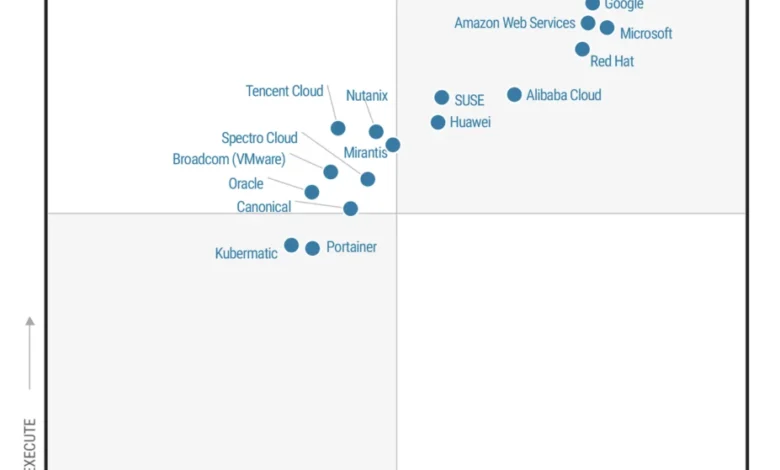
Microsoft has officially been recognized as a Leader in the 2026 Gartner Magic Quadrant for Container Management, achieving the furthest position to the right for Completeness of Vision. This acknowledgment marks a significant milestone in the evolution of cloud-native infrastructure, highlighting Microsoft’s ability to bridge the gap between traditional application modernization and the rapidly emerging demands of artificial intelligence (AI) workloads. As enterprises grapple with increasingly complex, distributed environments, Microsoft’s container portfolio—centered on Azure Kubernetes Service (AKS), Azure Container Apps, Azure Arc, and Azure Kubernetes Fleet Manager—has emerged as a foundational element of the modern digital enterprise.
The Evolution of Container Orchestration
To understand the significance of this recognition, one must examine the decade-long trajectory of Kubernetes. When the open-source project was first introduced to the industry, its primary goal was the democratization of distributed systems. The intent was to simplify the development of reliable services by decoupling workloads from their underlying physical infrastructure. This architectural abstraction allowed schedulers to optimize resource allocation without imposing rigid constraints on the nature of the applications themselves.
Over the last ten years, the scope of container management has expanded exponentially. Initially designed for web-scale microservices, Kubernetes is now the standard for AI model training, inference, and agentic workflows. However, the current landscape introduces a new set of constraints: the requirement for workloads to run closer to the data, a necessity for regulatory compliance, and the demand for data sovereignty. Today, organizations are not merely looking for orchestration; they require a unified operating model that can span multi-cloud, edge, and on-premises environments without necessitating the wholesale rebuilding of applications.
Architectural Models in the AI Era
The integration of AI into enterprise workflows has forced a bifurcation in how platforms are managed. Data suggests that enterprises are gravitating toward two primary architectural patterns. The first model involves platform teams maintaining a persistent serving layer. In this configuration, the platform team manages GPU scheduling, the model lifecycle, and compliance boundaries. This approach is favored by organizations with high-volume, predictable AI requirements. By utilizing tools like the AI toolchain operator, platform teams can automate deployment while ensuring that the infrastructure remains compatible with CNCF (Cloud Native Computing Foundation) AI Conformance standards.
The second model is built for elasticity and speed. In this scenario, applications or autonomous agents trigger inference on demand, consuming resources only as needed and releasing them immediately upon completion. This serverless approach, epitomized by Azure Container Apps, is essential for handling unpredictable workloads that require high levels of isolation. The core challenge for modern engineering teams is to facilitate seamless transitions between these two models—maintaining the same identity, network security, and policy controls regardless of the deployment method.
Chronology of Microsoft’s Cloud-Native Commitment
Microsoft’s current standing is the result of a long-term strategic pivot toward open-source integration.
- 2014-2015: Microsoft begins early participation in the Kubernetes community, recognizing the potential for cross-platform portability.
- 2017: The official launch of Azure Kubernetes Service (AKS) simplifies the deployment and management of containerized applications on Azure.
- 2019: The introduction of Azure Arc signals a shift toward hybrid-cloud management, allowing users to extend Azure management services to any Kubernetes cluster.
- 2023-2025: Acceleration of AI-specific container features, including serverless GPU support and the integration of AI-driven SRE (Site Reliability Engineering) agents.
- 2026: Recognition in the Gartner Magic Quadrant, reflecting the maturity of the platform across diverse deployment models.
Data-Driven Scaling and Operational Efficiency
As organizations scale, the number of clusters often outpaces the growth of the operations teams responsible for them. Market research indicates that "cluster sprawl" is a leading cause of configuration drift and security vulnerabilities. To combat this, Microsoft has introduced automated guardrails. AKS Automatic, for instance, leverages Microsoft’s internal expertise in running large-scale Kubernetes fleets to apply operational best practices by default.
Furthermore, the industry is seeing a transition toward "agentic operations." By integrating tools like the Azure SRE Agent and the AKS MCP (Model Context Protocol) Server, Microsoft is enabling operators to move from reactive alerting to proactive diagnosis. These tools use existing security permissions to troubleshoot, reducing the time spent on routine investigations. Data from early adopters suggests that these AI-augmented operational tools can significantly reduce the "mean time to resolution" (MTTR) for complex container environments.

The Role of Open Source and Standardization
A critical component of Microsoft’s strategy is its commitment to upstream Kubernetes. By avoiding proprietary forks, Microsoft ensures that developers can move workloads between Azure and other environments with minimal friction. Microsoft currently ranks as the second-largest contributor to CNCF projects globally, a testament to its philosophy that standardized APIs are essential for ecosystem health. This commitment ensures that the operational models built by customers today remain viable as the underlying technology evolves.
Industry Implications and Expert Analysis
The naming of Microsoft as a Leader in the 2026 Gartner Magic Quadrant arrives at a critical juncture for IT infrastructure. Industry analysts note that the "AI-first" enterprise requires more than just compute capacity; it requires a platform that can handle the regulatory and logistical realities of the modern world.
"The challenge for CIOs today is avoiding the creation of silos," says a leading infrastructure consultant. "When companies treat AI infrastructure as an isolated project rather than part of the broader container ecosystem, they incur significant technical debt. Microsoft’s strategy of extending a single, unified control plane—whether on-premises, at the edge, or in the cloud—is a direct response to this fragmentation."
Customer feedback underscores this trend. Organizations like CallRevu have noted that the ability to scale GPU resources based on call volume without altering production architecture has been transformative. This flexibility allows businesses to iterate on AI models at speed, testing in sandbox environments before deploying to production, all while operating within a consistent governance framework.
Addressing the Complexity of the Edge
As workloads move closer to the user—frequently in remote locations, factories, or regional data centers—the risk of "coordination failure" rises. Microsoft’s focus on "AKS Everywhere" and the expansion of Azure Arc are designed to provide a consistent identity and observability model across geographically dispersed estates. By treating configuration management as a fleet-wide issue rather than a cluster-by-cluster issue, Microsoft’s approach enables enterprises to maintain compliance with sovereign and local regulatory requirements without sacrificing the benefits of centralized management.
Future Outlook
The path forward for Microsoft involves continuing to abstract away infrastructure complexity. As container management shifts from a manual, configuration-heavy process to an agent-driven, automated model, the role of the platform engineer will evolve. The objective remains clear: to provide a platform that is robust enough for mission-critical applications yet flexible enough to support the experimental nature of AI development.
For enterprises, the takeaway from the 2026 Gartner report is that container management is no longer a niche infrastructure concern; it is the central nervous system of the modern, AI-powered business. Microsoft’s position as a Leader reflects not just the technical capabilities of its current stack, but the foresight to build a platform capable of absorbing future technological shifts without forcing users to re-engineer their fundamental business logic.
As the industry moves toward 2027 and beyond, the competition in the container management space is expected to intensify. However, by maintaining deep ties to the open-source community and prioritizing the stability of the Kubernetes API, Microsoft has positioned itself as a primary architect of the next generation of cloud computing. Whether through serverless GPU instances or the management of vast, multi-region fleets, the company’s focus remains on enabling the customer to decide where their workload belongs, ensuring the platform adapts to the user rather than forcing the user to adapt to the platform.
Related posts: