The Evolution of Automotive IoT: Driving the Future of Connected Mobility and Software-Defined Vehicles

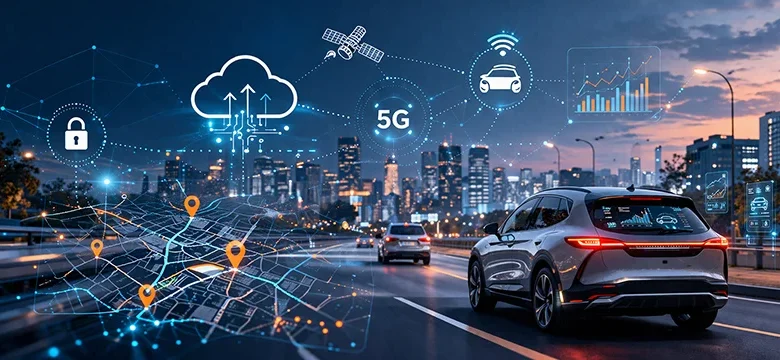
The global automotive industry is currently undergoing its most significant transformation since the invention of the assembly line, driven by the rapid integration of the Internet of Things (IoT). Automotive IoT has transitioned from a high-end luxury feature to a fundamental architectural requirement for modern mobility, turning vehicles into sophisticated, networked data centers on wheels. As the convergence of 5G connectivity, edge computing, and artificial intelligence accelerates, the automotive sector is shifting its focus from hardware-centric manufacturing to software-defined ecosystems. This evolution is not merely about adding internet access to cars; it represents a complete reimagining of how vehicles are designed, operated, and integrated into the broader digital landscape of smart cities and intelligent transportation systems.
The Architectural Foundation of Automotive IoT
To understand the magnitude of this shift, one must examine the complex, multi-layered architecture that enables Automotive IoT. At its most basic level, a connected vehicle relies on a dense network of sensors and Electronic Control Units (ECUs) that monitor every aspect of the machine’s health and environment. These components collect data on engine performance, tire pressure, braking patterns, and external surroundings via LIDAR, radar, and cameras.
The central hub of this system is the Telematics Control Unit (TCU). The TCU serves as the vehicle’s gateway to the outside world, managing high-speed data transmission through cellular networks. While previous generations of vehicles relied on 4G LTE, the industry is rapidly migrating toward 5G. The primary advantage of 5G is not just speed, but the drastic reduction in latency. In safety-critical applications, such as autonomous emergency braking or collision avoidance, a delay of even a few milliseconds can be the difference between a near-miss and a catastrophe.
Beyond the vehicle itself, Automotive IoT relies on cloud-based platforms for large-scale data processing. While the "edge"—the vehicle’s internal processors—handles immediate, time-sensitive decisions, the cloud aggregates data from millions of vehicles to identify broader trends. This allows manufacturers to perform predictive maintenance across entire fleets, identifying potential component failures before they occur and notifying owners to schedule service.
A Chronology of Connected Mobility
The path to the modern connected vehicle has been a decades-long journey of incremental technological breakthroughs.
- The Era of Telematics (1996–2010): The journey began with the introduction of basic telematics services like GM’s OnStar. These early systems focused primarily on safety and security, utilizing cellular and GPS technology to provide emergency assistance and remote diagnostics. Connectivity was slow, and data exchange was limited to voice calls and small packets of text data.
- The Infotainment Revolution (2010–2018): As 4G LTE became the global standard, the focus shifted toward the driver’s experience inside the cabin. This era saw the rise of integrated infotainment systems, real-time navigation updates, and the birth of smartphone integration platforms like Apple CarPlay and Android Auto. Vehicles began to be perceived as extensions of the user’s digital life.
- The Software-Defined Era (2018–Present): Today, the industry has entered the age of the Software-Defined Vehicle (SDV). In this phase, the vehicle’s hardware is increasingly decoupled from its software. This allows for Over-the-Air (OTA) updates, similar to how a smartphone receives a new operating system. A car purchased in 2024 can theoretically be more capable in 2026 through software optimizations that improve battery efficiency, unlock performance features, or enhance autonomous driving algorithms.
Supporting Data and Market Projections
The economic impact of Automotive IoT is staggering. According to recent industry reports, the global automotive IoT market was valued at approximately $82 billion in 2022 and is projected to expand at a compound annual growth rate (CAGR) of over 18% through 2030, potentially exceeding $250 billion. This growth is fueled by the increasing demand for connected features in mid-range vehicles and the global push toward electric vehicles (EVs), which are inherently more digitizable than internal combustion engines.
Data volume is another critical metric. A modern connected vehicle can generate up to 25 gigabytes of data per hour of operation. Across a global fleet of hundreds of millions of cars, the resulting data lake offers unprecedented opportunities for monetization. McKinsey & Company estimates that data-driven services in the automotive sector could create up to $1.5 trillion in additional value by 2030, ranging from usage-based insurance to personalized in-car advertising and sophisticated fleet management services.
Strategic Use Cases Across the Ecosystem
Automotive IoT is not limited to passenger cars; its applications span the entire spectrum of transportation and logistics.
- Fleet Management and Logistics: For commercial enterprises, IoT is a tool for radical efficiency. Fleet managers use real-time telematics to track vehicle location, monitor fuel consumption, and analyze driver behavior. By optimizing routes and reducing idle time, companies can slash operational costs by 10% to 15% while simultaneously reducing their carbon footprint.
- Usage-Based Insurance (UBI): The insurance industry is being disrupted by "pay-how-you-drive" models. By analyzing IoT data—such as average speed, braking intensity, and the time of day a vehicle is used—insurers can offer personalized premiums. This rewards safe drivers and provides insurers with a more accurate risk profile than traditional demographic-based models.
- Predictive Maintenance: Traditional maintenance schedules are based on time or mileage. IoT enables condition-based maintenance. Sensors can detect the microscopic vibrations of a failing bearing or the heat signature of a degrading battery cell long before a driver notices a problem. This reduces "down-time" for commercial vehicles and prevents expensive secondary damage for consumers.
- Vehicle-to-Everything (V2X) Communication: Perhaps the most transformative use case is V2X. This allows vehicles to communicate with traffic lights, road signs, and even the smartphones of pedestrians. In a smart city environment, a traffic light can signal a vehicle to slow down because a pedestrian is entering a crosswalk around a blind corner, effectively extending the vehicle’s "vision" beyond its physical sensors.
Industry Responses and Strategic Shifts
The shift toward Automotive IoT has forced traditional Original Equipment Manufacturers (OEMs) to reinvent themselves. Historically, companies like Ford, Volkswagen, and Toyota were masters of mechanical engineering and supply chain management. Today, they are competing with Silicon Valley for software talent.
General Motors and Ford have both announced significant investments in in-house software development, aiming to move away from third-party infotainment dependencies. Meanwhile, luxury brands like BMW and Mercedes-Benz are exploring subscription-based models, where owners can pay a monthly fee to "unlock" features like heated seats or advanced parking assistance—a move that has met with mixed reactions from consumers but highlights the shift toward recurring revenue streams.
Tech giants are also entrenching themselves in the ecosystem. Google’s Android Automotive OS is being integrated directly into the hardware of brands like Volvo and Polestar, while Qualcomm and NVIDIA have become the primary suppliers of the high-performance chips required to process the massive data loads generated by modern vehicle sensors.
Challenges: The Friction of Progress
Despite the immense potential, the road to a fully connected future is fraught with challenges. The most pressing of these is cybersecurity. As vehicles become networked endpoints, they become targets for hackers. A breach in a vehicle’s system is not just a privacy risk; it is a physical safety risk. The industry is currently working on harmonizing standards, such as ISO/SAE 21434, to ensure that cybersecurity is "baked in" to the vehicle’s design from the very first blueprint.
Data privacy remains another significant hurdle. As vehicles collect detailed information on location, habits, and even biometric data through driver-monitoring cameras, questions arise regarding who owns this data and how it is used. Regulatory bodies in the European Union and the United States are increasingly scrutinizing automotive data practices to ensure they comply with frameworks like GDPR and CCPA.
Finally, there is the issue of infrastructure. The full benefits of V2X and autonomous driving cannot be realized if the surrounding infrastructure is "dumb." This requires massive public-private investment to equip roads, bridges, and intersections with the sensors and connectivity needed to talk to modern vehicles.
Broader Impact and Future Outlook
The long-term implications of Automotive IoT extend far beyond the car itself. This technology is a linchpin for the future of urban planning and environmental sustainability. Connected vehicles can contribute to "Green Waves," where traffic lights are synchronized to vehicle speeds to minimize idling and reduce emissions. In the energy sector, the integration of EVs into the IoT ecosystem allows for Vehicle-to-Grid (V2G) technology, where car batteries act as a distributed storage system for the electrical grid, soaking up excess solar power during the day and discharging it during peak evening hours.
Looking toward 2030 and beyond, the rollout of 6G and the maturation of artificial intelligence will likely lead to "Cooperative Driving," where groups of vehicles operate as a single, coordinated unit to maximize road capacity and eliminate traffic jams. The vehicle will no longer be an isolated tool for transportation but a node in a living, breathing digital organism.
Automotive IoT has reached a point of no return. The transition from mechanical transport to intelligent mobility is well underway, promising a future of safer roads, more efficient cities, and a personalized driving experience that was once the province of science fiction. For manufacturers, technology providers, and policymakers, the challenge now lies in navigating the complexities of this new digital frontier while ensuring that safety, privacy, and reliability remain the North Star of innovation.