The best air purifiers for wildfire smoke tested: Our faves from Blueair, Coway Airmega, Shark, and more.

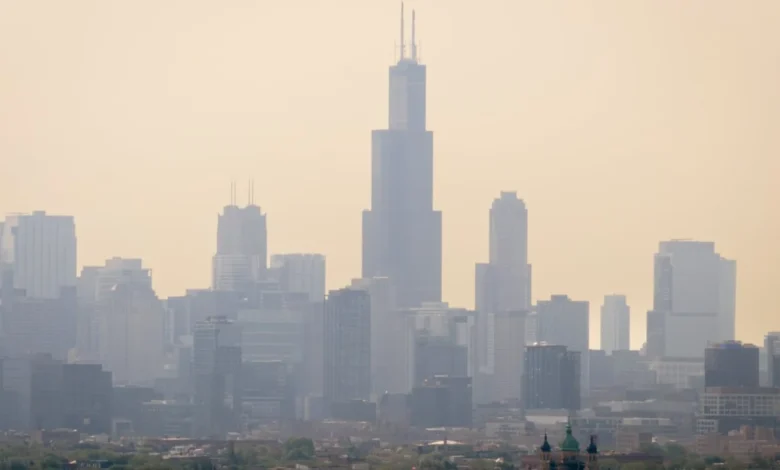
As global climate patterns continue to intensify, the increasing frequency and severity of wildfire seasons have transformed what was once a localized concern into a widespread public health crisis. By July 2026, many regions across North America and beyond have become accustomed to the ominous haze that blankets skylines, forcing a critical re-evaluation of indoor air quality. While the smog outside remains largely beyond individual control, the sanctity of the air within our homes has become a paramount health imperative, making a high-efficiency particulate air (HEPA) purifier a non-negotiable for discerning households. This comprehensive guide, compiled and tested by Mashable writers in real-world home environments, spotlights the leading air purifiers engineered to combat the insidious threat of wildfire smoke and other pervasive indoor pollutants.
The Escalating Wildfire Crisis and Indoor Air Imperative

The phrase "another wildfire season" now carries a heavy weight, signaling not just a seasonal occurrence but a symptom of a broader climate crisis. Regions historically less affected are now experiencing dangerous levels of air pollution, exemplified by events like the Canadian wildfires that sent smoke drifting across vast swaths of the U.S. and Canada in recent years. This environmental shift underscores the urgent need for robust indoor air purification strategies. As citizens prioritize holistic health—from active lifestyles and mindful eating to adequate sleep—the often-overlooked act of breathing clean air has risen to critical importance. Air purifiers, once considered a niche appliance, are now essential health technology, protecting against a silent but significant threat.
The Invisible Threat: Understanding Wildfire Smoke Infiltration
Contrary to popular belief, wildfire smoke is not confined to the outdoors. Even with windows and doors sealed, the microscopic particulate matter (PM)—particularly PM2.5, which measures 20 to 30 times smaller than a human hair—possesses the ability to infiltrate homes through minute cracks, poorly sealed windows, and ventilation systems. This invisible invasion means that while the hazy conditions might not be overtly visible indoors, the air quality can still be severely compromised. Many advanced air purifiers now integrate sensors that provide real-time air quality metrics, including PM2.5 levels, offering tangible evidence of this infiltration. Beyond wildfire smoke, indoor environments are consistently exposed to a cocktail of pollutants from everyday activities: volatile organic compounds (VOCs) from cleaning products and building materials, cooking fumes, pet dander, and even microplastics embedded in household dust. These ubiquitous contaminants make continuous air purification a vital component of a healthy living space, regardless of external environmental events.

Profound Health Implications of Smoke Exposure
The health consequences of inhaling wildfire smoke are far-reaching and affect everyone, not solely individuals categorized as "sensitive groups." The U.S. Centers for Disease Control and Prevention (CDC) warns that repeated exposure can trigger immediate symptoms such as breathing difficulties, headaches, lethargy, persistent coughing, and wheezing. However, the danger extends beyond these acute reactions. The minuscule size of smoke particles allows them to bypass the body’s natural defenses, entering the bloodstream and potentially reaching vital organs like the heart and liver. Yale Medicine highlights that prolonged exposure to PM2.5 can lead to an elevated risk of severe health issues, including various cancers, heart attacks, and long-term cognitive impairments. Furthermore, dermatological research suggests that particulate matter can disrupt the skin barrier, exacerbating oxidative stress and undermining skincare efforts.
Certain demographics face even greater risks. Individuals with pre-existing conditions such as asthma, heart disease, or diabetes are highly vulnerable to severe complications. Children and pregnant individuals are also considered high-risk populations, as their developing systems are more susceptible to the damaging effects of air pollution. The impact isn’t limited to humans; pets, too, suffer from compromised air quality. The American Veterinary Medical Association (AVMA) advises that if humans can feel or see the effects of smoke, their animal companions are also affected, particularly those with pre-existing cardiovascular or respiratory conditions. The World Health Organization (WHO) has consistently emphasized that air pollution, including that from wildfires, is a leading environmental risk to health, contributing to millions of premature deaths globally each year.

The Science of Clean Air: How Air Purifiers Combat Smoke
Air purifiers function by drawing in ambient air and passing it through a sophisticated filtration system designed to trap pollutants. The cornerstone of effective air purification, especially against wildfire smoke, is the True HEPA filter. These filters are rigorously tested to capture 99.97% of airborne particles as small as 0.3 microns, a size category that includes the most harmful components of smoke, as well as pollen, dust mites, and pet dander.
Most high-quality air purifiers employ a multi-stage filtration process for comprehensive cleaning. This typically begins with a pre-filter, a mesh screen designed to capture larger particles like dust, hair, and lint. By removing these larger contaminants, the pre-filter protects the more delicate HEPA filter from premature clogging, extending its lifespan and maintaining its efficiency. Following the HEPA filter, an activated carbon filter is often included. This layer is crucial for adsorbing gaseous pollutants, odors from cooking, pets, and chemical VOCs, which HEPA filters are not designed to capture. When selecting an air purifier, the Clean Air Delivery Rate (CADR) is a critical metric, indicating how quickly the purifier cleans air in a specific room size for smoke, dust, and pollen. A higher CADR signifies faster and more effective purification.

Featured Air Purifiers: A Tested Selection for Every Need
Mashable’s extensive hands-on testing has identified several top-tier air purifiers, each excelling in specific scenarios while universally employing True HEPA filtration to ensure robust protection against wildfire smoke and other airborne contaminants.
Coway Airmega Mighty: For years, Coway has been an industry benchmark in air purification, and the Airmega Mighty exemplifies this legacy. Capable of purifying spaces up to 1,748 square feet, it employs a formidable four-stage filtration system that includes a true HEPA filter, an activated carbon filter for odor control, and a pre-filter to manage larger debris. Its standout feature, particularly relevant during wildfire season, is the optional Intense Smoke Filter. These specialized filters, available separately, are engineered with enhanced capabilities to specifically target and eliminate harmful pollutants prevalent in wildfire smoke, a claim supported by independent third-party testing. This makes the Airmega Mighty, with its dual HEPA and smoke-specific filtration, an exceptional choice for individuals with respiratory sensitivities in wildfire-prone regions.

Shark NeverChange Air Purifier Max: Ideal for expansive, open-concept living areas, the Shark NeverChange Air Purifier Max is engineered to purify up to 1,400 square feet. Its signature "NeverChange" HEPA filter boasts an impressive lifespan of up to five years, significantly reducing the long-term cost and hassle of filter replacements. The unit also incorporates two easily removable and washable pre-filters, which diligently capture larger particles, preserving the efficiency of the main HEPA filter. The integrated Clean Sense IQ display provides a real-time air quality analysis as a precise percentage and a color-coded indicator. In auto mode, the purifier intelligently adjusts its fan speed to maintain optimal indoor air quality, a feature particularly useful for managing sudden spikes in pollutants from activities like cooking.
Levoit Core 300P: A perennial bestseller on platforms like Amazon, the Levoit Core 300P offers unparalleled value, delivering robust performance for under $100. This compact unit, measuring just 14.2 inches tall and under nine inches in diameter, is an effortless "unbox-and-go" solution for single rooms. Its popularity is evident in its nearly 110,000 five-star reviews. Praised by Mashable’s Digital Culture Editor Crystal Bell for its efficacy and small footprint compared to larger units, the Core 300P is lightweight enough to be easily moved between rooms, offering flexible purification wherever it’s most needed.
Shark NeverChange Air Purifier Compact Pro: Designed for smaller spaces such as bedrooms, offices, or dorm rooms, the Shark NeverChange Air Purifier Compact Pro handles areas up to 250 square feet. Its aesthetically pleasing, almost robotic design, available in various colorways, integrates seamlessly into personal spaces. Like its larger sibling, it features a HEPA filter with an extended five-year lifespan, translating to significant savings on replacement filters over time. The Compact Pro also utilizes the CleanSense IQ display, offering a clear percentage readout of air quality. During testing, its exceptionally quiet operation made it almost imperceptible, even when placed on a nightstand. While highly effective, its lack of a dedicated carrying handle presented a minor inconvenience during relocation.

Dreame FP10 (Pet-Specific): Pet owners understand that animal fur can drastically reduce the efficiency of traditional HEPA filters. The Dreame FP10 addresses this challenge with its innovative Furcatch roller, a self-cleaning mechanism that prevents pet hair from clogging the filter. This unique feature, combined with a rotating HEPA filter for 360-degree air intake, maintains consistent filtration effectiveness, as evidenced by its air quality tracker in the accompanying app. The filter itself is designed to last up to two years. Its subtle white noise, even in Pet Purify mode, ensures it can operate discreetly in living spaces. Thoughtfully designed, the floor unit boasts a flat, sturdy canvas top supporting up to 33 pounds, preventing accidental toppling by curious pets.
Levoit Sprout (Family-Friendly): The Levoit Sprout redefines the concept of a multi-functional air purifier, especially for nurseries or children’s bedrooms, though its features are appealing to adults as well. It integrates a built-in nightlight and a speaker offering five white noise options, providing a comprehensive solution for creating a calming and healthy environment. Crucially, the Sprout employs a robust four-filter system, including a three-stage pre-filter and a HEPA filter, to safeguard children, a demographic particularly vulnerable to wildfire smoke according to the CDC and EPA. Its superior air quality metrics, delivered via an intuitive app, track CO2 levels, total volatile organic compounds (TVOCs), and particulate matter (PM1.0, PM2.5, PM10) in real-time, alongside room temperature and humidity, offering unprecedented insight into indoor air conditions.
Blueair ComfortPure 3-in-1 (T10i): For those seeking year-round utility, the Blueair ComfortPure 3-in-1 offers exceptional versatility as an air purifier, fan, and heater. In all operational modes, it consistently outputs air with 99.97% of particles removed, including smoke. Its elegant design features a convenient carrying handle and a magnetic filter access system. The Blueair app is a highlight, offering extensive control options, outdoor air quality tracking, and even a geofencing function that activates the purifier as users approach home. Its modern, minimalist aesthetic ensures it complements any interior design.

LG PuriCare AeroTower Air Purifier: Blending sophisticated design with powerful purification, the LG PuriCare AeroTower Air Purifier is a stylish, space-saving tower unit. Its filtration system includes a pre-filter, a NanoFiber True HEPA Filter that captures 99.97% of particulate matter (including smoke), and an activated carbon deodorizer filter to eliminate unwanted smells. A significant advantage is its allergy and asthma friendly certification from the Asthma and Allergy Foundation of America (AAFA), a rare endorsement that underscores its filtration capabilities. It rapidly cleans a 185-square-foot room in just 15 minutes, achieving four air changes per hour—a reassuring rate during periods of high wildfire smoke. The unit features a clear LCD display, a remote control, and seamless integration with LG’s ThinQ App for advanced monitoring of air quality, temperature, and humidity. Its additional function as a room heater with 140-degree oscillation ensures its utility across all seasons.
Beyond Smoke: Broader Benefits for Indoor Air Quality
The utility of air purifiers extends far beyond mitigating wildfire smoke. Given that HEPA filters are designed to capture a wide array of airborne particles, they are invaluable tools for individuals suffering from allergies. The Asthma and Allergy Foundation of America (AAFA) confirms that HEPA filters can substantially reduce indoor airborne allergens, whether they originate from open windows, clothing, or pets. Furthermore, air purifiers equipped with HEPA filters play a supportive role during cold and flu seasons. While not all virus particles are small enough to be directly trapped, many are expelled within larger respiratory droplets during coughs or sneezes. These larger droplets can be effectively filtered out by HEPA systems, thereby reducing the concentration of airborne pathogens and potentially lowering the likelihood of illness transmission in enclosed spaces, as advised by the CDC.

Methodology: How Mashable Tests Air Purifiers
Mashable’s commitment to providing reliable consumer advice is underpinned by a rigorous, hands-on testing methodology. Every air purifier featured in this review has undergone extensive evaluation within the homes of Mashable writers. A fundamental selection criterion was the inclusion of a True HEPA filter, as its proven efficacy against microscopic particles, including wildfire smoke, is non-negotiable for critical health protection. While less expensive purifiers exist, their filtration claims are often unsubstantiated, a risk we deem unacceptable when addressing the serious hazards of wildfire smoke. Our testing focused on several key performance indicators:
- Filter Replacement and Frequency: We assessed the longevity of filters and the ease and cost of replacement, favoring models with longer-lasting filters or effective pre-filters that extend the main filter’s life.
- Room Coverage and Efficiency: Each purifier was evaluated against its advertised coverage area, considering its Clean Air Delivery Rate (CADR) to ensure it could effectively clean spaces of varying sizes. Matching the purifier’s capacity to room dimensions is crucial for optimal performance.
- Noise Levels: Recognizing that continuous operation is often necessary, we prioritized purifiers that operate quietly, ensuring they do not disrupt daily life, sleep, or concentration.
Looking Ahead: The Future of Indoor Air Quality Management

The increasing awareness of air quality issues, driven by global environmental challenges, is propelling significant advancements in air purification technology. The market is rapidly evolving with smart features, comprehensive air quality monitoring, and multi-functional designs, signaling a broader integration of air quality management into smart home ecosystems. This shift not only empowers consumers with greater control over their immediate environment but also underscores a societal recognition of clean air as a fundamental aspect of public health. As climate change continues to present new environmental challenges, the role of innovative air purification solutions will only grow in importance, offering a crucial layer of protection and peace of mind in an increasingly unpredictable world.