Advanced Methodologies in AI Development: Optimizing Language Models, Orchestrating Agents, and Enhancing Data Engineering Portfolios

The landscape of software engineering and data science has undergone a radical transformation by mid-2026, shifting from a focus on simple model integration to the sophisticated orchestration of autonomous agents and the optimization of production-grade pipelines. As artificial intelligence moves beyond the "hype cycle" into a period of rigorous industrialization, developers are increasingly prioritizing code maintainability, cost-efficiency, and deterministic reliability. Current industry trends indicate that the transition from experimental scripts to scalable AI systems requires a fundamental rethinking of traditional programming patterns, particularly in how Python-based architectures handle complex conditional logic and how Large Language Models (LLMs) are deployed at scale.
The Evolution of Pythonic Architecture: Moving Beyond Conditional Chains
A primary concern for modern AI architects is the extensibility of codebase structures. For years, developers relied on extensive if-else chains to manage dispatch logic within their applications. However, as of July 2026, the industry has reached a consensus that these long conditional chains hinder system growth by violating the Open/Closed Principle—a core tenet of SOLID design which states that software entities should be open for extension but closed for modification.
To combat the brittleness inherent in hardcoded logic, the "Registry Pattern" has emerged as a preferred standard. By replacing conditional blocks with a central lookup table, developers allow components to register themselves dynamically. This shift is not merely a stylistic choice but a functional necessity for modern AI pipelines. When a system behavior is driven by configuration rather than hardcoded logic, it becomes significantly easier to introduce new model versions or processing steps without risking regression errors in the core engine. This architectural shift is estimated to reduce code maintenance hours by up to 35% in large-scale enterprise environments where multi-model routing is frequent.
The Economics of Production AI: Latency and Inference Optimization
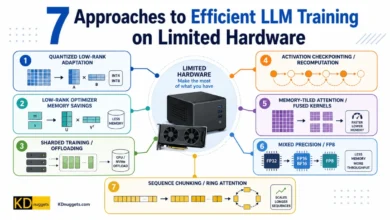
As LLMs become ubiquitous in production environments, the focus has shifted from raw capability to the "unit economics" of inference. High latency and spiraling token costs remain the two greatest barriers to the widespread adoption of real-time AI features. To address these challenges, engineers are adopting a multi-pronged optimization strategy that moves away from a "one-size-fits-all" model approach.
Industry data suggests that implementing model routing—directing simpler queries to smaller, specialized models while reserving larger "frontier" models for complex reasoning—can reduce inference costs by 40% to 60%. Furthermore, the management of "context budgets" has become a specialized skill. Rather than relying on increasingly large context windows, which often lead to "lost in the middle" phenomena and higher costs, developers are utilizing multi-layered caching strategies. By persisting frequently accessed prompts and system instructions at the edge, organizations are reporting latency improvements of nearly 500 milliseconds per request, a critical threshold for maintaining user engagement in interactive applications.
Determinism in Generative Outputs: The Role of Structured Generation
One of the most significant breakthroughs in the past year has been the maturation of tools like the Outlines library, which brings deterministic certainty to LLM outputs. Historically, the stochastic nature of language models made them difficult to integrate with traditional software that requires strict data formats like JSON or SQL.
The introduction of token masking during the inference process allows practitioners to enforce syntactically legal outputs with 100% reliability. By constraining the model’s vocabulary at each step of the generation process, developers ensure that the resulting string adheres to a predefined schema. This eliminates the need for expensive "retry" loops and post-processing validation, which were previously the standard (and inefficient) methods for handling hallucinated or malformed outputs. This movement toward "Structured Language Model Generation" is viewed by many industry analysts as the bridge that finally connects generative AI with the rigid world of enterprise databases.
Chronology of Development: The Path to Agentic AI (2023–2026)
The current state of AI development is the result of a rapid three-year evolution:
- Late 2023: Focus was primarily on Prompt Engineering and basic RAG (Retrieval-Augmented Generation) to ground model outputs in private data.
- 2024: The "Agentic" shift began, with developers experimenting with autonomous loops where models could use tools and browse the web.
- 2025: High failure rates in autonomous agents led to the development of better orchestration frameworks. The industry realized that "raw" agents were too unpredictable for production.
- 2026: The rise of "Context-Driven Development" and localized orchestration. Frameworks now focus on "minimalist architecture," documenting what agents cannot do to prevent scope creep and excessive token usage.
Infrastructure for Parallel Development: Git Worktrees and AI Agents
As autonomous agents begin to take on more significant coding tasks, the traditional single-workspace Git workflow has proven inadequate. When multiple AI agents operate simultaneously on a single repository, the risk of file collisions and context loss increases exponentially.
The adoption of Git worktrees has provided a necessary infrastructure layer for this new era. By creating isolated workspaces for different branches within the same repository, developers allow various AI agents to work in parallel without interfering with one another’s environment. This isolation ensures that an agent running a test suite on a "feature" branch does not accidentally overwrite the source code being edited by a human developer or another agent on a "bugfix" branch. This workflow optimization has become a cornerstone of the "AI-Native" development shop, where the ratio of autonomous agents to human developers often exceeds three to one.
Professionalizing the Data Workforce: SQL and Specialized Portfolios
Despite the advancements in LLMs, the fundamental bedrock of data science remains SQL. However, the expectations for data portfolios have shifted. In 2026, a "generic" portfolio is no longer sufficient for employment in a competitive market. Aspiring data professionals are now encouraged to build "Real-World SQL Projects" that demonstrate domain-specific expertise.
Current hiring trends emphasize five key domains:
- Customer Churn Analysis: Demonstrating the ability to predict business loss using longitudinal data.
- Data Warehousing: Building scalable schemas that support both OLTP and OLAP workloads.
- Sales Analysis: Utilizing window functions and complex joins to derive actionable growth insights.
- Banking Segmentation: Handling sensitive financial data with an emphasis on security and precision.
- Healthcare Systems: Modeling complex relationships between patients, providers, and outcomes while maintaining data integrity.
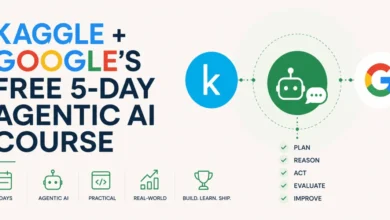
Educational resources have pivoted to meet this demand, with platforms like YouTube and specialized free courses focusing on "Agentic AI" theory and multi-agent orchestration patterns. These resources are designed to help practitioners move beyond simple demos toward building robust, evaluatable systems.
Analysis of Implications: The Minimalist Turn in Agentic Design
Perhaps the most surprising trend of 2026 is the "minimalist" movement in agentic workflows, exemplified by the emergence of Pi Coding Agents. While the initial instinct of the industry was to give agents more context and more tools, the current philosophy suggests that "less is more."
By explicitly documenting omitted features and reducing the "injected context" to the bare essentials, developers are finding that agents actually become more efficient. High-context environments often lead to "distraction" for the model, where irrelevant information triggers hallucinations or incorrect logic. Minimalist architectures reduce costs and increase the speed of execution, signaling a move toward "Precision AI" rather than "General AI" for software tasks.
Official Responses and Industry Outlook
Leading figures in the software engineering community have expressed cautious optimism regarding these developments. "We are finally moving away from treating AI as a magic black box and starting to treat it as a manageable software component," stated a senior architect at a major cloud provider during a recent symposium. "The use of patterns like the Registry and tools like Git worktrees shows that we are applying 50 years of software engineering wisdom to the 3-year-old field of LLM application development."
The broader impact of these advancements is a significant lowering of the barrier to entry for complex system creation, provided the developer understands the underlying architectural principles. As local AI agent orchestration becomes more secure and cost-effective through Python frameworks, the reliance on expensive, centralized API providers may begin to wane, favoring "Local-First AI" for enterprise applications.
The trajectory for the remainder of 2026 suggests that the integration of Context-Driven Development—where project specifications and architectural constraints are persisted directly within repository files—will become the standard. This will enable AI agents to maintain a "memory" of project goals across sessions, finally resolving the persistent issue of context loss that has plagued AI-assisted coding since its inception. The focus remains clear: building systems that are not just intelligent, but structured, predictable, and economically viable.