Microsoft Unleashes Record-Breaking 570+ Security Patches, Citing AI-Driven Vulnerability Discovery

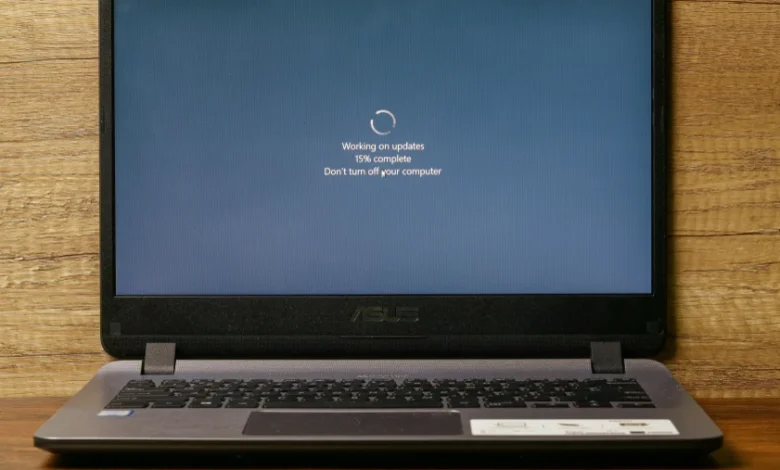
Microsoft Corp. today released an unprecedented volume of software updates, addressing at least 570 security vulnerabilities across its Windows operating systems and other software. This colossal patch rollout represents nearly triple the number of fixes delivered in last month’s already record-setting Patch Tuesday release, signaling a significant shift in the landscape of software security. The Redmond-based tech giant attributes this burgeoning count of discovered flaws to the accelerating capabilities of artificial intelligence, which is increasingly aiding in the identification of software weaknesses.
Unprecedented Volume: A Deeper Dive into the Numbers
The sheer scale of this month’s security update is a stark indicator of the evolving challenges in software security. With over 570 vulnerabilities addressed, Microsoft’s July 2026 Patch Tuesday sets a new benchmark for the company. Among these hundreds of fixes, a particularly concerning subset includes nearly 60 bugs that earned a "critical" severity rating. This designation is reserved for vulnerabilities that, if exploited, could allow malicious actors or malware to gain remote control over a Windows device with minimal or no interaction from the user. Such critical flaws pose an immediate and severe threat, demanding urgent attention from system administrators and individual users alike.
Beyond the critical vulnerabilities, Microsoft also tackled three "zero-day" flaws. Zero-day vulnerabilities are those that are unknown to the vendor and for which no patch exists at the time of their discovery and, critically, often at the time of their active exploitation. Two of these three zero-days are particularly alarming as they are already being exploited "in the wild," meaning attackers have discovered and are actively leveraging these weaknesses to compromise systems. The presence of actively exploited zero-days underscores the urgency for users to apply these patches, despite the operational challenges presented by such a massive update.
The Shadow of Zero-Days: Immediate Threats
The three zero-day weaknesses patched this month represent some of the most pressing threats. Two of these flaws are classified as "elevation of privilege" vulnerabilities, which, if exploited, allow an attacker to escalate their user rights on a compromised Windows system from a standard user to an administrator. This level of access grants attackers significant control, enabling them to install programs, modify data, and create new accounts. These include CVE-2026-56155, an Active Directory Federation Services (ADFS) bug, and CVE-2026-56164, a vulnerability found within Microsoft SharePoint. These particular flaws are concerning due to their potential impact on enterprise environments, where ADFS and SharePoint are critical components for identity management and collaborative data sharing.
The third zero-day, CVE-2026-50661, is a security feature bypass vulnerability affecting Windows BitLocker. BitLocker is Microsoft’s full-disk encryption feature, designed to protect data by encrypting entire volumes. This bug could potentially allow attackers who have physical access to a device to bypass BitLocker’s encryption and gain unauthorized access to encrypted data. While Microsoft stated that this particular bug has been publicly detailed, it also noted that it was not aware of any active exploitation of CVE-2026-50661 at the time of the patch release. Nevertheless, the potential for data compromise through physical access remains a serious concern for devices containing sensitive information. In total, approximately 250 other elevation of privilege flaws were also fixed this month, further highlighting the widespread nature of these types of vulnerabilities.
Artificial Intelligence: A Double-Edged Sword in Cybersecurity
The burgeoning patch counts are not merely an anomaly but a trend Microsoft explicitly attributes to the increasing role of artificial intelligence in vulnerability discovery. Pavan Davuluri, Microsoft Executive Vice President, articulated this shift in a blog post on July 9, stating that Windows users should anticipate "a higher volume of security updates included in each security release." Davuluri elaborated on the profound impact of AI, noting, "The pace of vulnerability discovery is changing with advances in AI making it possible to find more issues, faster, across more code, with new mechanisms that can accelerate both discovery and analysis." This statement suggests a proactive approach by Microsoft, leveraging AI to scour its vast codebases for potential weaknesses before they can be exploited by malicious actors.
However, the rapid evolution of AI presents a double-edged sword. While AI is enhancing the speed and efficacy of vulnerability discovery and remediation for defenders, it is simultaneously empowering attackers. AI models can quickly analyze known software flaws and generate working exploits, dramatically reducing the time attackers need to weaponize vulnerabilities. This acceleration on both sides creates a dynamic and increasingly challenging environment for cybersecurity professionals. The traditional cat-and-mouse game between defenders and attackers is now being played at machine speed, requiring constant adaptation and innovation from security teams.
The Evolving Threat Landscape: Beyond Windows Core
The scope of this month’s updates extends beyond core Windows components, touching upon newer offerings like Microsoft Copilot. Jack Bicer, director of vulnerability research at Action1, drew specific attention to CVE-2026-48561, a critical remote code execution (RCE) flaw found in Microsoft Copilot. This vulnerability carries a high CVSS (Common Vulnerability Scoring System) threat score of 9.6 out of 10, indicating severe potential impact. An RCE flaw allows an unauthorized attacker to execute arbitrary code on a vulnerable system over a network, potentially leading to complete system compromise.
Microsoft’s advisory details a concerning attack vector for this Copilot bug: an attacker could exploit it by hosting a malicious website. When a user visits this site using Microsoft Edge for Android, the site could automatically send crafted prompts to Copilot, triggering the remote code execution. This highlights the expanding attack surface presented by AI-integrated applications and the need for rigorous security testing even in nascent technologies. The integration of AI into user-facing applications like Copilot introduces new paradigms for exploitation, moving beyond traditional software vulnerabilities to encompass potential abuses of AI model interactions.
Reassessing Risk: The Exploitability Index Under Scrutiny
Microsoft has historically used an "exploitability index" to provide its best estimate of how likely attackers are to develop a reliable exploit for a given vulnerability. This index serves as a guide for organizations to prioritize patching efforts. However, with the advent of AI, this traditional assessment model is facing significant scrutiny. Satnam Narang, senior staff research engineer at Tenable, argues that Microsoft’s exploitability index needs to adapt more rapidly to the "machine speed of discovery" and exploitation.
Narang points to a critical example from this month’s release: the SharePoint zero-day (CVE-2026-56164). Microsoft initially rated this flaw as "less likely" to be exploited. Yet, the Cybersecurity and Infrastructure Security Agency (CISA) added this very vulnerability to its Known Exploited Vulnerabilities catalog on July 1, well before Patch Tuesday, indicating active exploitation. This discrepancy highlights a growing chasm between traditional human-centric risk assessment and the reality of AI-accelerated exploitation.
Further validating this concern, Narang cited findings from Anthropic’s Red Team. Their research on known vulnerabilities (n-days) revealed the fragility of existing exploitability assessments. Anthropic’s Mythos Preview model was able to produce proof-of-concept exploits for 13 out of 14 vulnerabilities that Microsoft had rated as "Exploitation Less Likely" or "Exploitation Unlikely." Narang concluded, "What this means is that our way of looking at Patch Tuesday has changed, because the exploitability index is centered around humans, not AI tools, and as these tools continue to improve, defense needs to improve alongside it." This expert commentary underscores a fundamental paradigm shift: the criteria for assessing exploitability must now account for the capabilities of AI, not just human ingenuity.
Industry-Wide Shift: Accelerating Patch Cadence
The phenomenon of increased patch volumes is not confined to Microsoft alone; it represents a broader industry trend. Chris Goettl, an expert at Ivanti, observed that several other major software makers are also accelerating their patch cadences. Adobe, for instance, announced a move to twice-monthly security bulletins, to be published on the 2nd and 4th Tuesday of each month. Notably, Adobe also cited AI as a factor in accelerating their patch cycles, mirroring Microsoft’s stance.
Beyond Adobe, companies like Cisco, Mozilla, and Oracle are also shipping updates more frequently. Google, a perennial leader in software development and security, released an impressive batch of over 900 security fixes in June 2026, further illustrating the pervasive nature of this trend. This collective acceleration across major software vendors signals a new era in vulnerability management, driven by the dual forces of sophisticated threat actors and AI-powered discovery tools. The implications for IT departments, who must manage an ever-growing stream of updates across diverse software ecosystems, are substantial.
Historical Context of Patch Tuesday
Patch Tuesday, a moniker for Microsoft’s monthly security update release, originated in October 2003. Prior to this, Microsoft released patches on an ad-hoc basis, often causing disruption for IT administrators who struggled to keep up with unpredictable update schedules. The standardization of a monthly release, typically on the second Tuesday of each month, provided IT professionals with a predictable rhythm for planning and deploying security updates. Over the years, Patch Tuesday has become a critical event in the cybersecurity calendar, defining the operational tempo for vulnerability management worldwide.
The consistent growth in patch numbers reflects not only the increasing complexity of software but also the maturing field of vulnerability research. What began as a handful of fixes each month has steadily escalated, culminating in the record-breaking numbers seen today. This evolution underscores the ongoing arms race between software developers striving for secure code and malicious actors seeking weaknesses, a dynamic now significantly amplified by AI.
Implications for Users and IT Administrators
The sheer volume of patches released this month presents significant operational challenges for both individual users and, more critically, enterprise IT departments. For IT administrators, the process of testing, validating, and deploying hundreds of patches across diverse systems and applications is a monumental task. Each patch carries a potential, albeit small, risk of introducing system stability issues or compatibility conflicts. With such a gigantic patch count, the chances of encountering such issues are proportionally increased. This necessitates careful planning, robust testing environments, and potentially staggered deployment strategies to mitigate risks.
For end-users, while applying updates promptly is generally best practice, the current scenario warrants a cautious approach. Cybersecurity experts often recommend backing up critical Windows systems and/or data before applying operating system updates, a recommendation that becomes even more pertinent with this month’s release. Given the unprecedented volume of fixes, it may be prudent for end-users and smaller organizations to wait a few days after the initial release. This brief delay allows the broader cybersecurity community to identify and report any unforeseen stability issues or regressions introduced by the patches, enabling users to proceed with more informed caution. Organizations should also prioritize the deployment of critical and zero-day patches first, focusing on the highest-risk vulnerabilities.
The Future of Vulnerability Management in the AI Era
The July 2026 Patch Tuesday serves as a watershed moment, illustrating a fundamental shift in vulnerability management driven by AI. The ability of AI to rapidly discover flaws and, conversely, for attackers to quickly devise exploits, means that traditional security paradigms are under immense pressure. Going forward, security teams will need to embrace AI-powered defense tools, implement continuous monitoring, and adopt more agile patch management strategies. The emphasis will shift from reactive patching to proactive security posture management, with a stronger focus on threat intelligence and predictive analysis.
The ongoing collaboration between software vendors, security researchers, and government agencies like CISA will become even more critical in this rapidly evolving landscape. The challenge lies not just in patching vulnerabilities but in adapting the entire ecosystem of software development, security assessment, and incident response to the speed and scale dictated by artificial intelligence. This new era demands innovation, collaboration, and a relentless commitment to staying ahead of the ever-advancing threat.