The Evolution of AI-Assisted Software Engineering Leveraging Git Worktrees for Parallel Development and Multi-Agent Workflows

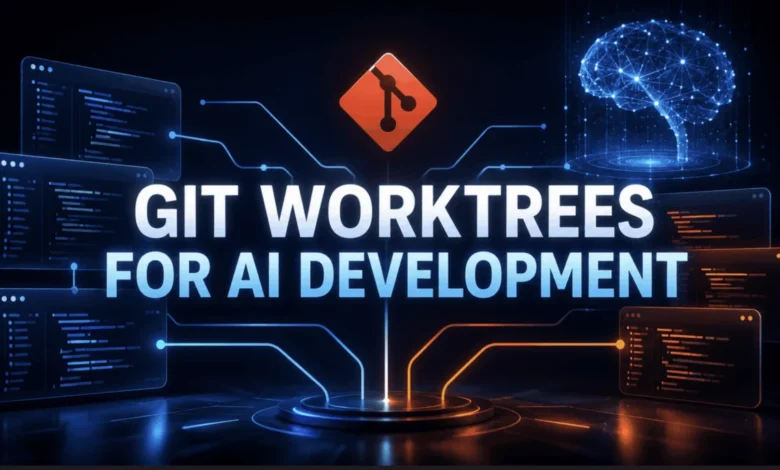
The rapid integration of autonomous AI coding agents into the professional software development lifecycle has exposed a significant friction point in traditional version control workflows. As tools like Claude Code, Cursor, and OpenAI’s Codex transition from simple autocomplete assistants to sophisticated agents capable of multi-file rewrites, the standard "branch-and-stash" method of Git management has become a bottleneck for productivity. Recent industry data indicates that while 51% of professional developers now utilize AI tools on a daily basis, a mere 17% report that these tools have meaningfully improved team collaboration. This discrepancy highlights an infrastructure gap: teams are deploying high-velocity AI agents on top of a single-directory workflow designed for human-speed linear development.
The technical solution gaining traction among engineering leads is the utilization of Git worktrees—a feature introduced in Git version 2.5 in 2015 that has found new relevance in the era of agentic AI. By allowing a single repository to maintain multiple linked working directories simultaneously, worktrees enable developers to run several AI agents in parallel isolation, effectively turning a single workstation into a multi-agent development hub.
The Architecture of Isolation: Understanding Git Worktrees
At its core, a standard Git repository consists of a single .git directory and one associated working tree. When a developer switches branches, Git updates the files in that working tree to reflect the state of the target branch. For AI agents, which build internal context based on the current state of the filesystem, this switching is catastrophic. An agent mid-task loses its orientation, and any uncommitted changes must be stashed, often leading to corrupted state or lost progress when the agent is reactivated.
Git worktrees break this one-to-one relationship. A worktree is a separate physical directory checked out from the same repository, sharing the same underlying .git history, objects, and configuration. This allows a developer to have the main branch open in one folder for urgent hotfixes, a feature-auth branch in another for an AI agent to handle authentication logic, and a refactor-api branch in a third for a separate agent to modernize endpoints.
Unlike the naive approach of creating multiple clones of a repository, which duplicates the entire history and complicates synchronization, worktrees are lightweight. They share the same local database, meaning a commit made in one worktree is immediately visible across all others. This architecture ensures that agents remain physically isolated on the filesystem—preventing them from overwriting each other’s configuration files or dependencies—while remaining logically connected through the Git backend.
Case Study: The Microsoft Global Hackathon 2025
The practical utility of this workflow was demonstrated during the Microsoft Global Hackathon in late 2025. Engineering lead Tamir Dresher faced the challenge of scaling output during a high-pressure development window where multiple features required simultaneous attention. Traditional branch switching proved too slow for the agents being deployed.
Dresher’s team implemented a "Virtual AI Development Team" model using worktrees. In this setup, each major feature was assigned its own dedicated worktree and a corresponding IDE instance. By running three to four agents in parallel, the team moved from a sequential development model to a concurrent one. Dresher’s role transitioned from a primary coder to a technical lead and orchestrator, focusing on scoping tasks within context files, reviewing the diffs produced by the agents, and managing the integration of finished work into the primary branch.
This experiment yielded three critical findings for the industry. First, it eliminated the "context-switching tax" that typically degrades LLM performance. Second, it provided a natural "sandbox" for agents, where failing tests or broken builds in one worktree had zero impact on the stability of other ongoing tasks. Third, it mirrored the human pull-request (PR) workflow, allowing for rigorous code review of AI-generated contributions before they reached the main codebase.
The Role of Architectural Context in Agent Performance
A pivotal factor in the success of parallel agent workflows is the provision of high-quality context. Research presented at the International Conference on Software Engineering (ICSE) 2026 underscored this necessity. The study confirmed that agents provided with structured architectural documentation—rather than just raw code access—showed measurable improvements in functional correctness and code modularity.
To implement this, practitioners have adopted the use of AGENTS.md or CLAUDE.md files located in the repository root. These files serve as the "mission briefing" for any AI agent entering the worktree. They define build commands, testing protocols, architectural constraints, and "prohibited zones" where the agent is forbidden from making changes. In a multi-worktree environment, these files are updated per-branch to define the specific acceptance criteria for that isolated task. This prevents "scope creep" where an agent might otherwise attempt to refactor unrelated parts of the system, leading to massive and difficult-to-review PRs.
Technical Implementation and Lifecycle Management
Establishing a professional worktree workflow requires more than just basic Git commands; it requires a systematic approach to environment parity. Because each worktree is a new directory, it does not automatically inherit untracked files such as .env configurations or local dependency folders like node_modules.
The lifecycle of a high-performance AI worktree typically follows a five-stage chronology:
- Initialization: Using the
git worktree addcommand to create a new directory and branch. - Environment Mirroring: Scripting the movement of
.envfiles and the execution of package managers (npm, pip, or cargo) to ensure the agent has a functional runtime environment. - Contextualization: Defining the task boundaries within the
AGENTS.mdfile. - Execution: Launching the AI agent within the specific worktree directory.
- Synchronization: Regularly rebasing the worktree branch against the main branch to prevent "branch drift."
Branch drift is a significant risk in parallel development. If a worktree remains isolated for too long while the main branch evolves, the eventual merge becomes a complex conflict-resolution exercise. Industry best practices now suggest a "sync-at-checkpoint" strategy, where the developer or an automated script rebases the agent’s work onto the latest main every time a significant sub-task is completed.

Strategic Implications for the Software Industry
The shift toward worktree-based parallel development has broader implications for the structure of engineering teams. As AI agents handle an increasing volume of routine implementation tasks, the value of human engineers is shifting toward architectural design, security auditing, and system integration.
From a DevOps perspective, the rise of parallel agent environments necessitates more robust local machine resources. Running multiple IDE instances, language servers, and test suites simultaneously demands higher RAM and CPU allocations than the single-threaded workflows of the past decade. Companies are beginning to respond by providing developers with high-performance workstations or cloud-based development environments (like GitHub Codespaces or Gitpod) that can dynamically scale to support multiple active worktrees.
Furthermore, this workflow is redefining the "Junior Developer" role. Traditionally, junior engineers learned by performing the very tasks now being assigned to AI agents in worktrees. Engineering leaders are now tasked with finding new ways to mentor staff, often by involving them in the oversight and review of the agents working within these parallel structures.
Conclusion: A New Standard for Productivity
Git worktrees, once a niche feature for advanced users, have emerged as an essential infrastructure component for the modern AI-augmented developer. By solving the collision problems inherent in multi-agent workflows, worktrees allow teams to move beyond the limitations of linear development.
The data from 2025 and 2026 suggests that the most successful engineering organizations will be those that treat AI agents not just as better IDE plugins, but as digital collaborators that require their own dedicated workspaces. Through the combination of Git worktrees for physical isolation, structured context files for logical guidance, and rigorous synchronization habits, the software industry is finally beginning to close the gap between the adoption of AI and the realization of its full collaborative potential. The model writes the code; the engineer creates the environment where that code can be written safely, efficiently, and in parallel.