The rapid evolution of generative artificial intelligence has fundamentally altered the landscape of digital content creation. As businesses face mounting pressure to maintain a consistent online presence, the reliance on AI-driven writing assistants has moved from a niche experiment to an industry standard. These platforms, powered by sophisticated Large Language Models (LLMs), have enabled marketing teams and solo entrepreneurs to produce high-quality articles, social media copy, and technical documentation at a fraction of the time and cost historically associated with traditional copywriting.

The Rise of Generative AI in the Content Lifecycle
The integration of AI into the content workflow gained significant momentum between 2020 and 2022, a period marked by the transition toward remote work and a surge in digital consumption. According to recent industry reports, over 60% of marketing professionals now utilize some form of AI-assisted writing tool to draft initial content briefs, generate email campaigns, or optimize SEO metadata. This shift is not merely about automation; it represents a strategic pivot toward scalability. By offloading repetitive drafting tasks to machine learning models, human creators are increasingly positioned as editors and strategists, focusing on high-level narrative architecture rather than sentence-level construction.
Top 10 AI Writing Platforms: A Comprehensive Overview
While the market is saturated with dozens of emerging tools, ten platforms have consistently distinguished themselves through accuracy, feature depth, and integration capabilities.
1. Jasper AI
Formerly known as Jarvis, Jasper AI has established itself as a premier enterprise-grade solution. Utilizing advanced natural language processing (NLP), it excels in maintaining specific brand voices across diverse platforms. Its "Boss Mode" functionality is particularly noted for allowing users to command the AI to produce long-form content, such as white papers or extensive blog posts, with minimal manual intervention.
2. Copy.ai
Designed specifically for the marketing funnel, Copy.ai focuses on the rapid generation of short-form content. By leveraging over 90 specialized templates, it allows users to pivot quickly between social media captions, Facebook ad copy, and product descriptions. It is widely regarded as a high-velocity tool for teams that prioritize daily output volume.

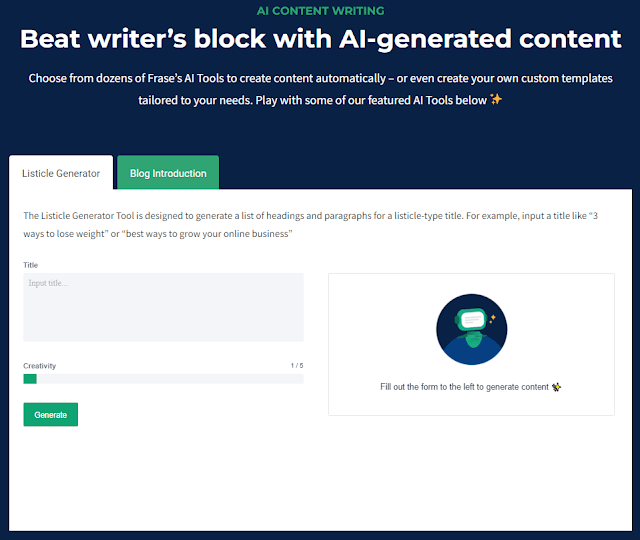
3. Frase.io
Frase differentiates itself by placing SEO at the center of the writing process. Unlike generalist tools, Frase analyzes top-performing search results for a given query and suggests content structures that are statistically likely to rank well on search engines. It serves as both a research assistant and a writing tool, bridging the gap between content creation and search visibility.
4. Article Forge
Article Forge offers a more hands-off approach, distinguishing itself through its autonomous content generation capabilities. By inputting a single keyword, users can trigger the creation of a complete, coherent article. This tool is frequently utilized by SEO specialists focused on building niche site clusters where rapid content deployment is a critical success factor.
5. Rytr
Rytr is often cited for its accessibility and user-friendly interface. As a versatile assistant, it supports multiple languages and tones, making it a favorite among freelancers and small business owners who require a cost-effective, all-in-one solution for emails, blog posts, and academic-style writing.
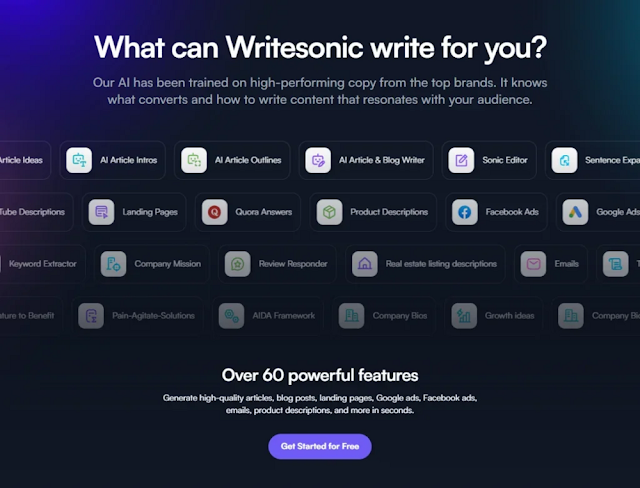
6. Writesonic
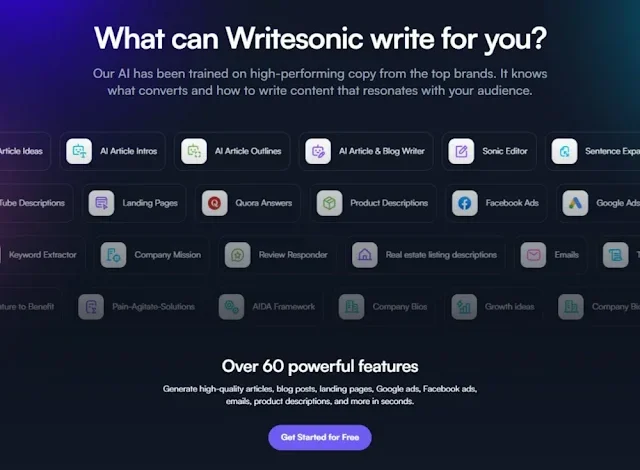
Writesonic provides a robust ecosystem for content creators, featuring integrated grammar and plagiarism checkers. Its strength lies in its ability to generate high-converting landing page copy. By focusing on psychological triggers in its templates, it helps small businesses maximize their conversion rates without requiring extensive copywriting experience.

7. CopySmith
CopySmith is geared toward high-volume enterprise e-commerce needs. Its ability to generate thousands of unique, SEO-optimized product descriptions simultaneously makes it an essential tool for large-scale online retailers looking to refresh their catalogs without manual entry.
8. Hypotenuse.ai
Similar to CopySmith, Hypotenuse.ai is optimized for e-commerce, though it brings additional capabilities in visual content creation and infographic generation. Its clean interface allows users to manage vast quantities of product data, ensuring that the generated copy remains accurate to the product specifications.

9. Kafkai
Kafkai is unique in its approach to niche-specific content. It is designed specifically for marketers who require vast amounts of content across narrow subject areas. By focusing on machine-generated niche articles, it provides a scalable solution for those managing extensive link-building campaigns.
10. Peppertype.ai
Peppertype functions as a virtual content desk. It uses a clean, intuitive design that allows users to select a content type and receive multiple variants instantly. It is particularly effective for teams looking to brainstorm headline ideas or iterate on different angles for a single marketing campaign.
Chronology of AI Integration
The trajectory of these tools reflects broader advancements in computing power. Early iterations in 2018 were often limited to simple sentence completion based on basic probability models. By 2020, the emergence of transformer-based architectures allowed for context-aware writing. Today, the focus has shifted toward "Human-in-the-Loop" systems, where the software provides the foundational draft, and human experts perform fact-checking and emotional refinement.
Economic and Operational Implications
The adoption of these tools carries significant economic implications for the labor market. While some concerns have been raised regarding the displacement of entry-level writing positions, many firms report that these tools actually increase the demand for high-level editorial talent. The role of the "Content Manager" is evolving into that of an "AI Editor," where the ability to prompt, curate, and fact-check AI-generated text has become a high-value skill set.

Furthermore, the cost-efficiency of these tools allows startups and small businesses to compete with larger organizations that have historically held monopolies on high-volume content production. However, experts warn that over-reliance on automated tools without human oversight can lead to "content decay"—a phenomenon where repetitive, low-quality AI text floods search results, potentially triggering algorithmic penalties from major search engines like Google.
Strategic Best Practices
For organizations looking to integrate these tools, industry analysts recommend a three-tiered approach:

- Strategic Prompting: Investing time in training staff on how to provide detailed, context-rich prompts to AI models to ensure the output aligns with brand standards.
- Fact-Checking Protocols: Because AI models can occasionally "hallucinate" or provide outdated information, a mandatory human verification layer is essential for technical, medical, or financial content.
- SEO Synergy: Using tools like Frase or SurferSEO to ensure that AI-generated content is not only readable but also optimized for the specific intent of the target audience.
The Future of AI-Assisted Communication
As we look toward the remainder of the decade, the distinction between human-written and AI-assisted content will likely become increasingly blurred. The focus of these platforms is shifting from simple text generation to multi-modal content creation, incorporating video, data visualization, and interactive elements.
The successful digital marketer of the future will not be the one who generates the most content, but the one who best orchestrates the synergy between human creativity and the immense processing power of artificial intelligence. By leveraging these top-tier tools, businesses can maintain the necessary scale to compete in a global digital economy while preserving the authenticity that drives meaningful consumer engagement. As these technologies mature, the ongoing challenge for the industry will remain balancing the efficiency of automation with the nuance and empathy that only human editorial oversight can provide.