Building Bridges Across the Asphalt: The Unveiling of the Wallis Annenberg Wildlife Crossing Aims to Heal Fragmented Ecosystems in Los Angeles County

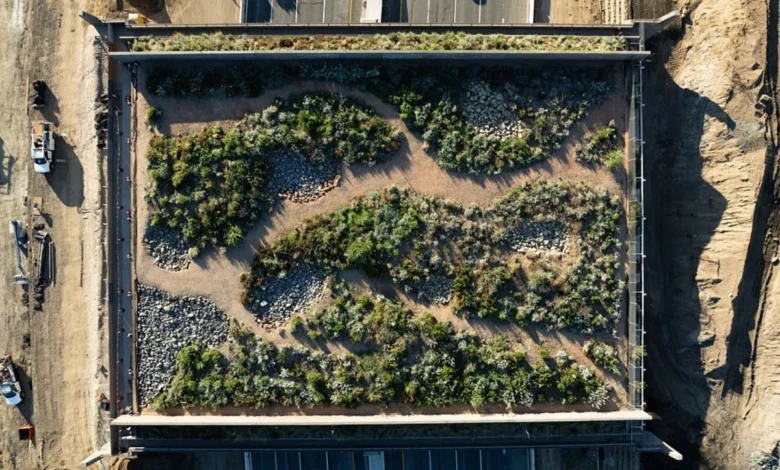
Los Angeles County is renowned for its sprawling network of multi-lane freeways, a defining feature of Southern California transportation that moves millions of commuters daily. However, this same concrete infrastructure has long served as an impassable barrier for the region’s indigenous fauna. Soon, California drivers speeding down the 101 freeway will no longer be the only ones navigating the landscape with ease. The completion of the Wallis Annenberg Wildlife Crossing represents a monumental shift in how urban planning intersects with environmental conservation, offering a safe and naturalized pathway for local wildlife.
Spanning 10 lanes of roaring traffic and an adjacent access road, the Wallis Annenberg Wildlife Crossing is officially recognized as the largest wildlife crossing in the world. The structure connects the vital ecological zones of the Santa Monica Mountains to the Simi Hills, bridging a geographic divide that has isolated animal populations for decades. As government officials, conservationists, and community stakeholders prepare for the official ribbon-cutting on December 2, the project stands as a crowning achievement in a decade-long collaborative effort between public agencies, private donors, and wildlife advocacy groups.
The Anatomy and Scale of a Megaproject
Constructed as a massive, heavily vegetated overpass, the Wallis Annenberg Wildlife Crossing is far more than a simple concrete bridge. Engineered to blend seamlessly into the surrounding natural terrain, the structure is layered with native soil, drought-tolerant shrubs, and trees designed to mimic the natural habitat of the local hillsides. This deliberate landscaping is critical to encouraging hesitant animals to step onto the span, ensuring the structure feels like an extension of the wilderness rather than a man-made overpass.
The project has been financed through a unique public-private partnership, combining substantial government infrastructure funding with significant philanthropic donations. This coalition of financial and logistical support reflects a growing recognition that urban sprawl must be mitigated with restorative ecological infrastructure. Partners spearheading the initiative include the National Wildlife Federation, the Mountains Recreation and Conservation Authority, and the National Park Service, all of which have contributed to the comprehensive scientific monitoring program designed to measure the crossing’s success over the coming years.
A Decade in the Making: The Chronology of the 101 Crossing
The realization of the Wallis Annenberg Wildlife Crossing is the culmination of nearly ten years of relentless advocacy, scientific research, and engineering design. The timeline of the project underscores the immense complexity of building over a major interstate highway without completely halting the flow of Southern California traffic.
The genesis of the project took root in the early 2010s, as biologists tracking local apex predators documented alarming rates of road mortality and severe genetic stagnation among urban-bound animal populations. The famous local mountain lion, P-22, became the poster child for this crisis, having successfully crossed two major freeways to take up residence in Griffith Park, where he lived a constrained life isolated from potential mates. P-22’s plight galvanized public awareness and accelerated political will for a permanent solution.
By the mid-2010s, feasibility studies identified the Agoura Hills section of the 101 freeway as the optimal location for a wildlife bridge, given its proximity to core protected open spaces in the Santa Monica Mountains and the Simi Hills. Fundraising efforts ramped up significantly toward the end of the decade, bolstered by high-profile donations, including a cornerstone contribution from philanthropist Wallis Annenberg, after whom the crossing is named. Groundbreaking commenced following years of meticulous planning, environmental reviews, and architectural design, culminating in the final structural assembly and the current phase of scientific instrumentation ahead of the December grand opening.
Addressing the Crisis of Genetic Isolation and Road Mortality
The primary impetus behind the construction of the Wallis Annenberg Wildlife Crossing is the urgent need to address two critical threats facing Southern California’s wildlife: high mortality rates from vehicle strikes and severe genetic inbreeding.
For decades, the 101 freeway acted as an unyielding wall, boxing animals into increasingly restricted pockets of land. While large mammals like mule deer, coyotes, bobcats, and the region’s imperiled mountain lion population suffer the highest profile casualties from vehicular collisions, smaller fauna—including numerous species of birds, lizards, and snakes—also face localized extinction events due to habitat fragmentation.

When animal populations are confined to isolated patches of wilderness, interbreeding becomes unavoidable. Genetic diversity plummets, leaving populations vulnerable to congenital defects, disease, and reduced adaptability to environmental stressors such as wildfires and climate change. By reestablishing a continuous corridor between the Santa Monica Mountains and the vast wilderness areas to the north, the crossing provides local fauna with access to expanded hunting ranges, new mating pools, and sustainable long-term habitat viability.
Scientific Monitoring and Trail Camera Integration
Even before the official public opening, the crossing has become a focal point of intense scientific observation. Over the past week, wildlife biologists from the National Park Service and partner organizations have been installing an extensive network of monitoring equipment within the Santa Monica Mountains National Recreation Area and directly on the bridge itself.
By the time the crossing opens to the public eye on December 2, the site will be monitored by 50 high-definition wildlife cameras and four thermal video cameras. This sophisticated surveillance array will allow researchers to meticulously track every animal that traverses the bridge, documenting species types, crossing frequencies, behavioral patterns, and demographic data. While live video feeds will initially be restricted to researchers for operational and wildlife security reasons, project leads have confirmed that curated photo streams will be made publicly available, allowing nature enthusiasts and supporters to witness the bridge’s ecological impact in real time.
Early Successes and Surprising First Visitors
The efficacy of the crossing is already being tested, and early indicators have exceeded the most optimistic projections of project scientists. Trail cameras installed during the final phases of construction have already captured historic moments, including the crossing’s very first visitor: a solitary coyote that trotted up the unpaved, maturing path under the cover of night, undisturbed by the absence of blinding headlights and urban noise.
The sighting caught project researchers off guard. Most experts had hypothesized that smaller, highly adaptable scavengers or rodents would test the bridge first, cautious of stepping into an unfamiliar man-made structure. Instead, the bold appearance of a coyote has shifted expectations regarding how quickly larger fauna will adapt to the corridor.
Beth Pratt, regional executive director for the National Wildlife Federation and a driving force behind the Wildlife Crossing Fund, expressed astonishment at the rapid utilization of the site. Speaking to the Los Angeles Times, Pratt noted the evolving calculus of wildlife behavior, stating that she now believes there is a distinct possibility a mountain lion could utilize the span even before the official ribbon-cutting ceremony. In the interconnected world of local predators, word travels fast, and conservationists are eager to see which species will be next to make the historic trek.
Broader Implications for Global Urban Conservation
The completion of the Wallis Annenberg Wildlife Crossing marks a watershed moment not only for California, but for urban conservation efforts worldwide. As metropolitan areas continue to expand, traditional infrastructure frequently carves up natural ecosystems, resulting in severe biodiversity loss.
The success of the 101 freeway project offers a blueprint for how densely populated regions can retroactively mend the ecological scars of highway development. By prioritizing green infrastructure that accommodates both human transit and ecological preservation, urban planners can foster a more sustainable coexistence between modern civilization and the natural world.
As the December 2 opening date approaches, the eyes of the global conservation community remain fixed on Agoura Hills. The silent, steady footsteps of the first coyotes crossing the span signal a hopeful new chapter for Los Angeles County—one where the asphalt ribbon that once divided a landscape is now bridged by the resilience of nature itself.
Related posts: