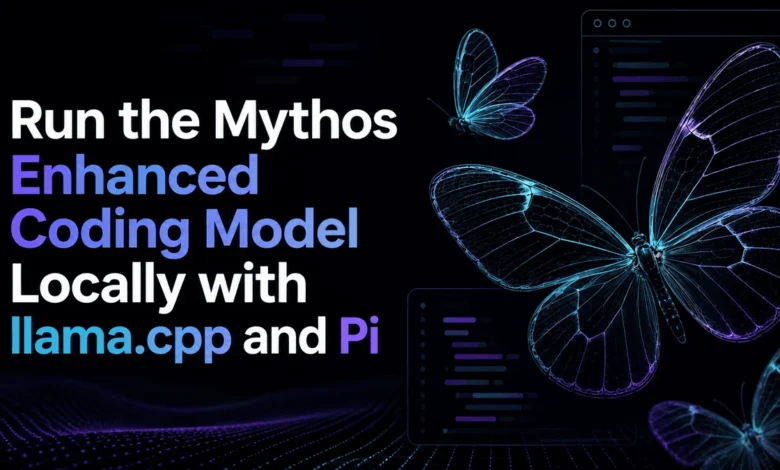
The landscape of software development is undergoing a fundamental shift as high-performance generative AI models transition from massive, cloud-dependent entities to streamlined, locally executable tools. At the forefront of this evolution is the Qwythos-9B-Claude-Mythos-5-1M, a 9-billion parameter reasoning and coding model based on the Qwen3.5 architecture. This model represents a significant milestone in the "Small Language Model" (SLM) movement, offering sophisticated agentic development capabilities and long-context reasoning within the hardware constraints of modern consumer-grade workstations. By leveraging the llama.cpp inference engine and the Pi developer agent framework, engineers can now establish a private, high-speed coding environment that rivals premium subscription-based services.
The Rise of Localized AI in Software Engineering
The release of the Qwythos-9B model comes at a time when data privacy and operational latency have become primary concerns for enterprise and independent developers alike. While cloud-based models like GPT-4 and Claude 3.5 Sonnet offer immense power, they necessitate the transmission of proprietary code to external servers and are subject to varying API costs and downtime. The Mythos-enhanced Qwythos model, specifically fine-tuned for coding workflows, addresses these issues by providing a "local-first" alternative.
The architecture of Qwythos-9B is built upon Alibaba’s Qwen3.5, a series noted for its strong performance in mathematics and logical reasoning. The "Mythos" enhancement refers to specific fine-tuning techniques designed to improve the model’s ability to follow complex instructions and maintain coherence over a massive 1-million-token context window. For developers, this means the model can ingest entire codebases, documentation sets, and historical logs, allowing it to act as a deeply informed architectural assistant rather than a simple snippet generator.
Hardware Optimization and the Quantization Strategy
One of the critical factors enabling the local execution of a 9B parameter model is quantization—a process that reduces the precision of a model’s weights to save memory and increase speed without significantly sacrificing intelligence. For users equipped with high-end consumer hardware, such as the NVIDIA RTX 4070 Ti Super with 16GB of VRAM, the Q6_K MTP (Multi-Token Prediction) quantization variant offers a high-fidelity experience.
Industry benchmarks suggest that while 16-bit precision is the gold standard for accuracy, 6-bit quantization (Q6_K) retains over 99% of the original model’s perplexity while drastically reducing the VRAM footprint. For developers with 8GB GPUs, the Q4_K_M variant has emerged as the recommended baseline, balancing speed and reasoning quality. This accessibility democratizes AI-assisted coding, allowing developers without access to industrial-grade data centers to utilize state-of-the-art reasoning engines.
Deployment Chronology: Building the Local Infrastructure
The implementation of a local coding agent follows a structured chronology, beginning with the installation of the inference engine and culminating in the integration of an agentic interface.
Phase 1: Establishing the Inference Engine
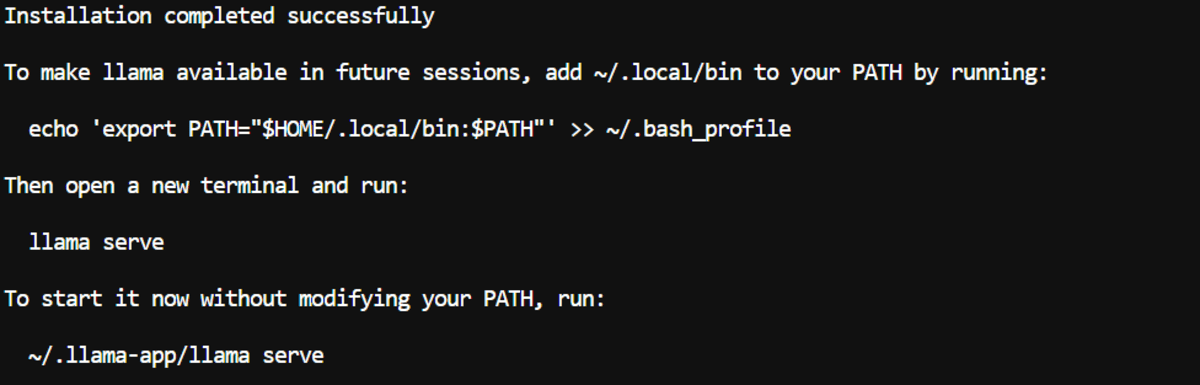
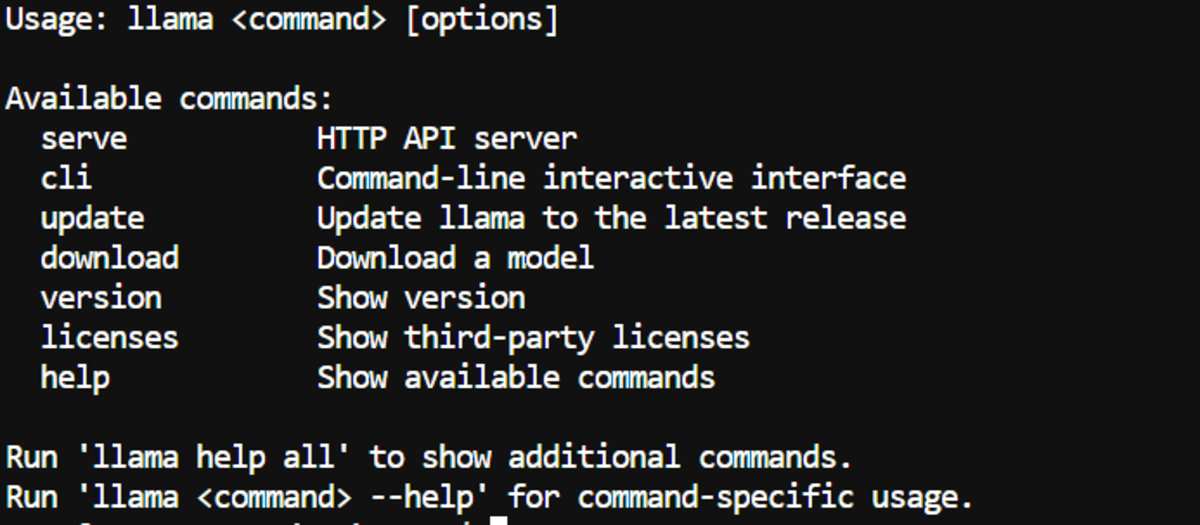
The foundation of the local setup is llama.cpp, a highly optimized C++ implementation of the Llama architecture designed for maximum performance on both CPUs and GPUs. The installation process is streamlined through a command-line interface, allowing developers to fetch the necessary binaries and configure their shell environments.

Once the environment is prepared, the configuration of the Hugging Face cache becomes a vital logistical step. Given that high-context models can require several gigabytes of storage, directing the model cache to high-capacity drives ensures that the system’s primary partition remains uncluttered—a common challenge in cloud-based virtual machines and partitioned workstations.
Phase 2: Server Configuration and Speculative Decoding
Launching the Qwythos model requires a sophisticated set of parameters to maximize hardware utilization. A key innovation in this workflow is the use of Multi-Token Prediction (MTP) speculative decoding. By using the --spec-type draft-mtp flag, the engine can predict multiple tokens simultaneously, significantly boosting throughput.

On an RTX 4070 Ti Super, this configuration has demonstrated performance speeds of approximately 81.74 tokens per second. This throughput is crucial for a fluid developer experience, as it minimizes the "wait time" between a prompt and the generated solution. Furthermore, the allocation of a 100,000-token context window allows the model to "remember" vast amounts of project data, though this requires careful VRAM management.
Phase 3: Integrating the Agentic Layer
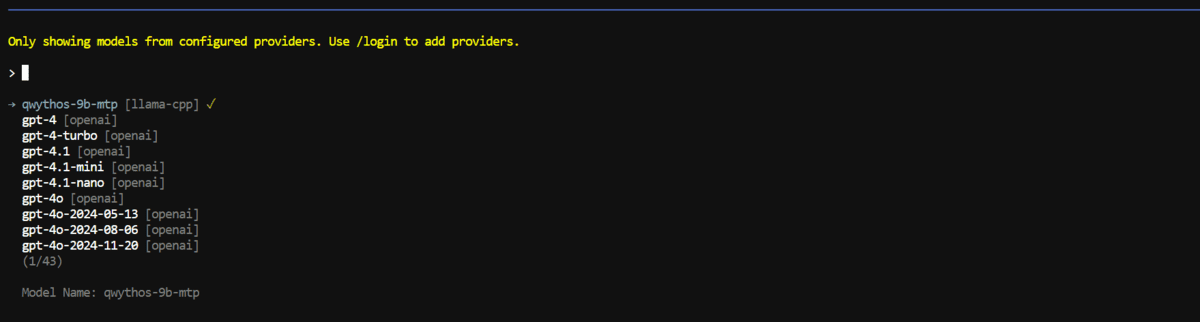
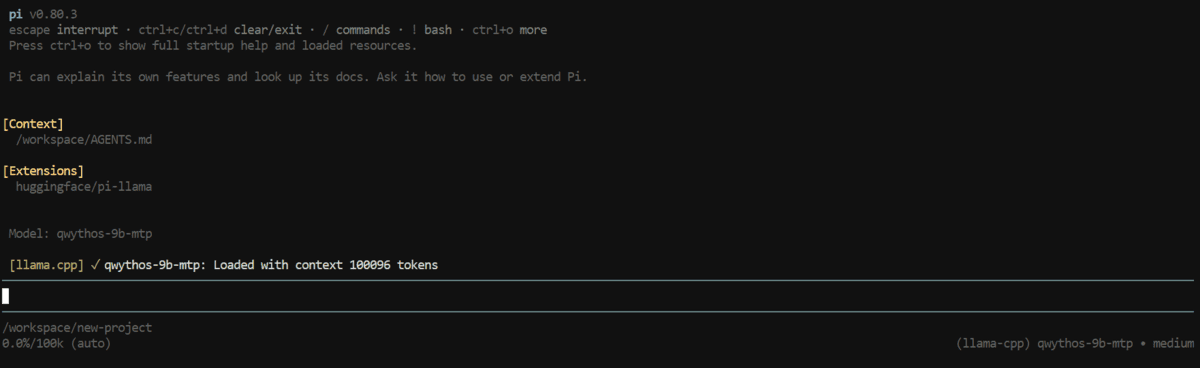
While an LLM can generate code in a chat box, a "coding agent" can interact with the file system and execute commands. Pi, a developer-centric tool, serves as this bridge. By installing the pi-llama plugin, the local llama.cpp server is transformed into an active participant in the development process. This setup creates an OpenAI-compatible API endpoint locally, allowing Pi to send instructions to the model and receive executable code in return.
Practical Validation: Benchmarking Through Real-World Tasks
The efficacy of the Qwythos-9B model in a local agentic environment has been validated through two distinct categories of software tasks: front-end application development and back-end utility scripting.
Case Study A: Front-End Logic and State Management
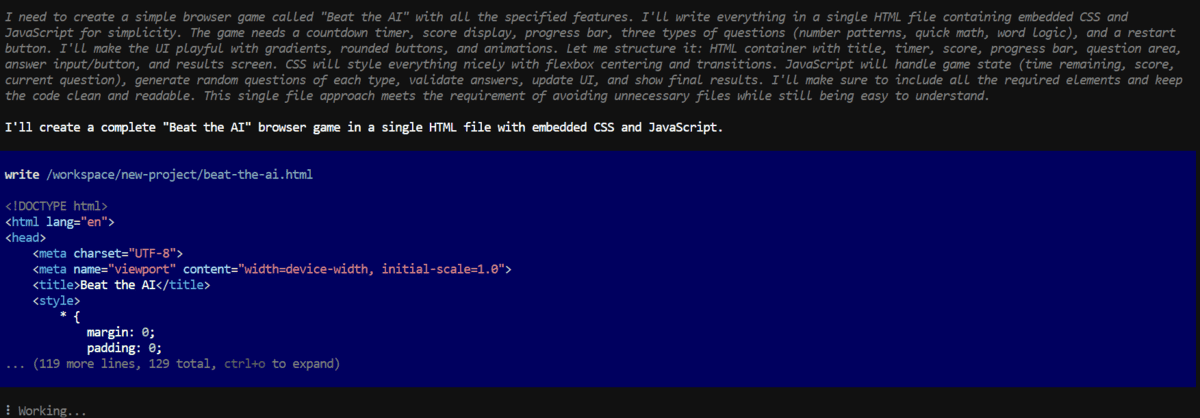
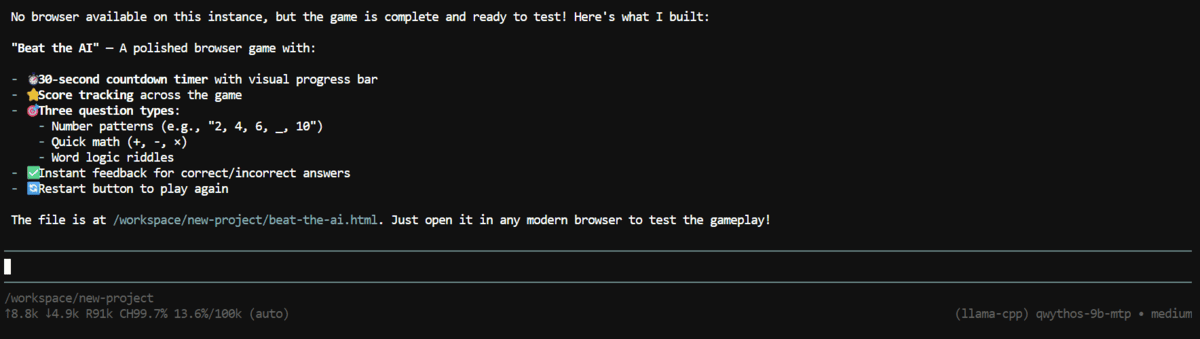
In a test involving the creation of a browser-based pattern recognition game titled "Beat the AI," the model demonstrated a sophisticated grasp of vanilla JavaScript, CSS, and HTML5. The task required the model to implement a 30-second countdown timer, dynamic score tracking, and a progress bar.
Observers noted that the model did not merely provide snippets but generated a cohesive, single-file application. This indicates a high level of "architectural awareness," where the model understands how the CSS styling interacts with the JavaScript DOM manipulation and the HTML structure. The resulting "polished" feel of the interface suggested that the Mythos fine-tuning effectively captured aesthetic and user-experience principles in addition to raw logic.
Case Study B: Back-End Tooling and Error Handling
The second validation task involved building a Python-based Command Line Interface (CLI) for converting CSV files to Excel formats. This test was designed to evaluate the model’s ability to handle external libraries (such as pandas or openpyxl), validate file paths, and manage potential runtime errors.
The Qwythos model successfully generated a script named csv2excel.py, but more importantly, it proactively generated a dummy CSV file to test its own code. This "self-testing" behavior is a hallmark of agentic reasoning. The model’s ability to verify that headers were preserved and that the output file was valid before declaring the task complete reflects a significant advancement in local AI reliability.
Technical Analysis of Performance Metrics
The success of the local Qwythos deployment is largely attributed to the specific flags used during the llama serve process. The use of --flash-attn on (Flash Attention) optimizes the attention mechanism, reducing memory usage during long-context processing. Additionally, the flags --cache-type-k q8_0 and --cache-type-v q8_0 allow the Key-Value (KV) cache to be compressed, which is essential for maintaining a 100k-token window on a 16GB GPU.
Data suggests that without these optimizations, a 9B model with a 100k context window would easily exceed the VRAM limits of most consumer cards. By offloading all layers to the GPU (--n-gpu-layers all), the system bypasses the slower system RAM, ensuring that the bottleneck remains the GPU’s compute power rather than data transfer speeds.
Broader Industry Implications and Future Outlook
The ability to run a model of Qwythos-9B’s caliber locally signals a shift in the AI economy. As models become more efficient, the "moat" held by massive cloud providers begins to thin. For the individual developer, this setup offers a "zero-marginal-cost" coding assistant—once the hardware is purchased, there are no per-token fees or monthly subscriptions.
Furthermore, this movement supports the "offline-first" development philosophy. In environments where internet connectivity is restricted for security reasons (such as government or high-security corporate sectors), local AI agents provide a way to leverage modern productivity tools without compromising the "air-gap" security model.
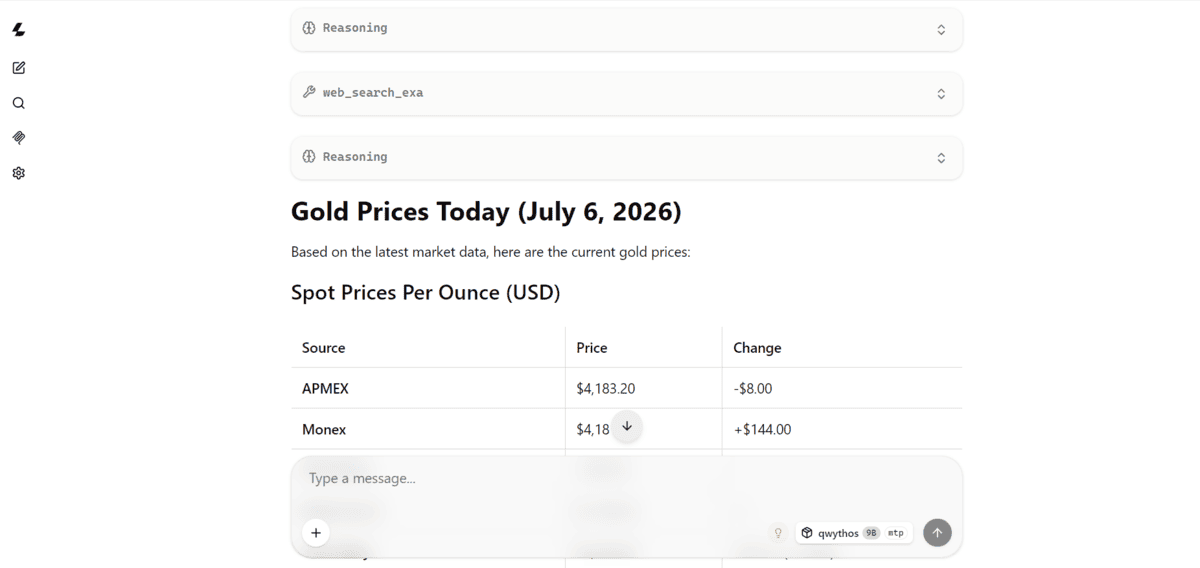
As the industry moves forward, we can expect further refinements in speculative decoding and quantization. The integration of web search capabilities and specialized context-retrieval tools (like Context7) will likely be the next step in making these local agents even more powerful. For now, the combination of Qwythos, llama.cpp, and Pi represents a robust, high-performance blueprint for the future of private, localized software engineering. Professionals who adopt these local workflows today are positioning themselves at the vanguard of a more secure, efficient, and autonomous era of digital creation.