Demystifying the Model Context Protocol: How MCP is Revolutionizing AI Agent Integration and Tool Use

The rapid expansion of artificial intelligence capabilities has brought forth a persistent challenge: how to efficiently bridge the gap between large language models and the vast ecosystem of external software, APIs, and data repositories. Historically, developers were forced to build bespoke, custom integrations for every new database, web scraper, or software development tool an AI agent needed to access. This fragmented approach introduced high maintenance costs, security vulnerabilities, and scaling bottlenecks. Enter the Model Context Protocol (MCP), an open standard designed to streamline how AI applications communicate with external data sources and tools.
While the acronym has become ubiquitous in discussions surrounding advanced coding assistants and autonomous AI agents, the underlying mechanics of how MCP functions—and how it is rapidly transforming the engineering landscape—remain deeply understood by only a fraction of developers. Originally introduced to solve the chaotic landscape of proprietary integrations, MCP establishes a universal communication layer. Rather than rewriting custom wrappers for every service, AI hosts can connect to standardized MCP servers to instantly discover, query, and execute external capabilities.
Understanding the Core Architecture and Client-Server Dynamics
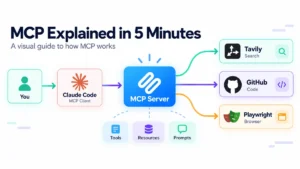
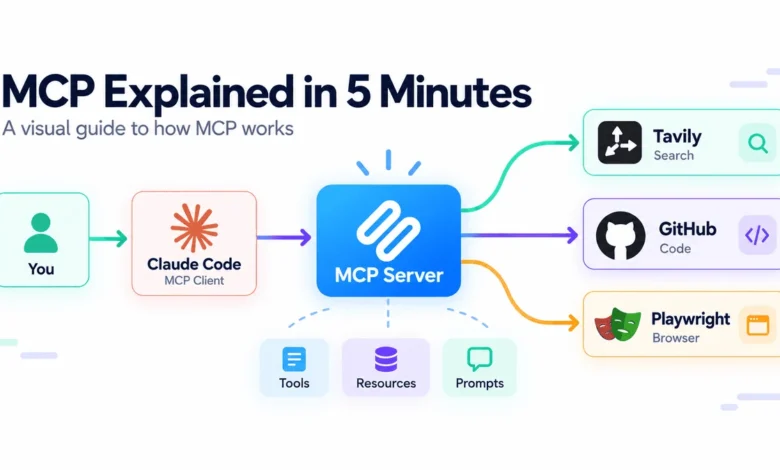
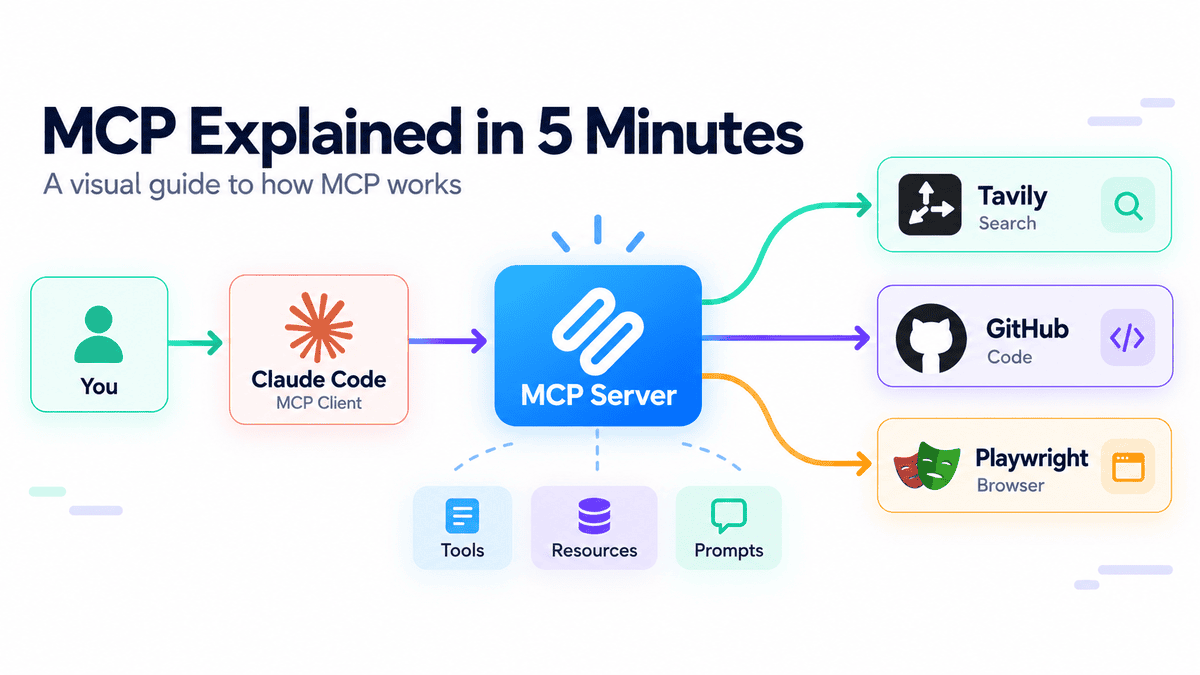
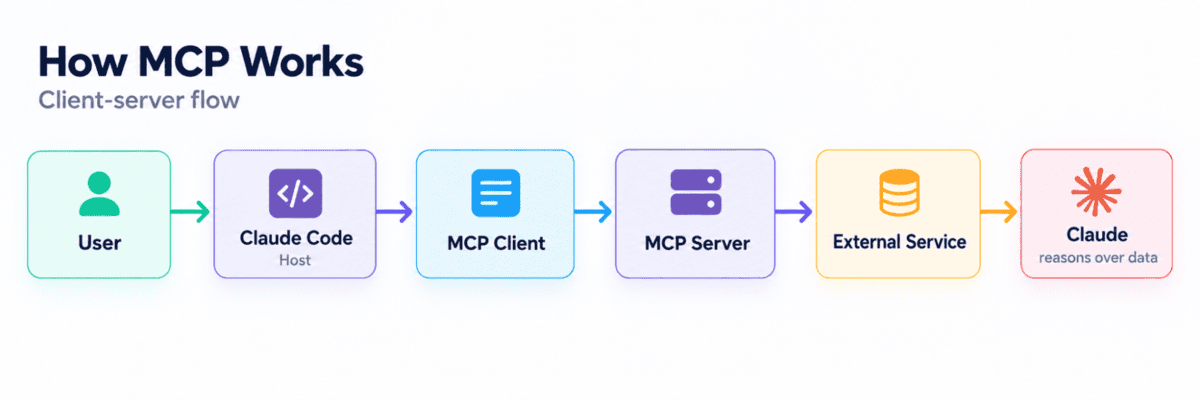
To fully grasp the utility of the Model Context Protocol, one must examine its foundational architecture. MCP operates on a straightforward client-server paradigm, though its terminology can occasionally obscure its underlying simplicity. At the center of this ecosystem is the "host"—typically an advanced AI application or environment such as Claude Code. Embedded within this host is an MCP client, which is responsible for managing connections to one or more external MCP servers.
These servers act as intermediaries, exposing a standardized set of capabilities that can be broadly categorized into tools, resources, and prompts. For the end user or the AI model, the distinction is vital. Resources allow the model to read raw data, files, or documentation, while prompts offer structured templates for human-AI interaction. However, it is the "tools" capability that serves as the catalyst for true agentic workflows. Tools empower language models to transcend static text generation, enabling them to actively write code, query databases, execute tests, and manipulate external systems in real time.
Crucially, MCP does not handle the underlying reasoning processes of the artificial intelligence. The language model itself retains the responsibility of deciding when a specific tool is required, parsing the parameters, and interpreting the returned results. MCP merely provides the secure, standardized pipe through which these interactions occur. By decoupling the reasoning engine from the interface of the external service, the protocol eliminates the need for hardcoded API parameters inside the model’s primary training weights.
Practical Implementation: Connecting Claude Code to Real-World Tools
The true value of any software protocol is measured by its utility in production environments. Modern development environments, such as Anthropic’s Claude Code, feature native support for MCP server management, allowing engineers to bootstrap complex capabilities with minimal configuration. Through simple command-line interfaces, developers can inspect, add, and manage secure connections to various external utilities using commands like claude mcp list or interactive prompts via /mcp.
To illustrate the versatility of this architecture, developers commonly integrate three distinct MCP servers that address critical pillars of modern software engineering: live web acquisition, version control management, and browser-based end-to-end testing.
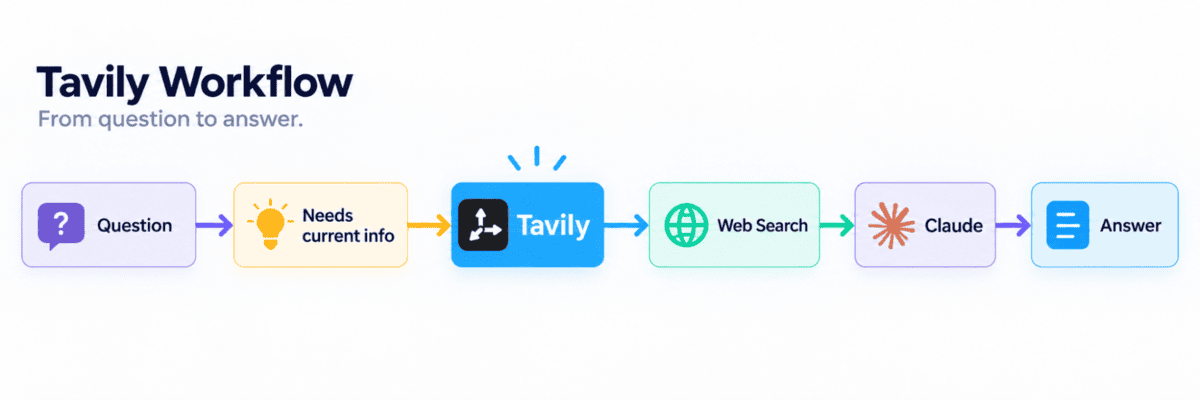
The first major hurdle for many language models is the static nature of their training data, which inherently leaves them blind to real-time developments, recent software releases, or breaking API changes. By integrating the Tavily MCP server via standard HTTP transport protocols, developers equip their AI assistants with robust web search, content extraction, and document crawling capabilities. When a user prompts the AI to research the latest documentation for a newly released software library, the model does not guess or hallucinate; it queries the Tavily MCP server, retrieves structured search results, and synthesizes the findings into actionable insights.
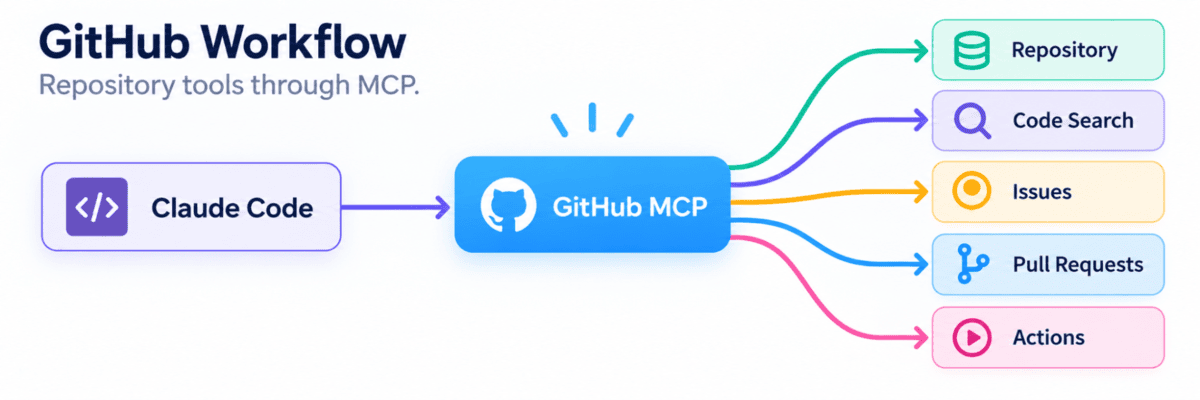
The second critical domain involves version control and repository orchestration. The official GitHub MCP server transforms code repositories into interactive environments. Depending on granted permissions, an AI assistant can read codebases, search through commit histories, investigate open pull requests, and analyze continuous integration workflows. By configuring the server with a scoped Personal Access Token, developers can issue high-level commands, such as requesting a thorough code review of a specific pull request or identifying critical unaddressed bugs. This completely removes the tedious overhead of manually copying code snippets, error logs, and issue descriptions into chat interfaces.
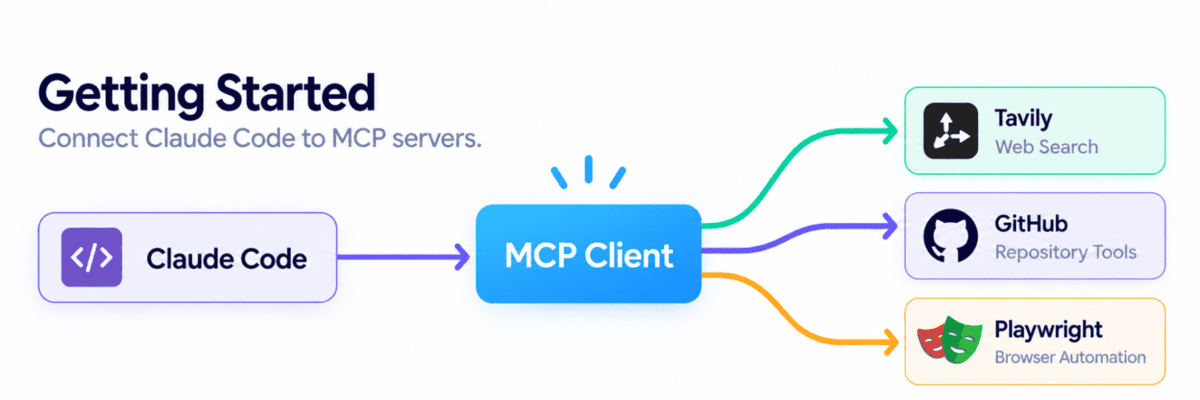
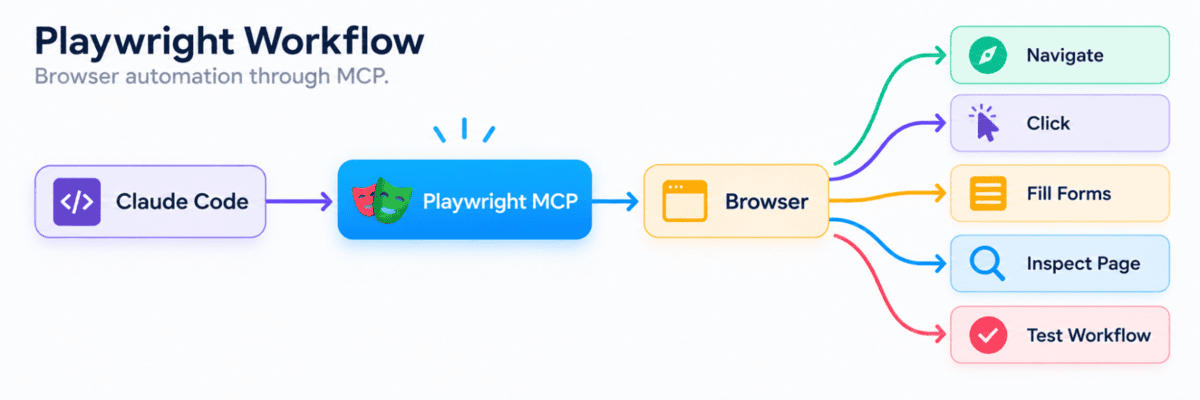
The third pillar addresses the limitations of standard APIs through browser automation via Playwright. Modern web applications often require complex interactions that cannot be satisfied by simple HTTP GET requests. Microsoft’s Playwright MCP server allows an AI agent to programmatically open web browsers, navigate pages, click buttons, fill out input forms, and execute end-to-end user flows. By translating web pages into structured accessibility snapshots, the Playwright server gives the model a reliable, token-efficient representation of the Document Object Model (DOM), enabling autonomous UI testing and deployment verification.
Evolution of the Protocol: The MCP 2026 Specification and Scalability
Since its initial introduction, the Model Context Protocol has undergone rapid iterations to meet the rigorous demands of enterprise software development and large-scale cloud deployments. A major milestone in this evolution is the implementation of the stateless core architecture introduced in recent specifications.
In earlier iterations of the protocol, maintaining long-lived sessions between an AI client and a specific server presented significant infrastructure challenges, particularly when scaling distributed workloads across cloud clusters. The updated specification fundamentally re-architects this interaction model by making requests stateless. Each incoming query now carries the necessary context to be processed independently. This architectural shift drastically simplifies the deployment of remote MCP servers on containerized infrastructure, allowing organizations to scale their internal AI toolsets dynamically in response to traffic spikes.
Furthermore, recent updates have strengthened security paradigms, enhanced authentication workflows, and introduced more granular permission frameworks. These improvements ensure that enterprise teams can safely expose sensitive internal databases and proprietary code repositories to AI agents without compromising organizational security postures.
Broader Industry Implications and the Future of AI Agents
The widespread adoption of the Model Context Protocol signifies a broader maturation within the artificial intelligence industry. As the novelty of standalone chat interfaces fades, the focus has shifted entirely toward autonomous AI agents capable of executing complex, multi-step workflows across diverse software ecosystems.
Before the advent of MCP, the AI integration landscape was plagued by fragmentation. Every developer and enterprise had to reinvent the wheel, constructing proprietary wrappers and custom connectors for every new software tool they wished to integrate into their AI pipelines. This lack of standardization created significant technical debt and restricted the adoption of advanced automation. MCP resolves this friction by establishing a universal lingua franca for software interaction.
By decoupling tool interfaces from specific AI models, MCP fosters an open marketplace of plug-and-play capabilities. Developers can write an MCP server for a specific database or internal microservice once, and it instantly becomes accessible to any compliant AI host or agent framework. This modularity dramatically lowers the barrier to entry for building sophisticated, domain-specific AI applications.
As standards continue to evolve and enterprise adoption accelerates, the underlying mechanics of protocols like MCP will form the invisible infrastructure powering the next generation of software engineering. By standardizing the bridge between reasoning engines and external digital tools, the Model Context Protocol is not merely simplifying development—it is actively laying the technical foundation for the autonomous enterprise of the future.
Related posts: