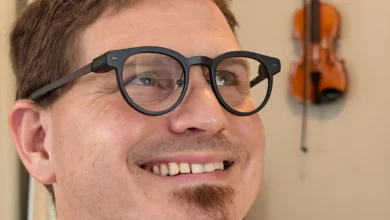
Apple Director of European Government Affairs Sébastien Gros to headline Web Summit 2026 in Lisbon

The upcoming edition of Web Summit, scheduled to take place in Lisbon, Portugal, from November 9 to 12, 2026, will feature a high-profile appearance from Apple’s leadership. Sébastien Gros, the technology giant’s Director of Government Affairs for Europe, the Middle East, and Africa (EMEA), is slated to take the stage as part of the event’s extensive speaker roster. While specific details regarding his presentation topic remain under wraps, the inclusion of a senior government relations executive suggests a strategic focus on the evolving regulatory landscape currently reshaping the tech industry across the European Union.
Web Summit has long served as a critical forum for global policymakers, venture capitalists, and technology executives to debate the intersection of innovation and governance. By sending a representative tasked with navigating the complexities of European policy, Apple is signaling a continued commitment to active dialogue with European stakeholders. This engagement follows a multi-year trend of Apple leveraging the Lisbon stage to communicate its stance on high-stakes issues ranging from cybersecurity and health-tech integration to accessibility and digital market regulation.
A Legacy of Strategic Engagement at Web Summit
Apple’s participation in Web Summit is not a novel occurrence; rather, it is a continuation of a deliberate strategy to place key executives in front of a global, tech-savvy audience. The event has consistently provided a platform for Apple to manage its public narrative, particularly regarding controversial regulatory developments.
In 2021, the company utilized the summit to reinforce its hardline stance on software distribution. Craig Federighi, Apple’s Senior Vice President of Software Engineering, delivered a notable address in which he argued against the mandated "sideloading" of applications on the iPhone. At the time, this was a direct response to growing pressure from international regulators to open the iOS ecosystem to third-party app stores.
The strategy shifted in subsequent years to highlight the company’s humanitarian and service-oriented advancements. In 2022, Dr. Sumbul Desai, Vice President of Health, detailed Apple’s ambitious roadmap for health-monitoring technologies, emphasizing how the Apple Watch and iPhone were being integrated into clinical workflows. By 2024, the focus transitioned to inclusive design, with Sarah Herrlinger, Apple’s Head of Global Accessibility, discussing the transformative potential of artificial intelligence in empowering users with disabilities. Most recently, in 2025, Ole Obermann, a co-lead for Apple Music, addressed the shifting dynamics of the music industry and the role of digital streaming services in a post-algorithmic era.
The Regulatory Landscape: Why Sébastien Gros’s Presence Matters
The appointment of Sébastien Gros to speak at this year’s summit is arguably more significant than previous appearances by product-focused executives. As the Director of Government Affairs for EMEA, Gros is at the front lines of Apple’s interactions with the European Commission.
Europe has emerged as the global epicenter for technology regulation, spearheaded by landmark legislation such as the Digital Markets Act (DMA) and the Digital Services Act (DSA). These frameworks impose strict requirements on "gatekeepers"—a category that includes Apple—to ensure interoperability, prevent anti-competitive behavior, and enforce data privacy standards.
Industry analysts suggest that Gros’s appearance will likely touch upon how Apple is reconciling its proprietary ecosystem with these stringent new mandates. The tech giant has faced ongoing scrutiny regarding its App Store fees, the implementation of third-party browser engines, and the opening of its NFC (Near Field Communication) technology to competitors. A keynote or panel discussion featuring Gros provides a rare opportunity for the company to offer a more nuanced view of its compliance strategy in a public forum.
Web Summit 2026: Scale and Significance
Web Summit 2026 is projected to be one of the largest gatherings of its kind in recent years. Organizers expect over 850 speakers to participate across the four-day event, representing a diverse cross-section of global industry, academia, and government. The event is slated to host representatives from hundreds of companies, ranging from early-stage startups to multinational conglomerates, alongside research institutions and public sector entities.
The diversity of the speaker lineup reflects the broadening scope of the summit, which now extends well beyond traditional software development. The inclusion of humanoid robotics experts, for instance, underscores a growing emphasis on the hardware and artificial intelligence integration that is currently driving investment cycles.
Adding to the intrigue for the Apple community is the scheduled appearance of Tony Fadell. Often referred to as one of the "fathers of the iPod," Fadell is a figure of historical significance for the company. His presence, alongside a high-ranking current executive like Gros, offers a unique bridge between Apple’s foundational era and its current position as a firm deeply entrenched in modern geopolitical and regulatory debates.

Broader Implications and Market Context
The decision to send a government affairs expert to such a high-profile public event reflects a broader trend among Silicon Valley firms. As the regulatory "chilling effect" continues to impact business operations, companies are moving away from purely product-led marketing toward a strategy of transparency and policy-driven communication.
For investors and industry observers, the session with Sébastien Gros will be scrutinized for indications of how Apple intends to navigate the next phase of the DMA. European regulators have been proactive in their investigations into Apple’s compliance, and any insight into how the company views the future of its European operations could move the needle on market expectations.
Furthermore, the participation of such a senior official suggests that Apple remains invested in maintaining a strong presence within the European market, despite the friction caused by new regulations. While other firms have at times threatened to pull services from the region due to legislative hurdles, Apple has consistently sought to adapt its products to remain compliant while protecting its core business model.
Looking Ahead: A Pivotal Moment for Big Tech
The 2026 Web Summit arrives at a pivotal juncture. Artificial intelligence, which was the buzzword of the previous two years, is now moving from the experimentation phase to the regulatory scrutiny phase. As European authorities begin to implement the EU AI Act, the role of government affairs directors like Gros becomes exponentially more critical.
The summit will also provide a venue for the broader tech community to assess how the "European model" of regulation—which prioritizes privacy, safety, and competition—is holding up against the rapid pace of global innovation. With Apple sitting at the center of this tension, the company’s engagement in Lisbon will likely serve as a bellwether for the industry at large.
As the industry prepares for the event, the absence of specific details regarding Gros’s session has only fueled speculation. Whether he will address specific policy disputes or focus on a high-level vision of "responsible technology," the event is set to provide a rare, direct line of communication between one of the world’s most powerful corporations and the regulators who are shaping its future. For those tracking the evolution of the digital economy, the insights shared in Lisbon this November will be essential for understanding the path forward for global technology policy.
Related posts: