The AI Industry Embraces the Dark Forest: Why World Model Startups Are Going Quiet

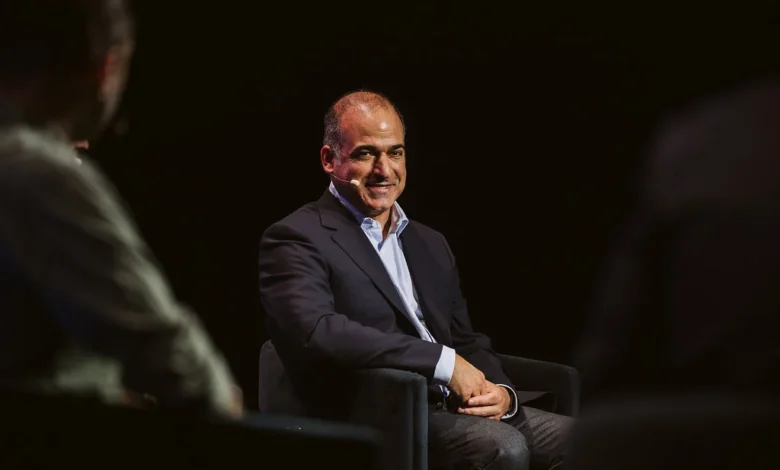
The artificial intelligence sector is currently experiencing a peculiar phenomenon of calculated silence, particularly within the cutting-edge domain of world models. While heavyweights like Yann LeCun’s AMI Labs and Fei-Fei Li’s World Labs command massive valuations and intense industry buzz, they rank remarkably low on traditional monetization metrics. Moderating a panel on world models at the All In conference provided a rare window into this secretive ecosystem, where foundational research is heavily funded, yet commercial roadmaps remain fiercely guarded secrets.
At their technological core, world models represent a major leap forward in automating spatial intelligence. Unlike traditional language models that predict the next token in a sequence of text, world models simulate physical environments, predicting how objects interact, move, and change over time. This foundational capability unlocks a vast array of lucrative applications, ranging from advanced robotics and interactive video game environments to more complex, physics-aware autonomous driving systems. Yet, when pushed on concrete commercial timelines or specific product deployments, industry leaders retreat behind corporate veils.
The Wall of Secrecy: Inside AMI Labs and World Labs
The fog surrounding commercialization was on full display during the All In conference panel. When pressed on AMI Labs’ specific product pipeline, Michael Rabbat, co-founder and VP of World Models at AMI Labs, offered little clarity. "We’ll talk about it when we’re ready to talk about it," he stated during the discussion. Later clarifying via email, Rabbat noted that the firm remains strictly in a research and building phase, declining to comment publicly on timelines or product releases.
To be fair, AMI Labs is less than a year old, making an early stealth phase a standard operating procedure for heavily funded deep-tech startups. However, this caginess permeates the entire world-modeling ecosystem. World Labs’ platform, Marble, stands out as one of the most mature products in the space, yet its public demonstrations—ranging from media creation and explorable video game environments to CGI visual effects—function more as capability showcases than finished commercial software. While robotics use cases are frequently teased, the primary objective appears to be demonstrating foundational technical competence rather than launching an immediate consumer product.
The Supply Chain Blind Spot
This pervasive secrecy does not just affect consumers and competitors; it extends upstream to the data suppliers and foundational infrastructure providers powering these models. On the sidelines of the conference, Alex de Vigan, CEO of Physicl—a specialized data supplier for the world model industry—expressed frustration with the lack of transparency from his primary clients.
De Vigan acknowledged that Physicl’s proprietary data has been instrumental in training these emerging models, but noted that his team operates almost entirely in the dark regarding the end goals of the labs they supply. "I wish they would tell us more," de Vigan said. "We could build more useful data if we knew what they were working on." This disconnect highlights a unique dynamic in the current AI boom: foundational labs are so protective of their intellectual property that they restrict vital feedback loops even with their indispensable supply chain partners.
The Versatility Problem and Strategic Optionality
Part of the underlying mystery stems from the sheer versatility of world models as an architectural concept. In its simplest iteration, a world model functions as a navigable, predictive map of physical space—mirroring the neural networks that enable autonomous vehicles like Waymo to safely navigate unpredictable urban traffic.
However, the exact same underlying modeling architecture that helps an autonomous vehicle weave through congestion can theoretically be scaled to help a humanoid robot manipulate tools in a warehouse, or transform a short text prompt into a fully explorable 3D simulation. AMI Labs, for instance, has already explored intersections with manufacturing, biomedicine, robotics, and medical software through partnerships such as its collaboration with Nabia. It is statistically improbable that a single startup will successfully commercialize all of these verticals simultaneously, yet keeping all options open remains a deliberate strategic choice.
The Dark Forest Economy of Venture Capital
In the current macroeconomic environment, venture capital and institutional funding for foundational AI research remain remarkably robust. As long as these startups can effortlessly secure multi-million-dollar funding rounds, there is minimal pressure to prematurely narrow their operational focus onto a single, profitable product line. In fact, diversifying and keeping long-term plans ambiguous offers distinct strategic advantages.
If AMI Labs were to announce tomorrow that it had successfully built a commercial humanoid robotics platform or a next-generation cinematic rendering engine, it would instantly trigger a massive competitive response. Established tech giants like OpenAI and Anthropic, alongside a swarm of well-funded neolabs, would immediately pivot resources to contest that specific vertical.
This dynamic mirrors the "dark forest" hypothesis popularized by science fiction author Cixin Liu in his novel The Death’s End, where civilizations hide in silence to avoid detection by hostile predators. In the modern AI landscape, venture capital acts as a double-edged sword: the same abundant funding that allows a lab to quietly build sophisticated models under the radar is also actively bankrolling dozens of potential rivals. Once a company reveals its exact path to market, it exposes its position to the entire forest. Consequently, delaying that revelation through calculated silence is the most rational survival strategy.
Broader Industry Implications and Outlook
As the world model ecosystem matures throughout 2026 and beyond, the tension between stealth research and commercial accountability will inevitably reach a breaking point. Investors will eventually demand tangible returns on the billions of dollars poured into spatial intelligence infrastructure.
For now, however, the industry remains locked in a high-stakes game of strategic concealment. As startups continue to refine their spatial intelligence engines, the true commercial utility of world models remains obscured behind closed doors. Until these labs cross the threshold from research to deployment, the rest of the tech world must wait patiently at the edge of the woods, watching for the first signs of what is truly being built in the dark.