The Future of the Smart Home Amidst Executive Transitions and Evolving Security Standards

The smart home industry stands at a critical juncture as it approaches a decade of mainstream adoption, marked by significant leadership changes at market leaders and a shift toward more robust security and connectivity standards. Amazon, a dominant force in the ambient computing space, recently announced that David Limp, the Senior Vice President of Devices and Services, will retire after more than 13 years with the company. This departure comes as Alexa and the Echo ecosystem prepare to celebrate their tenth anniversary in 2024, a milestone that prompts a broader industry reflection on the successes and stagnations of the connected home. While the early years of the smart home were defined by novelty and rapid experimentation, the current landscape is increasingly focused on interoperability, industrial-grade security, and the integration of smart technology into the physical infrastructure of dwellings.
The End of an Era for Amazon Devices
David Limp’s retirement is part of a broader exodus of high-level executives from Amazon’s Seattle headquarters over the past year. Limp, who oversaw the development of the Kindle, Fire TV, and the Echo line, was instrumental in transforming Alexa from a niche laboratory project into a household name. Under his leadership, Amazon distributed hundreds of millions of Alexa-enabled devices, creating a massive footprint in the global consumer electronics market.
However, the leadership transition occurs at a time when Amazon’s Devices and Services division has faced internal pressure to achieve profitability. Reports from late 2022 indicated that the division was facing annual losses of approximately $10 billion, leading to significant layoffs. While Alexa remains a market leader in voice assistance, the "Star Trek" vision of a ubiquitous computer has struggled to monetize beyond basic tasks like setting timers, playing music, and controlling lights. The departure of Limp raises questions about the future direction of Amazon’s hardware strategy and whether the company will pivot toward more specialized industrial applications or maintain its aggressive consumer-facing expansion.
Infrastructure Integration: The High-End Smart Home
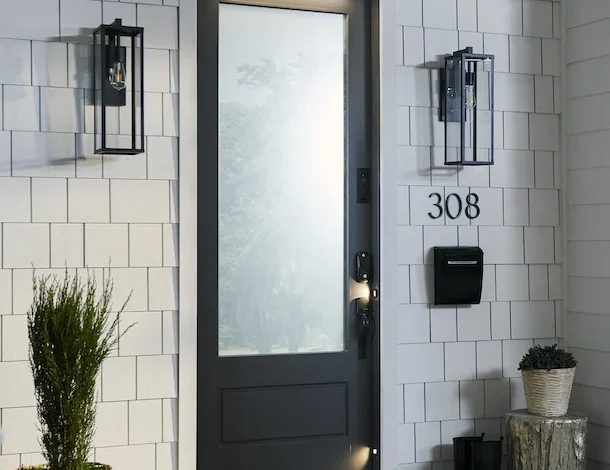
As the market for standalone smart speakers and bulbs matures, a new trend is emerging: the integration of smart technology directly into building materials. This is exemplified by Masonite’s recent launch of its "M-Pwr" smart doors at major retailers like Home Depot. Unlike traditional smart locks that are retrofitted onto existing doors, the Masonite system builds power and connectivity directly into the door itself.
The M-Pwr door features integrated Ring video doorbells and Yale smart locks, powered by a hardwired connection to the home’s electrical system with a battery backup. This represents a shift away from the "DIY" nature of early smart home products toward "pro-sumer" and builder-integrated solutions. However, the cost of such integration remains a significant barrier for the average consumer; these doors are priced in the thousands of dollars, suggesting that the "integrated" smart home may remain a luxury tier for the foreseeable future.
Similarly, the Mill kitchen composting system, developed by Nest co-founder Matt Rodgers, highlights a move toward complex, service-oriented smart appliances. The Mill bin is not merely a piece of hardware but a subscription-based waste management service that dehydrates food scraps and ships them back to be processed into chicken feed. This model reflects a growing industry interest in "Hardware as a Service" (HaaS), where the value proposition lies in the ongoing ecological or logistical benefit rather than the device itself.
Strengthening the Security Perimeter: FCC and Microsoft Initiatives
As smart devices become more deeply embedded in daily life, the risks associated with cybersecurity have moved to the forefront of the national policy agenda. The Federal Communications Commission (FCC) has recently issued a Notice of Proposed Rule Making for a new IoT cybersecurity labeling program, often referred to as the "U.S. Cyber Trust Mark." This initiative, which includes a 30-day public comment period, aims to provide consumers with a clear, visual indicator of a device’s security posture.
The proposed label would involve a QR code that consumers can scan to view up-to-date information regarding a product’s security features, such as data encryption, software update frequency, and vulnerability disclosure policies. This move is intended to mirror the "Energy Star" program, incentivizing manufacturers to prioritize security to earn the government-backed seal of approval. Industry analysts suggest that such transparency is essential for restoring consumer trust, which has been eroded by high-profile data breaches and privacy concerns.

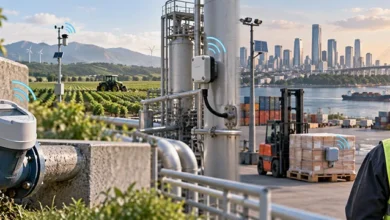
Simultaneously, the vulnerability of industrial and critical infrastructure has become a primary concern for cybersecurity researchers. Microsoft recently identified a set of vulnerabilities in industrial equipment that could theoretically be exploited to shut down power plants or manufacturing facilities. These findings underscore the "convergence" of Information Technology (IT) and Operational Technology (OT). As industrial sensors and controllers become "smarter" and more connected, they inherit the same risks as consumer IoT devices, but with much higher stakes for public safety and national security.
The Evolution of Connectivity: Z-Wave and Matter
In the realm of wireless protocols, the smart home industry is witnessing a significant reorganization. For years, the Z-Wave protocol was largely controlled by a single chip provider, Silicon Labs. However, the emergence of Trident IoT marks a pivotal shift in the ecosystem. Trident IoT has launched as a secondary source of Z-Wave chips and a provider of development services, effectively breaking the monopoly and fostering a more competitive marketplace.
Mariusz Malkowski, founder and CTO of Trident IoT, has emphasized that the company’s mission is to streamline the path to market for device manufacturers. By acting as both a chip supplier and a Z-Wave certification house, Trident aims to lower the barriers to entry for companies wanting to utilize the 800-series Z-Wave chips and the Z-Wave Long Range (LR) specification. Z-Wave LR is particularly notable for its ability to cover distances of up to a mile and support thousands of nodes on a single network, making it an ideal candidate for large-scale residential complexes and commercial applications.
The relationship between Z-Wave and Matter—the new industry-wide interoperability standard—remains a topic of intense discussion. While Matter is designed to run over Wi-Fi, Thread, and Ethernet, Z-Wave continues to offer advantages in terms of battery life and penetration through walls. Industry experts anticipate a "bridged" future, where Z-Wave devices connect to Matter-enabled ecosystems via hubs or bridges, allowing legacy devices to coexist with the latest Matter-certified hardware.
Local Control and the Power User
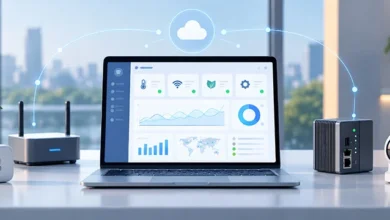
As the cloud-based models of companies like Amazon and Google face scrutiny over privacy and long-term reliability, a segment of the market is returning to "local control." The Homey Pro smart home hub is a prominent example of this trend. While many hubs rely on cloud processing to execute commands, the Homey Pro performs the majority of its logic locally. This approach offers two distinct advantages: increased speed (lower latency) and continued functionality even if the home’s internet connection fails.
The Homey Pro supports a wide array of protocols, including Zigbee, Z-Wave, Wi-Fi, Bluetooth, Infrared, and Matter. However, the price point for such versatile, locally-controlled hardware remains high, targeting "power users" and enthusiasts rather than the mass market. The review of the Homey Pro highlights a recurring theme in the smart home: the trade-off between the ease of use of cloud-connected "plug-and-play" devices and the privacy and stability of locally managed systems.
Implications for the Next Decade
The transition of leadership at Amazon, the introduction of government-backed security labels, and the diversification of chip suppliers all point to a "maturation phase" for the Internet of Things. The next ten years of the smart home are likely to be defined by three major pillars:
- Professionalization: The move from standalone gadgets to integrated home systems (like the Masonite smart door) will lead to a greater involvement of professional installers and builders, moving the smart home out of the "toy" phase.
- Standardization and Security: With the FCC’s labeling program and the rollout of Matter, the "Wild West" era of proprietary silos is ending. Consumers will expect—and regulators will demand—that devices work together and maintain a baseline level of security.
- Resilience and Privacy: As users become more tech-savvy, the demand for local processing and data sovereignty will grow. This will force major platform holders to reconsider their cloud-first strategies in favor of "edge" computing.
In conclusion, while the departure of pioneers like David Limp marks the end of the smart home’s first major chapter, the infrastructure being laid today suggests a more stable and secure second act. The industry is moving away from the "can we connect it?" phase and into the "should we connect it, and how do we protect it?" phase. For consumers, this shift promises a future where the smart home is less of a hobby and more of a reliable, invisible utility that enhances the safety and efficiency of the modern living environment.