The Software Development Life Cycle Evolves: Embracing AI for Enhanced Speed, Stability, and Strategic Engineering

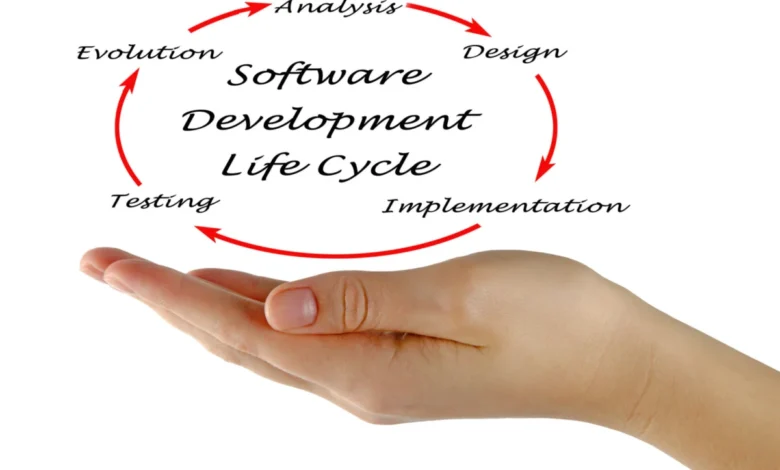
The traditional Software Development Life Cycle (SDLC), a bedrock of reliable software creation for decades, is undergoing a profound transformation. While its core stages—planning, analysis, design, coding, testing, deployment, and maintenance—remain crucial for ensuring code safety, stability, and risk management, this established framework was not architected for the era of artificial intelligence. The inherent rigidity, fixed assumptions, and embedded constraints of the traditional SDLC, while effective in the past, now present significant limitations. These include lengthening software delivery pipelines, hindering engineers’ capacity for flexible thought and development, and curtailing organizations’ ability to operate at the accelerated pace that AI enables.
This necessitates a strategic rethinking of the SDLC, not as an abandonment of proven best practices, but as an evolution to leverage the complementary strengths of both human ingenuity and artificial intelligence. The goal is to strike an optimal balance between the imperative for secure and stable code and the demand for the rapid, iterative development cycles characteristic of modern enterprises. The outcome of this recalibration promises compressed delivery timelines without compromising product stability or the critical focus on customer needs.
A New Division of Labor: Augmenting Engineers with AI
For years, the SDLC has served as the primary mechanism for managing risk, coordinating complex teams, and delivering high-quality software at scale. While AI does not negate the need for this fundamental structure, it is fundamentally reshaping the methodology of software construction. The true value of AI in this context lies in its capacity to augment, rather than replace, often overburdened engineers. AI tools excel in tasks involving synthesis, pattern recognition, rapid iteration, and the execution of straightforward, repetitive operations.
The impact of AI is poised to be most transformative across five key areas within the software development process:
1. Automating Boilerplate Code and Maintenance Toil: A significant portion of engineering effort has historically been dedicated to writing foundational code, managing dependencies, and performing routine maintenance. AI is now capable of generating this boilerplate code and automating batches of repetitive work. This includes tasks such as dependency upgrades and security fixes across vast codebases encompassing dozens, or even hundreds, of repositories simultaneously. By handling these time-consuming, low-complexity tasks before significant development even begins, AI liberates engineers to focus on more innovative and strategic aspects of their work. For instance, a recent analysis by [Industry Analyst Firm X] indicated that companies adopting AI for code generation saw a reduction of up to 30% in time spent on repetitive coding tasks, allowing teams to reallocate that time to feature development and architectural improvements.
2. Accelerating Iteration and Prototyping: The ability to rapidly iterate on ideas and prototypes is a cornerstone of agile development. AI can significantly speed up this process by generating multiple code variations based on specified requirements, allowing engineers to quickly explore different approaches and identify the most promising solutions. This accelerates the feedback loop between development and stakeholders, leading to more refined and effective products. In a comparative study conducted by [Research Institute Y] involving two development teams working on similar projects, the team leveraging AI for rapid prototyping completed their initial iteration phase 40% faster than the control group.
3. Enhancing Code Quality and Consistency: AI tools can be trained on vast datasets of high-quality, secure code, enabling them to identify potential bugs, security vulnerabilities, and deviations from established coding standards. This proactive approach to quality assurance can significantly reduce the number of defects that reach later stages of the SDLC, leading to more robust and reliable software. Furthermore, AI can enforce consistency in coding style and architectural patterns across large teams, reducing the "code drift" that can occur with manual development. A survey of software engineering managers revealed that 75% believe AI assistance in code review leads to a tangible reduction in critical bugs found in production.
4. Streamlining Documentation and Knowledge Management: The creation and maintenance of comprehensive documentation are often a tedious but essential part of software development. AI can assist in generating and updating documentation, including API references, user guides, and internal technical specifications, based on the codebase itself. This ensures that documentation remains current and accurate, improving knowledge sharing and onboarding for new team members. Reports from companies integrating AI for documentation have shown an average decrease of 20% in the time required to generate and update project documentation.
5. Automating Testing and Deployment: AI can play a crucial role in automating various aspects of testing, from generating test cases to analyzing test results and identifying root causes of failures. This leads to more comprehensive test coverage and faster identification of issues. Similarly, AI can assist in optimizing deployment processes, predicting potential issues, and automating rollback procedures when necessary, thereby enhancing the stability and reliability of software releases. Initial deployments utilizing AI-assisted testing and deployment pipelines have reported a reduction in deployment-related incidents by as much as 50%.
The Enduring Importance of Human Ingenuity
While AI revolutionizes how code is delivered, the fundamental "why" behind software development remains unchanged. Customers, their evolving problems, and the value engineers strive to deliver are constants. The core principles of good engineering—sound architecture, clear ownership, and unwavering reliability—do not diminish. In fact, as AI democratizes code generation at an unprecedented pace, these fundamentals become even more critical. When the barrier to code creation lowers, the potential for errors and security risks escalates, underscoring the amplified importance of the human element.
The Human Advantage: Strategic Oversight and Judgment
As AI takes on a larger share of the laborious tasks inherent in software development, the human role naturally evolves towards a more strategic and oversight-focused capacity. Humans bring irreplaceable qualities to the development process: critical judgment, deep contextual understanding, and empathy. These are skills that AI, in its current form, cannot replicate, particularly at the system level. They are essential for breaking down organizational silos, making complex architectural decisions, instilling production discipline, and strategically allocating engineering resources. In practical terms, this means the daily work of an engineer will increasingly shift from the mechanics of writing and debugging code to defining problems, rigorously evaluating trade-offs, and making high-stakes decisions that require real-world experience and a nuanced understanding of business context.

In this evolving human + AI collaborative model, the most valuable engineers will be those who develop robust oversight capabilities for AI tools. They will operate in strategic roles that capitalize on their judgment and ability to understand subtle nuances. Crucially, these engineers remain accountable for the ultimate outcomes. This involves meticulously reviewing AI-generated code to assess its quality, identify potential security vulnerabilities, catch edge cases that AI might miss, and ensure overall production reliability. This shift represents a move from individual contributor to strategic architect and guardian of the development process.
Forging a New Gold Standard for Software Delivery
The advent of AI in software development should not be viewed as a simple handoff of manual tasks to machines. Organizations that approach this integration as such are likely to be disappointed. Treating AI as a mere add-on, automating existing processes without a fundamental re-evaluation of the underlying development model, will yield only incremental gains at best. The true opportunity lies in a more profound transformation: rebuilding the SDLC from its foundational elements, weaving together the capabilities of humans and AI to create a new gold standard that maximizes the unique strengths of each.
The benefits of successfully implementing this human + AI model extend far beyond the engineering teams themselves. As humans and AI collaborate—with AI accelerating execution and humans providing the indispensable judgment, context, and accountability that technology currently lacks—the entire business undergoes a positive transformation. Products reach the market faster, systems become demonstrably more reliable, and precious engineering resources are strategically focused on solving genuine customer problems. Organizations that proactively rebuild their development frameworks around this integrated human + AI model will not only achieve greater speed but will also build superior software products. This strategic adaptation is becoming a competitive imperative in today’s rapidly evolving technological landscape.
Frequently Asked Questions: Navigating the AI-Infused SDLC
How does AI fundamentally change the software development life cycle (SDLC)?
AI’s impact on the SDLC is multifaceted. Primarily, it compresses delivery timelines by automating a wide array of tasks, including the generation of boilerplate code, dependency updates, comprehensive documentation, and repetitive maintenance activities. This automation inherently shifts the engineer’s role, moving it away from manual coding and towards higher-level responsibilities such as architectural decision-making, precise problem definition, and strategic oversight. While the core structure of the SDLC persists, its execution is being rebuilt around a collaborative framework between humans and AI, replacing the traditional sequential handoffs that characterized earlier development models.
What specific SDLC tasks can AI agents effectively handle without direct human involvement?
AI agents are particularly well-suited for high-volume, low-judgment tasks that have historically consumed significant engineering bandwidth. These include generating foundational and boilerplate code, efficiently batching dependency upgrades and security fixes across numerous repositories, drafting project specifications and tickets, generating status reports, and even shipping user interface (UI) changes directly from design tools to production environments. By offloading these routine yet critical tasks, AI liberates engineers to concentrate on more complex and value-driving activities.
What are the potential risks associated with AI-generated code drift within the SDLC?
A significant risk emerging with the widespread adoption of AI code generation is "code drift." Without a robust standardization layer that embeds approved patterns, libraries, and essential security requirements into every AI agent session, AI-generated code can diverge from established quality and compliance standards across different teams and projects. This divergence can introduce new forms of technical debt and significantly increase security exposure, particularly as more developers leverage AI code generation tools without adequate governance. Addressing this requires implementing strict guidelines and automated checks to maintain code integrity and security.
Will AI ultimately replace software engineers in the SDLC?
Current industry consensus and expert opinion position AI as a powerful augmentation tool rather than a direct replacement for human software engineers. The role of the engineer is evolving, with a greater emphasis placed on judgment-heavy responsibilities. These include defining system architecture, evaluating complex trade-offs, conducting thorough security reviews of AI-generated code, and ultimately bearing accountability for production outcomes. Engineers who cultivate strong oversight skills for AI toolchains and demonstrate proficiency in leveraging these tools strategically are expected to be the most valuable assets in this evolving development paradigm. The future of software engineering lies in the synergistic partnership between human expertise and artificial intelligence.