Unmasking Haise: How Operational Security Failures Led Investigators to the St. Petersburg Architect of the Qilin Ransomware Empire

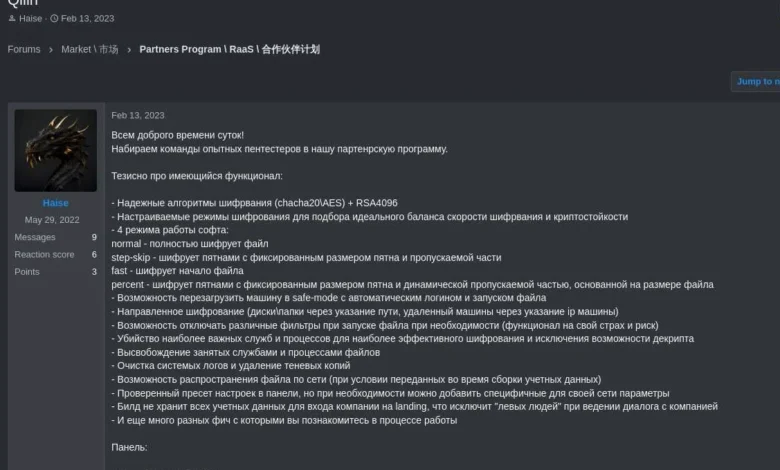
The Qilin ransomware syndicate has solidified its position as the most prolific ransomware-as-a-service (RaaS) operation currently plaguing the global digital infrastructure, accounting for at least 365 victim organizations in the third quarter of 2026 alone. While the group operates with a level of sophistication that has intimidated multinational corporations and critical infrastructure providers, its leadership has proven vulnerable to the most traditional of cyber-intelligence failures: the failure of operational security (OPSEC). A multi-layered investigation, bolstered by findings from NCC Group, Intel 471, Flashpoint, and IntelHawk, has successfully linked the group’s administrator—a figure known by the alias "Haise"—to a 36-year-old resident of St. Petersburg, Russia, identified as Aleksey Mikhailovich Yakovtsev.
The Rise of Qilin and the RaaS Model
Since its inception in September 2022, Qilin has distinguished itself through a highly aggressive RaaS model that prioritizes volume and high-value infiltration. By offering affiliates up to 80 percent of the proceeds from successful extortion events, the group has attracted a diverse network of cybercriminals, including notorious collectives such as Scattered Spider and RansomHub.
The group utilizes the "double extortion" tactic, wherein sensitive corporate data is exfiltrated before systems are encrypted. This strategy forces victims into a precarious position: pay the ransom to restore internal operations or face the public release of confidential records, which can lead to regulatory fines, loss of intellectual property, and catastrophic reputational damage. Unlike many of its counterparts, Qilin has maintained an unusually permissive recruitment policy, actively courting English-speaking affiliates to expand its reach beyond the Russian-speaking sphere.
Chronology of an Identity Unraveling
The identification of the man behind the moniker "Haise" is a study in the long-term dangers of digital persistence. Cybercriminals often rotate handles to sever ties with previous, less secure personas; however, in the case of the Qilin administrator, the transition between aliases provided the breadcrumbs necessary for de-anonymization.
- 2013–2014: Aleksey Mikhailovich Yakovtsev is active in domestic travel, with records showing multiple flights between St. Petersburg and Murmansk.
- 2018–2019: The individual begins his cyber-career, transitioning from a novice arbitrageur and credit card fraudster into the ecosystem of Russian cybercrime forums.
- 2020: The user "Rjun" appears on forums such as Exploit and XSS, utilizing the Telegram handle "Alexbigboss44." During this period, the user manages a network of traffickers and purchases compromised data to facilitate fraudulent advertising and gambling operations.
- June 2022: Under the name "Haise," the individual applies for membership to RAMP, a highly exclusive Russian cybercrime forum. The forum’s administrators approve the entry, explicitly linking "Haise" to the Telegram account "Alexbigboss44."
- January 2026: The FBI seizes the RAMP forum. The seizure leads to the discovery of archived direct messages that confirm the continuity of the identity between Rjun, Alexbigboss44, and Haise.
- Late 2026: Advanced stylometry, AI-based identity correlation, and data breach analysis converge to confirm the identity of the operator as Yakovtsev.
The Digital Footprint: From Forum Posts to Government Databases
The undoing of the Qilin administrator began with the cross-referencing of forum metadata. Intel 471 researchers noted that the account "Rjun" maintained a consistent footprint across platforms such as Darkmarket, Verified, and Zloy, almost always registering with the email address [email protected].

The definitive link to real-world identity was established through a massive data breach of gosuslugi.ru, the Russian government’s central portal for state and municipal services. The breach, which occurred in late 2025, exposed the personal details of over 20 million citizens. Within this dataset, the email address [email protected] was found registered to Aleksey Mikhailovich Yakovtsev.
Further verification came through a deep dive into Telegram’s historical data. The user ID 118329521, used by "Haise," was linked to a Russian phone number (+79602347275). This number, in turn, served as a bridge to secondary email addresses and registration details for various travel agencies. These records corroborate Yakovtsev’s identity, age, and geographical history, cementing the connection between the high-stakes ransomware operator and the St. Petersburg resident.
Supporting Data and Technical Attribution
The investigation into Yakovtsev highlights the efficacy of modern threat intelligence. By utilizing stylometry—the statistical analysis of writing style—and historical data correlation, firms like IntelHawk were able to track the evolution of the actor’s technical capabilities. The progression from simple credit card fraud to managing complex botnets and malware infrastructure indicates a maturation process that typically takes several years.
Furthermore, the involvement of anonymous investigative entities, such as the "GangExposed" account on X (formerly Twitter), underscores the democratization of threat intelligence. These actors utilize the same OSINT (Open Source Intelligence) techniques as state-sponsored agencies, often with faster, more public-facing results. The consensus among these independent researchers regarding the link between Haise and Yakovtsev provides a high degree of confidence in the attribution.
Official Responses and Industry Context
While the FBI has not issued a formal arrest warrant for Yakovtsev by name, the recent seizure of the RAMP forum and subsequent disclosures demonstrate a significant shift in the agency’s strategy toward "naming and shaming" key figures in the ransomware ecosystem. NCC Group’s report on Qilin serves as a warning to the private sector: the group is not merely an amorphous collective but a structured business enterprise led by individuals who, despite their technological proficiency, are subject to the limitations of human error.
Cybersecurity firms generally refrain from commenting on individual suspects until formal legal action is taken. However, industry analysts note that the exposure of a leader’s identity often creates internal friction within a ransomware group. Distrust, fear of infiltration, and the potential for law enforcement monitoring often lead to the dissolution or rebranding of such groups.

Broader Impact and Implications
The identification of the Qilin administrator provides a rare glimpse into the "human" element of the ransomware crisis. It challenges the prevailing narrative that these actors are entirely insulated by the geopolitical environment of Russia. Even in jurisdictions where prosecution is difficult, the loss of anonymity is a potent weapon.
For the cybersecurity community, this case study emphasizes that no digital persona is entirely isolated from a user’s physical life. The reliance on legacy email addresses, family-linked phone numbers, and consistent handles across disparate platforms created a chain of evidence that proved impossible to obscure.
As Qilin continues its operations, the exposure of Haise acts as a significant setback. The organization now faces the challenge of maintaining its affiliate base while its leadership is under intense scrutiny. Furthermore, the case serves as a cautionary tale for other RaaS administrators: the digital footprint is permanent, and the intersection of state-level data breaches and private sector intelligence is narrowing the gap between the dark web and real-world accountability.
The failure of Yakovtsev to maintain a distinct separation between his personal life—his education in Murmansk, his travels to Sochi, and his official government account usage—and his criminal activities serves as the ultimate indictment of the "invulnerable" cybercriminal. As investigators continue to piece together the remaining fragments of the Qilin infrastructure, the focus will likely shift to the group’s financial laundering channels and the potential for international cooperation to further disrupt their operations. For now, the "Haise" persona remains a cautionary example of how even the most "industrial" of ransomware gangs can be brought into the light by the very data they seek to exploit.
Related posts: