Wall Street Megacaps Complete Total Shutdown of OKX and ICE Tokenized Stock Platform

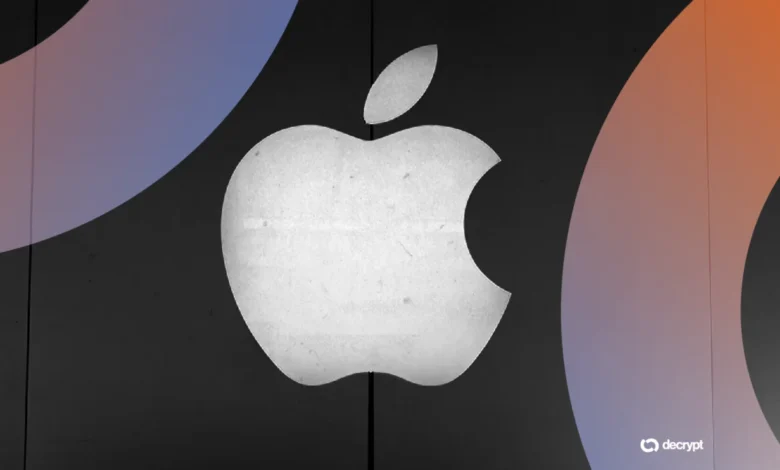
Every single member of Wall Street’s elite "Magnificent Seven" has officially barred its stock from being listed on the upcoming tokenized trading venue managed jointly by crypto exchange OKX and Intercontinental Exchange (ICE). Following an updated notice released on Thursday by OKXICE TSV—the 50-50 joint venture between the New York Stock Exchange owner and OKX’s U.S. holding company—both Apple and Meta Platforms were added to a growing roster of objecting issuers.
Their inclusion completes a unanimous rejection by the seven technology juggernauts that command a staggering share of the S&P 500 index’s total market capitalization. Prior to this update, tech heavyweights Microsoft, Alphabet, Amazon, Nvidia, and Tesla had already registered their formal written objections to the platform, signaling a coordinated industry-wide hesitation regarding third-party tokenization of public equities.
The sweeping resistance highlights a profound friction point between traditional corporate governance and the rapidly expanding frontier of decentralized finance (DeFi) and blockchain-based asset representation. As the total number of dissenting companies climbs to 67, questions are mounting over the long-term viability of permissioned tokenized stock venues operating without the explicit consent of the underlying issuers.
A Growing Wave of Dissent: From Initial Trickle to Corporate Deluge
The resistance campaign has evolved rapidly over a matter of weeks, transforming from a quiet legal maneuver into a widespread corporate movement. When the first wave of objectors materialized in mid-October, only nine companies had stepped forward to formally opt out of the OKXICE Tokenized Stock Venue (TSV).
By November 2, the tally expanded significantly to 56 corporations, notably bolstered by high-profile rejections from Elon Musk’s Tesla and SpaceX, alongside retail giant Amazon. Thursday’s updated filing brought the total to 67 companies. Alongside Apple and Meta, the latest batch of objecting issuers includes prominent blue-chip names and high-growth enterprises such as Home Depot, Boeing, GE Vernova, Palantir, ServiceNow, S&P Global, KLA, Super Micro Computer, and Nebius Group.
The inclusion of Meta Platforms carries a notable historical irony. Several years ago, the social media titan attempted to spearhead its own global cryptocurrency revolution by introducing Libra—later rebranded as Diem. That ambitious stablecoin initiative ultimately collapsed under relentless regulatory pressure, culminating in the complete wind-down and liquidation of the project’s assets in early 2022. Now, the very same corporate entity is aggressively shutting out blockchain-based representations of its own equity securities.
The Regulatory Catalyst: Understanding the SEC Innovation Exemption
The mechanism enabling these corporate blockades stems directly from recent regulatory maneuvering by the U.S. Securities and Exchange Commission (SEC). In September, following the legislative stall of the Clarity Act in the United States Senate, the SEC introduced a temporary conditional exemptive relief framework informally known as the innovation exemption.
Under the terms of this regulatory framework, any alternative trading venue or platform seeking to offer tokenized versions of public equities issued by unaffiliated third parties must first formally notify the target company. Crucially, the rule empowers the issuing corporation. If a company registers a formal written objection within a 30-day window following notification, the trading venue is legally barred from making that specific stock available for trading on its platform.
This regulatory safeguard was designed to give traditional corporations direct control over how their shares are represented and traded across emerging digital asset architectures. However, legal experts note that an objection filed under this exemption applies strictly to the notifying venue. It does not inherently prevent other platforms or decentralized protocols from attempting similar tokenization schemes, provided they navigate their own regulatory compliance frameworks.
The Anatomy of OKXICE TSV
Announced as a strategic bridge between traditional capital markets and distributed ledger technology, OKXICE TSV was structured to provide round-the-clock trading of tokenized U.S. equities. The operational blueprint relies on permissioned liquidity pools hosted on OKX’s proprietary layer-2 blockchain network, XLayer.
Under the proposed mechanics, an independent, third-party "tokenizer" would acquire and hold real-world shares on a strict one-for-one basis through a registered broker-dealer. These underlying equities would remain safely secured within traditional custody arrangements, while cryptographic tokens mirroring their value and price action would circulate on the blockchain network, enabling 24/7 settlement, fractional ownership, and global accessibility.
Despite the institutional pedigree brought by Intercontinental Exchange—the parent company of the venerable NYSE—the venture now faces a severe structural hurdle. With every single member of the Magnificent Seven, alongside dozens of other dominant market leaders, formally exercising their right to opt out, the platform’s initial product catalog has been severely depleted.
Notable Absences: Who Has Yet to Object?
While the list of corporate holdouts includes nearly every major driver of modern equity markets, market analysts are paying equally close attention to the prominent companies conspicuously absent from the objection ledger.
Crypto-native and crypto-adjacent publicly traded firms—including cryptocurrency exchange Coinbase, retail brokerage pioneer Robinhood, and enterprise bitcoin treasury firm MicroStrategy—do not appear anywhere on OKXICE TSV’s list of objectors. Coinbase, for its part, has already demonstrated an active interest in this space, having launched tokenized stocks for non-U.S. users on its own Base blockchain network in August.
Furthermore, several legendary titans of traditional finance and commerce, such as Warren Buffett’s Berkshire Hathaway, payments giant Visa, and energy supermajor ExxonMobil, have not filed notices of objection. Industry observers note that it remains unclear whether OKXICE officially served notification notices to these specific firms, or if these companies are intentionally adopting a wait-and-see posture as the regulatory and technological landscape matures.
Broader Market Implications and Strategic Outlook
The collective rejection by Wall Street’s heaviest hitters underscores a deep-seated institutional anxiety regarding asset fragmentation, secondary market oversight, and brand control. Corporate executives and legal counsels appear hesitant to allow their shares to be wrapped into tokenized instruments issued by external entities, particularly in an environment where regulatory certainty regarding secondary token markets remains contested.
For OKXICE TSV, the immediate path forward is shrouded in ambiguity. Because the platform’s official public notices have consistently omitted the specific list of tokens it intends to roll out at launch, market participants are left guessing which securities will actually be tradeable when the venue opens its digital doors.
As blockchain integration continues to press against the boundaries of traditional equity markets, the standoff between tokenized infrastructure providers and legacy issuers serves as a defining test case. Whether alternative venues can eventually coax corporate America into embracing blockchain-based shares—or whether they will be forced to pivot toward smaller-cap and more crypto-receptive issuers—will likely dictate the near-term evolution of tokenized real-world assets in the global financial system.