Reimagining the Software Development Life Cycle for the AI Era: A New Paradigm of Human-AI Collaboration

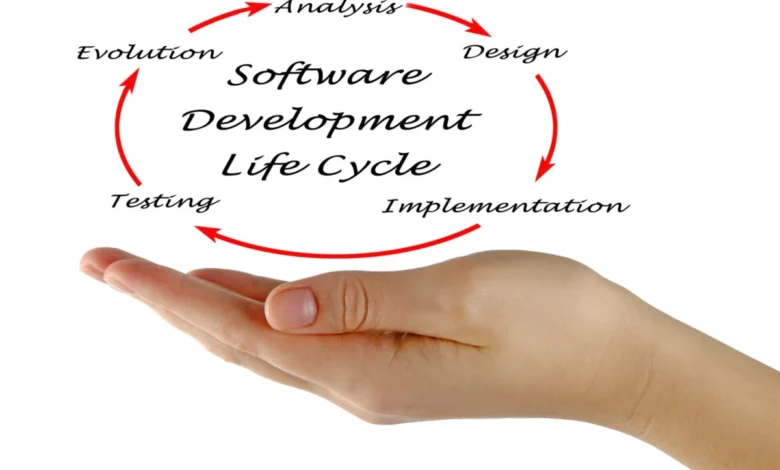
The foundational principles of the traditional Software Development Life Cycle (SDLC) – planning, analysis, design, coding, testing, deployment, and maintenance – were meticulously crafted to ensure the safety, stability, and robust risk management of software from its inception through to delivery. However, the advent of artificial intelligence has rendered this established framework, with its inherent rigidity, fixed assumptions, and built-in constraints, increasingly ill-suited for the demands of modern, AI-accelerated development. The traditional SDLC, while valuable, often lengthens the software delivery pipeline, constrains engineers’ capacity for flexible thought and innovation, and ultimately limits an organization’s ability to operate at the unprecedented speed that AI now makes possible.
Rethinking the SDLC is not an act of discarding established best practices but rather an imperative to evolve them, harmonizing what humans and AI each excel at. This evolution allows engineers to strike a critical balance between maintaining secure, high-quality code and embracing the rapid, iterative development cycles characteristic of today’s dynamic enterprise landscape. The tangible outcome of this recalibration is a significant compression of delivery timelines without compromising software stability or the crucial focus on customer needs.
A Strategic Division of Labor in Modern Software Development
For decades, the SDLC has served as the bedrock for managing risk, coordinating complex team efforts, and delivering high-quality software at scale. While AI does not eliminate the need for this structural integrity, it is fundamentally reshaping the methodologies and processes by which software is constructed. The true value of AI in this domain lies in its capacity to augment the capabilities of often-overworked engineers, rather than to replace them. AI tools demonstrate exceptional proficiency in synthesis, pattern recognition, rapid iteration, and the efficient execution of routine tasks.
The transformative impact of AI is poised to be most profound across five key areas within the software development lifecycle:
-
Automating Boilerplate Code and Tackling Maintenance Toil: AI is proving adept at generating foundational code structures and efficiently handling repetitive, time-consuming tasks. This includes automating dependency upgrades, executing security fixes across numerous repositories simultaneously, and other routine maintenance operations. By offloading these burdensome tasks, AI liberates engineers to focus on more complex and creative aspects of development before significant building work has even commenced. This proactive approach not only accelerates the initial phases of development but also ensures that essential security and maintenance hygiene is addressed from the outset.
-
Accelerating Testing and Quality Assurance: AI can analyze vast datasets of historical bugs and test results to predict potential areas of failure, generating more targeted and efficient test cases. This not only reduces the time spent on manual testing but also increases the thoroughness of quality assurance processes. Furthermore, AI-powered tools can automate the execution of regression tests, ensuring that new code changes do not adversely affect existing functionality, a critical step in maintaining stability.
-
Enhancing Documentation and Knowledge Management: The creation and maintenance of comprehensive documentation are often seen as tedious and time-consuming. AI can assist by automatically generating code documentation, API references, and even user guides based on the codebase. This ensures that documentation remains up-to-date with minimal human effort, improving knowledge sharing and onboarding for new team members, and reducing the risk of outdated or inaccurate information.
-
Streamlining Code Review and Identifying Vulnerabilities: AI algorithms can be trained to detect common coding errors, style inconsistencies, and potential security vulnerabilities during the code review process. While not a replacement for human oversight, AI can flag issues with a speed and consistency that manual reviews often struggle to match, allowing human reviewers to focus on more nuanced architectural and logic-related concerns. This augmentation can significantly reduce the time taken for code reviews, a common bottleneck in traditional SDLCs.
-
Facilitating Rapid Prototyping and Iteration: The ability of AI to quickly generate code snippets and functional prototypes empowers engineers to explore different design ideas and product features with unprecedented speed. This iterative approach allows for faster feedback loops from stakeholders and customers, enabling teams to pivot quickly based on evolving requirements and market demands.

It is crucial to understand that while AI fundamentally alters how engineers deliver code, the underlying purpose of software development remains unchanged. The ultimate drivers are customers, their specific problems, and the tangible value that engineers strive to deliver. The fundamental tenets of sound engineering – robust architecture, clear ownership, and unwavering reliability – do not diminish in importance; rather, they become amplified. As AI democratizes code generation at an accelerating pace, the potential for errors and security risks also expands, making the human element – with its critical judgment and contextual understanding – more indispensable than ever.
The Enduring Human Advantage in an AI-Augmented World
While AI efficiently handles a substantial portion of the inherent toil associated with software development, the human role undergoes a strategic transformation, shifting towards higher-level oversight and decision-making. Humans bring to the table indispensable qualities that AI, in its current form, cannot replicate: nuanced judgment, deep contextual understanding, and empathy. These are critical skills that operate at the system level, enabling teams to break down organizational silos, make sound architectural decisions, enforce production discipline, and strategically allocate engineering resources for maximum impact. In practical terms, this translates to an engineer’s day evolving from extensive manual coding and debugging to a greater emphasis on defining complex problems, meticulously evaluating trade-offs, and making critical decisions informed by real-world experience and a comprehensive understanding of business context.
In this evolving human + AI model, the most valuable engineers will be those who possess a sophisticated oversight of AI tools. They will operate in strategic roles, leveraging their judgment and understanding of subtle complexities to guide AI-driven development. Critically, these engineers retain ultimate accountability for outcomes. This involves rigorously reviewing AI-generated code to assess its quality, identify potential security vulnerabilities, catch edge cases that AI might miss, and ensure overall production reliability. This symbiotic relationship ensures that the efficiency gains from AI are harnessed responsibly and effectively.
This shift is not merely theoretical. Early adopters of AI in development are reporting significant improvements. For instance, a recent survey by TechBeacon found that 78% of organizations are already using or planning to use AI in their development workflows, citing increased efficiency and faster time-to-market as primary drivers. Companies like GitHub, with their Copilot tool, have demonstrated how AI can assist developers in writing code up to 55% faster, according to some internal studies, though broad independent validation of such metrics is ongoing. The implications are clear: organizations that fail to adapt risk falling behind in an increasingly competitive landscape.
Forging a New Gold Standard for Software Delivery
The future of modern software delivery is not simply a matter of offloading manual tasks to AI. Organizations that adopt this simplistic approach are likely to face disappointment, achieving only incremental gains at best. The true opportunity lies in a more fundamental reimagining of the development process: rebuilding the SDLC from the ground up, meticulously weaving together the capabilities of humans and AI to create a new gold standard that maximizes the strengths of each. This is not about replacing humans with machines, but about creating a powerful synergy.
The benefits of successfully implementing this human + AI model extend far beyond the engineering teams themselves. As humans and AI collaborate – with AI accelerating execution and humans providing the indispensable judgment, context, and accountability that technology cannot replicate – the entire business undergoes a profound transformation. Products reach the market faster, systems become more reliable and resilient, and precious engineering resources are strategically focused on solving genuine customer problems, driving innovation and business growth. Organizations that proactively rebuild their development frameworks around this human + AI model will not only achieve greater speed but will also build fundamentally better, more robust, and more customer-centric software.
Frequently Asked Questions
How does AI change the software development life cycle (SDLC)?
AI fundamentally alters the SDLC by significantly compressing delivery timelines. This is achieved through the automation of foundational code generation, dependency upgrades, comprehensive documentation, and various repetitive maintenance tasks. Consequently, the role of the engineer evolves from one primarily focused on manual coding to one centered on architectural decisions, strategic problem definition, and high-level oversight. While the SDLC structure itself persists, it is re-engineered to foster human-AI collaboration rather than relying on a sequential handoff of tasks. This represents a paradigm shift from a linear progression to a more iterative and integrated approach.
What SDLC tasks can AI agents handle without human involvement?
AI agents are exceptionally well-suited for a range of tasks that are high-volume and low-judgment. These include generating foundational and boilerplate code, batching dependency upgrades and security fixes across multiple repositories, drafting initial specifications and tickets, providing automated status reporting, and even shipping UI changes directly from design tools to production environments. These are tasks that historically consumed a considerable amount of valuable engineering time and are now prime candidates for AI automation, freeing up human engineers for more complex and strategic work.
What is the risk of AI-generated code drift in the SDLC?
A significant risk associated with widespread AI code generation is the potential for "code drift," where AI-generated code deviates from established quality, security, and compliance standards across different teams and projects. Without a robust standardization layer that embeds approved patterns, libraries, and security requirements into every AI agent session, this drift can lead to new forms of technical debt and increased security exposure. As more developers adopt AI code generation tools, mitigating this risk through centralized governance and standardized AI workflows becomes paramount to maintaining code integrity and organizational security.
Will AI replace software engineers in the SDLC?
The prevailing consensus within the industry is that AI will function as a powerful augmentation tool for software engineers, rather than as a replacement. The human role in the SDLC is shifting towards tasks that require significant judgment, such as defining system architecture, evaluating complex trade-offs, performing security reviews of AI-generated code, and ultimately taking accountability for production outcomes. Engineers who cultivate strong oversight skills for AI toolchains and can effectively leverage these technologies are expected to be the most valuable and in-demand professionals in this evolving landscape. The emphasis is on a collaborative future where human expertise directs and refines AI capabilities.