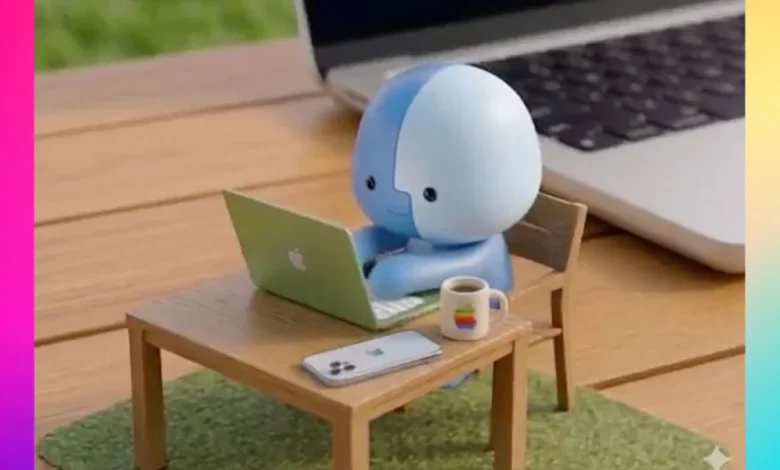
The Design Philosophy of Lil’ Finder Guy
The genesis of Lil’ Finder Guy represents a significant departure from Apple’s traditional marketing aesthetic, which historically favors sleek, minimalist product photography and high-contrast environments. According to Coelho’s recent professional updates, the project was envisioned as a "dream design" that sought to humanize the operating system’s most recognizable face. The character’s proportions were meticulously calculated; Coelho revealed that the mascot is officially "measuring exactly one apple tall," a whimsical yet precise specification that aligns with Apple’s internal culture of rigorous standards, even for its more playful ventures.
Behind-the-scenes documentation shared by Coelho includes a series of technical sketches and character studies. these documents reveal the iterative process required to translate the two-dimensional, Picasso-inspired Finder logo—originally designed by Susan Kare for the Macintosh—into a functional 3D character. The sketches explore a wide range of emotional expressions, ensuring the character could convey curiosity, excitement, and helpfulness without losing its iconic geometric simplicity. Furthermore, the shared materials included images of an airbrushed physical prototype, suggesting that the character’s movements in digital advertisements were informed by real-world lighting and tactile models rather than being purely computer-generated from the outset.
Chronology of the MacBook Neo Campaign
The rollout of the MacBook Neo and its accompanying mascot followed a strategic timeline designed to maximize engagement across different demographic segments, particularly targeting younger users on social media platforms.

- March 2026: The Initial Reveal: Apple introduced the MacBook Neo during a specialized livestream event. The "Neo" was positioned as a spiritual successor to the 12-inch MacBook, emphasizing extreme portability and a vibrant color palette. Lil’ Finder Guy made his debut as the "host" of the digital experience, appearing to interact with the hardware in a series of animated segments.
- April 2026: Social Media Expansion: Following the hardware launch, Apple pivoted to a mobile-first strategy. A series of TikTok videos were released, featuring Lil’ Finder Guy in "day-in-the-life" scenarios. These videos leveraged the character’s charm to highlight specific macOS features, such as Stage Manager and Universal Control, in a format that felt native to the platform’s short-form video culture.
- May 2026: The Meme Phenomenon: By late spring, the character had transcended official marketing channels. The "Lil’ Finder Guy" moniker was adopted by the internet community, leading to a surge in fan-made content. This included 3D-printable files for desk toys, high-resolution wallpapers created by enthusiasts like Basic Apple Guy, and various "edits" that integrated the character into popular culture.
- June 2026: WWDC Integration: During the Worldwide Developers Conference (WWDC) 2026, Apple fully embraced the mascot’s popularity. Lil’ Finder Guy appeared as an "Easter egg" in developer sessions, often hidden in the background of code demonstrations. Most notably, the character was featured on high-quality enamel pins included in the swag bags for on-site attendees, cementing his status as an official part of the Apple brand lexicon.
Supporting Data and Market Impact
The success of the Lil’ Finder Guy campaign is measurable through both critical acclaim and digital engagement metrics. The campaign’s shortlisting for a Cannes Lion in the visual design and character development categories is a testament to its industry impact. Within Apple’s marketing history, few characters have achieved this level of independent recognition; the last comparable campaign was the "Get a Mac" (Mac vs. PC) series, which relied on human actors rather than a stylized mascot.
Engagement data from the TikTok campaign indicated a 40% higher retention rate compared to standard product-focused advertisements. The use of a mascot allowed Apple to bypass the "ad blindness" often associated with tech hardware promotions. Furthermore, the search volume for "MacBook Neo" saw a secondary spike in May 2026, coinciding with the peak of the Lil’ Finder Guy meme cycle, suggesting that the character successfully extended the product’s relevance beyond the initial launch window.
From a design perspective, the transition to 3D marks a broader trend in Apple’s UI evolution. With the introduction of visionOS and spatial computing, the company has been moving away from the flat "skeuomorphism-lite" of the previous decade toward objects with depth, shadows, and physical presence. Lil’ Finder Guy serves as a mascot for this new era of "spatial" interaction.
Official Responses and Creative Leadership
Sofia Coelho’s role as Art Director was pivotal in maintaining the balance between "adorable" and "professional." In her recent communications, she credited a wider team of designers and animators who worked to ensure the character did not veer into the "uncanny valley." The goal was to create a figure that felt like a natural extension of the software—a friendly guide rather than a corporate intruder.

Industry analysts have noted that this campaign represents a "softening" of Apple’s brand. By allowing a character to become a meme, Apple demonstrated a rare willingness to let the community dictate the narrative. "Apple is usually very protective of its intellectual property," noted one marketing analyst during the WWDC 2026 post-show. "To see them lean into ‘Lil’ Finder Guy’ by putting him on pins and in developer sessions shows a level of self-awareness and community engagement we haven’t seen since the early days of the Mac."
Broader Implications for Apple’s Brand Strategy
The success of Lil’ Finder Guy may signal a long-term shift in how Apple approaches product launches for its consumer-grade hardware. While the "Pro" line of products continues to be marketed through high-performance metrics and sleek, dark aesthetics, the "consumer" line—comprising the MacBook Air, iPad Air, and the new MacBook Neo—is increasingly being associated with personality, color, and approachability.
This strategy serves several purposes:
- Demographic Targeting: It appeals to Gen Z and Gen Alpha users who value brand "personality" and shareable content.
- Software Education: A mascot can demonstrate complex software features in a way that feels less like a tutorial and more like a story.
- Merchandising Potential: While Apple has traditionally shied away from toy-like merchandise, the popularity of the WWDC pins suggests a latent demand for physical brand tokens.
As Apple continues to integrate artificial intelligence and more complex "Intelligent" features into macOS, the presence of a friendly, recognizable face like Lil’ Finder Guy could serve as the bridge between traditional computing and the more autonomous, agent-based systems of the future. By personifying the "Finder"—the very core of the Mac’s file system—Apple has effectively given its OS a heart, ensuring that as technology becomes more advanced, it remains, in the company’s own words, "adorable."

The "dream project" led by Sofia Coelho has done more than just sell a "little Mac"; it has updated a 40-year-old icon for a new generation of users. Whether Lil’ Finder Guy will remain a permanent fixture of the Apple ecosystem or stay a unique hallmark of the MacBook Neo era remains to be seen, but his impact on the brand’s visual language is undeniable. For now, he stands—exactly one apple tall—as a symbol of a more playful, accessible future for Apple silicon.