The Comprehensive Abacus AI Review: Evaluating Features, Pricing, and Enterprise Readiness for 2026

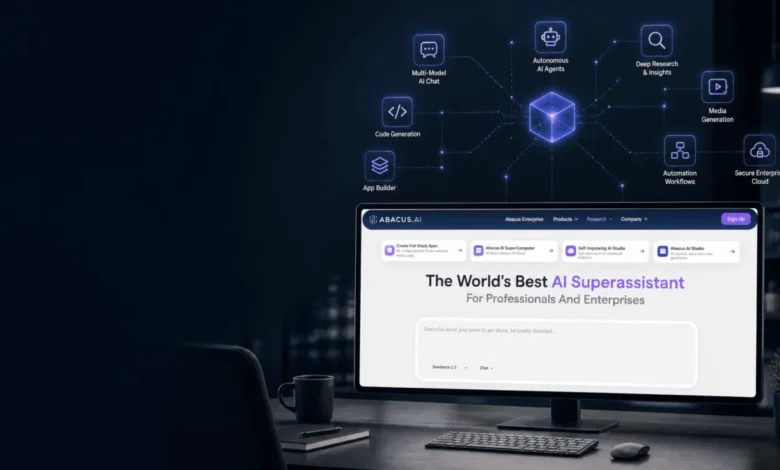
The landscape of generative artificial intelligence has grown increasingly fragmented over the past several years, compelling enterprises, independent developers, and creative professionals to juggle a dizzying array of distinct subscriptions. While OpenAI’s ChatGPT dominates general conversation, Anthropic’s Claude remains a favorite for software engineering, dedicated platforms handle image generation, and entirely separate workflows manage automated tasks. In response to this operational fatigue, Abacus AI has emerged as an ambitious aggregator designed to consolidate these disparate capabilities into a singular, cohesive ecosystem. Founded in 2019 by former Google Brain researchers, the company initially focused on enterprise machine-learning infrastructure before pivoting into the broader consumer and professional assistant market. This review examines whether Abacus AI successfully streamlines the modern digital workspace or merely adds another complex subscription layer to an already crowded tech stack.
Platform Architecture and Core Offerings
At its core, Abacus AI differentiates itself by avoiding reliance on a single foundational language model. Instead, its primary consumer-facing interface, ChatLLM, integrates more than 100 models from leading providers such as OpenAI, Anthropic, Google, xAI, and DeepSeek. This multi-model approach allows users to benchmark outputs side-by-side without managing multiple independent accounts. Beyond conversational capabilities, the self-serve subscription extends to specialized verticals: Abacus AI Agent for multi-step automated workflows, Desktop for local code editing and meeting transcription, Studio for creative media generation across more than 50 visual and audio models, AppLLM for full-stack application prototyping, and RouteLLM for developers seeking an OpenAI-compatible API endpoint.
To understand the platform’s positioning, one must separate the low-cost self-serve tiers—priced at roughly $7 for the introductory month and $10 to $20 thereafter—from the enterprise-grade platform. The self-serve tier is explicitly structured as a broad professional toolkit for individuals and small teams. Conversely, the Abacus AI Enterprise offering is targeted at large organizations requiring dedicated GPU clusters, single sign-on (SSO), SAML compliance, in-VPC configurations, and connections to internal databases for structured tasks like fraud detection and demand forecasting, with enterprise pricing reportedly starting around $5,000 per month.
The Credit Economy and Pricing Mechanics
While the headline subscription price of $10 for the Basic plan or $20 for the Pro plan appears highly economical, the platform’s underlying credit system introduces notable financial complexity. Credits do not function as a straightforward conversion of traditional language model tokens; rather, they serve as a dynamic measure of computational resource consumption. Simple text prompts draw minimally against monthly allowances, whereas resource-intensive operations—such as video generation in Studio, continuous cloud workloads on SuperComputer, or multi-step execution via Abacus AI Agent—deplete credit reserves at an accelerated rate.
Independent user feedback across platforms like G2 and Trustpilot reveals a recurring tension regarding this credit economy. While many technical users praise the platform’s extraordinary breadth, numerous consumer complaints highlight rapid credit depletion, restrictions triggering prior to monthly renewal cycles, and friction surrounding promotional billing terms. Furthermore, while the Basic tier provides an inexpensive entry point for light multi-model usage, users frequently note that automated agent capabilities and advanced app-building tools require the $20 Pro plan to become genuinely functional.
Performance Across Professional Use Cases
Evaluating Abacus AI across distinct operational domains reveals a nuanced performance profile. In everyday text-based tasks, such as document summarization and cross-model comparison, the platform delivers clear utility by eliminating the need to transfer files between separate web applications. In the realm of software development, the Desktop workstation—featuring a command-line interface, local file processing, and a VS Code extension—provides a competent environment for local codebase management, though vendor claims of outperforming dedicated coding agents lack independent, verified benchmarks.
In creative production, Studio successfully lowers the barrier to entry by housing dozens of media models under one roof, though creators must carefully budget their usage to avoid exhausting resources on high-fidelity video outputs. Meanwhile, AppLLM and the autonomous agent layer offer rapid prototyping capabilities, enabling users to generate functional applications and multi-step research reports from simple text prompts. However, analysts emphasize that these outputs function strictly as functional starting points rather than secure, production-ready deliverables, necessitating rigorous human code review and oversight.
Security, Data Governance, and Privacy Standards
For professionals handling proprietary or sensitive material, platform security is paramount. Abacus AI publishes a robust compliance framework, noting adherence to SOC 2 Type II and ISO/IEC 27001:2022 standards, alongside support for HIPAA, GDPR, and CCPA regulations. The company maintains that data is encrypted at rest using AES-256 and in transit via TLS 1.2 or higher, and explicitly states that customer inputs are not utilized to train generalized or proprietary models.
Nevertheless, the practical risk profile shifts depending on how the platform is deployed. Granting an autonomous agent screen access, persistent personal memory, or integration with email and financial systems introduces significant concentrations of sensitive context. Consequently, organizations and individuals are advised to implement a phased adoption strategy—initiating usage on low-sensitivity tasks and verifying specific contractual terms before integrating the platform into mission-critical workflows.
Implications and Market Outlook
Abacus AI occupies a unique space in the generative software ecosystem. It effectively addresses the fatigue of subscription stacking and tab-switching, offering an impressive breadth of tools that outpace many single-provider offerings. However, this versatility introduces interface complexity, opaque credit forecasting, and variable agent reliability.
For technical founders, multi-model researchers, and developers willing to navigate its resource management system, Abacus AI provides exceptional value and workflow consolidation. Conversely, users seeking a frictionless, single-purpose chatbot or predictable monthly expenses may find traditional first-party subscriptions a more reliable fit. Ultimately, prospective users should leverage introductory pricing to rigorously test the platform against their specific operational demands before committing to a long-term subscription.