The convergence of industrial automation, artificial intelligence, and the Internet of Things (IoT) has reached a critical inflection point, as evidenced by recent industry developments and strategic shifts at major technology conglomerates. This week, the intersection of smart home standardization, semiconductor evolution, and edge computing serves as a microcosm for the broader challenges facing the connected device ecosystem. As companies like Honeywell move toward implementing TinyML—machine learning algorithms optimized for low-power, resource-constrained hardware—the industry is simultaneously grappling with the teething pains of the Matter smart home standard and a significant realignment in the global chip architecture market.
The Matter Standard and the Challenge of Interoperability
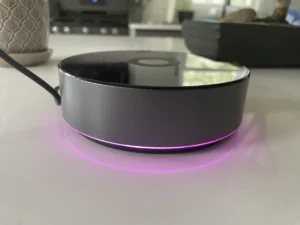
The smart home landscape, long fragmented by proprietary ecosystems, was expected to find unity through the Matter standard. However, recent reporting from outlets including The Verge and Stacey on IoT indicates that the transition is far from seamless. While Matter promises a unified language for smart home devices, the practical implementation has been plagued by issues regarding Thread credentialing and inconsistent device support across vendors.
The fundamental tension lies between the goal of universal interoperability and the reality of vendor-specific gatekeeping. When manufacturers prioritize their own ecosystems—be it Apple, Google, or Amazon—the cross-platform experience often degrades, leading to failed device discovery and connectivity loops. This "messy" rollout underscores a broader industry reality: standardization is not merely a technical hurdle but a political one. For the consumer, this translates to an uneven experience where the promise of a "plug-and-play" smart home remains largely aspirational.
Infrastructure Vulnerabilities and Global Security
Beyond the domestic smart home, the vulnerability of connected systems remains a top-tier security concern. Investigative reporting by Kim Zetter has recently highlighted the unsettling prospect of hacked radiation sensors in Chernobyl. This incident serves as a stark reminder that as critical infrastructure becomes increasingly digitized and sensor-dependent, the surface area for cyberattacks expands exponentially.
Whether it is a power plant or a smart thermostat, the reliance on IoT sensors necessitates a robust security framework that many legacy systems lack. The "mystery" of data spikes in radiation monitoring suggests that even if sensors are not directly "hacked" in the traditional sense, the integrity of the data stream can be compromised, leading to false reporting and potential panic. This incident reinforces the need for edge-based validation—a security model where data is verified at the source before it ever hits the cloud.
The RISC-V Pivot and Semiconductor Consolidation
The hardware that powers these sensors is currently undergoing a structural transformation. A coalition of industry titans, including Qualcomm, NXP, and Infineon, has recently backed a new initiative focused on the RISC-V architecture. This move represents a strategic hedge against the dominance of proprietary instruction sets like ARM.
The rationale is twofold: cost efficiency and supply chain sovereignty. By adopting an open-standard architecture, these companies can reduce licensing fees and gain greater control over their hardware designs. Simultaneously, the acquisition market is heating up, with Renesas moving to acquire Sequans, a specialist in cellular IoT modules. These shifts indicate that the semiconductor industry is preparing for a future where high-performance, low-power IoT connectivity is the default requirement for every industrial and consumer device.
TinyML: The Future of Edge Intelligence
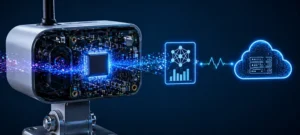
At the center of this technological evolution is the implementation of TinyML. Muthu Sabarethinam, VP of AI/ML products and services at Honeywell, recently provided insights into how industrial giants are operationalizing this technology. Unlike cloud-based AI, which requires constant data transmission, TinyML allows algorithms to reside directly on the sensor itself.

Honeywell’s current footprint includes over one million active sensors in the field. The scale of this deployment makes cloud-only processing economically and technically prohibitive. By shifting intelligence to the edge, Honeywell aims to solve three primary constraints:
- Latency: Critical decisions, such as detecting a mechanical failure in a turbine or a gas leak in a facility, must occur in milliseconds. Edge processing eliminates the "round-trip" time required to reach a data center.
- Power Consumption: Transmitting large volumes of data via Wi-Fi or cellular networks is energy-intensive. TinyML allows sensors to process data locally, transmitting only the relevant insights or alerts, thereby extending battery life.
- Security: Keeping data on the device mitigates the risks associated with data in transit. If the sensor is not constantly broadcasting raw data, the window for interception or malicious packet injection is significantly narrowed.
The Strategic Shift in Business Models
The deployment of TinyML is not merely an engineering challenge; it is a business model transition. Honeywell and its peers are moving away from simply selling hardware to providing "data-as-a-service." When a sensor can interpret its own environment, it ceases to be a simple reporting tool and becomes an intelligent agent capable of predictive maintenance.
Customers are increasingly demanding access to actionable insights rather than raw data. A facility manager does not need a million data points about a machine’s vibration; they need to know when that machine is likely to fail. TinyML provides the bridge between raw telemetry and this high-level operational intelligence. As Sabarethinam noted, the challenge for companies now lies in packaging these algorithms so they can be deployed at scale across millions of heterogeneous devices without requiring bespoke software updates for every individual unit.
Consumer-Facing Shifts: Home Assistant and Energy Management
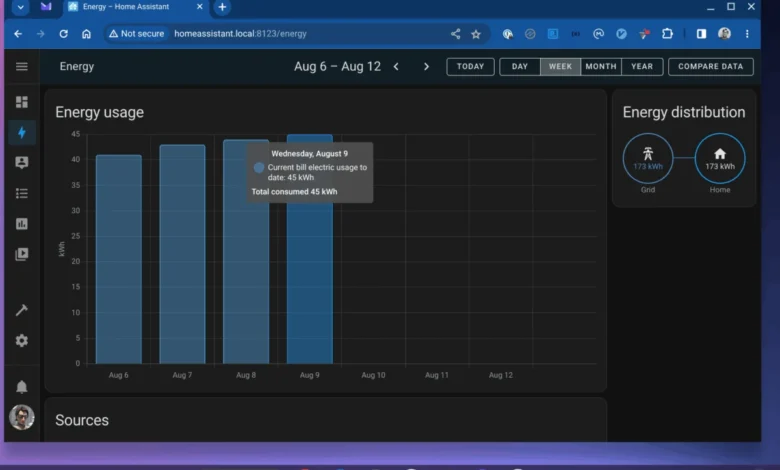
While the industrial sector pursues sophisticated machine learning, the consumer market is undergoing a grassroots shift toward self-reliance. The growing interest in Home Assistant—an open-source platform that prioritizes local control over cloud dependence—reflects a consumer base that is increasingly wary of the privacy and stability issues inherent in centralized smart home ecosystems.
This transition is mirrored in the push for smarter energy management. As utility providers move toward demand-response programs, consumers are looking for ways to automate their homes to save costs during peak energy pricing. Preparing a home for these programs requires a level of connectivity and local intelligence that standard "smart" devices often struggle to provide. For the average user, the barrier to entry remains high, but the increasing availability of sophisticated, local-first platforms is beginning to narrow the gap.
Broader Implications and Future Outlook
The trajectory of the next five years will be defined by the maturation of these technologies. We are moving toward a world where the "Internet of Things" is replaced by the "Intelligence of Things." In this environment, the ability to process information locally—whether in a nuclear facility or a residential smart meter—will be the primary differentiator between successful and obsolete systems.
The current friction in the Matter standard and the ongoing consolidation of the semiconductor market are necessary growing pains for an industry attempting to reconcile its past with its future. As firms like Honeywell continue to integrate TinyML into their massive sensor networks, the reliance on cloud-centric, latency-prone, and security-vulnerable architectures will diminish.
The lessons from recent weeks are clear: the hardware will become more open (via RISC-V), the software will become more local (via Home Assistant and TinyML), and the security will move to the edge. While the transition may be "messy," as the current state of Matter suggests, the ultimate goal—a secure, intelligent, and interoperable network of devices—remains the driving force of the modern industrial and consumer digital economy. The integration of artificial intelligence into the smallest of chips is not just a technological advancement; it is the fundamental architecture of the next generation of global infrastructure.