Google Labs Expands No-Code AI Platform Opal with Agent-Driven Workflows and Dynamic Tool Integration

The landscape of no-code artificial intelligence development experienced a significant evolution as Google Labs introduced autonomous agent capabilities to its Opal platform. Originally launched in July 2025 as an experimental tool for translating natural language into functional AI workflows, Opal has transitioned from a static pipeline generator into an adaptive system capable of dynamic decision-making. This latest update, deployed quietly to the interface in early 2026, introduces an "Agent" step alongside an expanded suite of specialized models and integrated tools, fundamentally altering how creators design automated applications without writing code.
Evolution of Opal: From Google Labs Experiment to Developer Framework
Opal was initially conceived by Google engineer Dimitri Glazkov, utilizing an internal framework known as Breadboard. The core premise of the tool has remained consistent: users articulate their requirements in plain English, and Opal automatically structures a visual workflow comprised of connected steps. These workflows can then be published and shared via a public URL, eliminating the traditional friction of server management and software deployment pipelines.

However, the product’s trajectory over its first seven months reflects a broader strategic commitment from Google. Initially sequestered within the experimental catalog of Google Labs—a division known for incubating ideas that may or may not reach commercial maturity—Opal has recently been integrated into the official Google for Developers ecosystem. Industry analysts view this migration as an indicator of long-term viability, supported by a rapid cadence of feature deployment that has expanded the platform’s reach to more than 160 countries.
The Technical Shift: Introducing the Agent Step

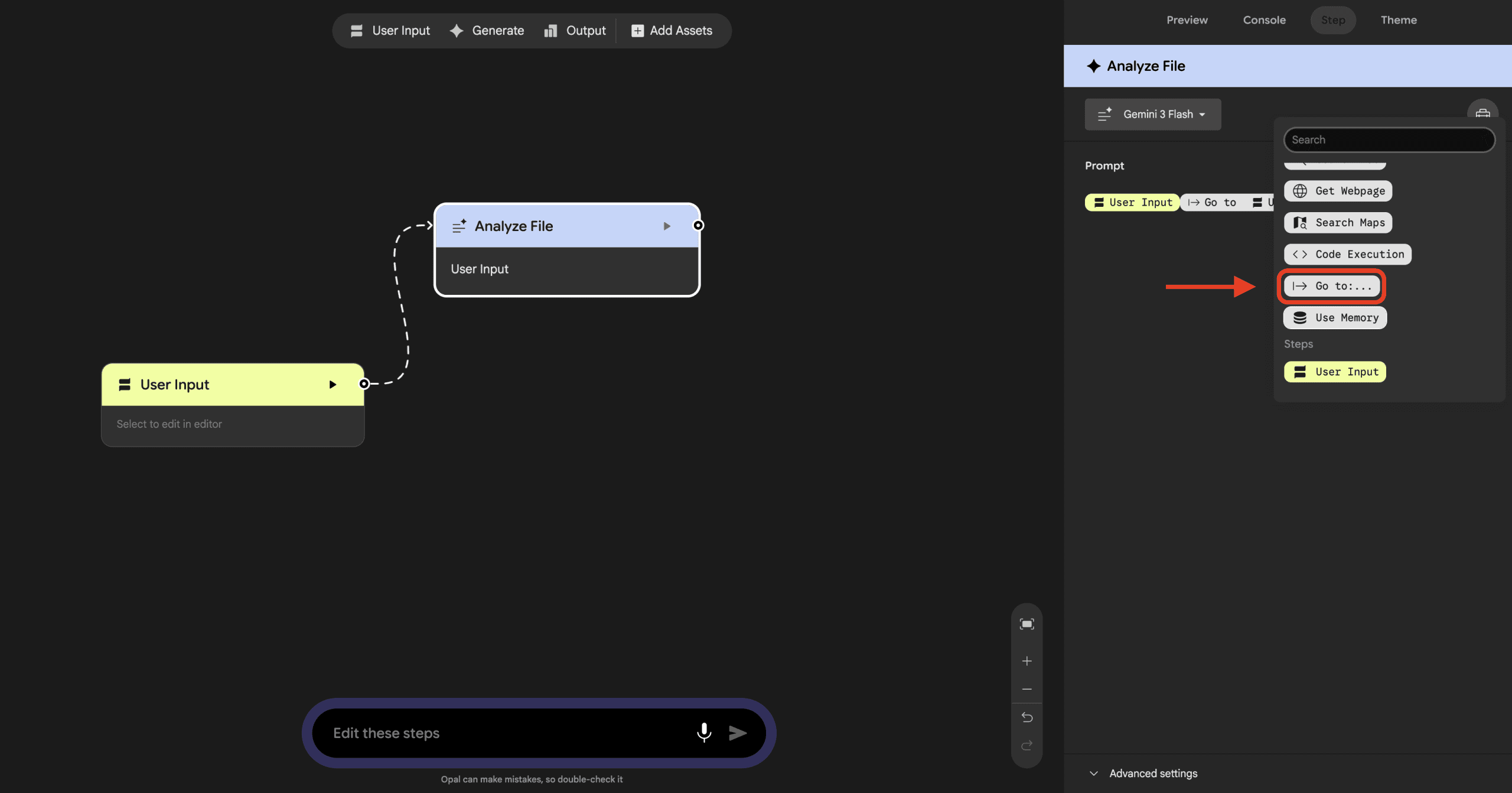
The most consequential addition to Opal is the Agent step, which replaces rigid, manually configured model selections with dynamic runtime reasoning. In previous iterations, developers were required to construct fixed sequences, manually choosing specific models—such as Gemini for text generation or Imagen for visual assets—and chaining them together in a predetermined order.
By selecting the new Agent option within the generation interface, developers define a high-level goal rather than a step-by-step script. At runtime, the system autonomously determines which models, data sources, or computational tools are required to achieve the objective. This capability mirrors advancements in broader enterprise AI agent frameworks, moving away from scripted prompts toward goal-oriented execution. For instance, whereas a digital storybook application previously required explicit, pre-defined prompts for every single page, an agent-driven workflow can accept a holistic prompt—such as drafting and illustrating a multi-part narrative—and dynamically generate plot points, manage assets, and adapt its output based on intermediate results.
Expanded Model Roster and Ecosystem Integration
To support these dynamic workflows, Google has broadened the array of specialized models accessible within the platform. The updated model picker includes:

- Agent: Dynamically selects models and tools based on a stated goal.
- Gemini Flash: Optimized for rapid, everyday text processing and reasoning tasks.
- Gemini Pro: Deployed for complex logic and multi-step computational requirements.
- Nano Banana and Nano Banana Pro: Dedicated to image editing and generation, with the Pro variant handling complex visuals requiring precise text rendering.
- AudioLM: Powers text-to-speech generation.
- Veo: Handles text-to-video and image-to-video creation.
- Lyria 2: Generates instrumental music.
This diversification transforms the agent step from a generalized router into a sophisticated conductor capable of orchestrating text, audio, visual, and analytical assets within a single, unified interface.
Practical Application: Building an Autonomous Interview Preparation Coach
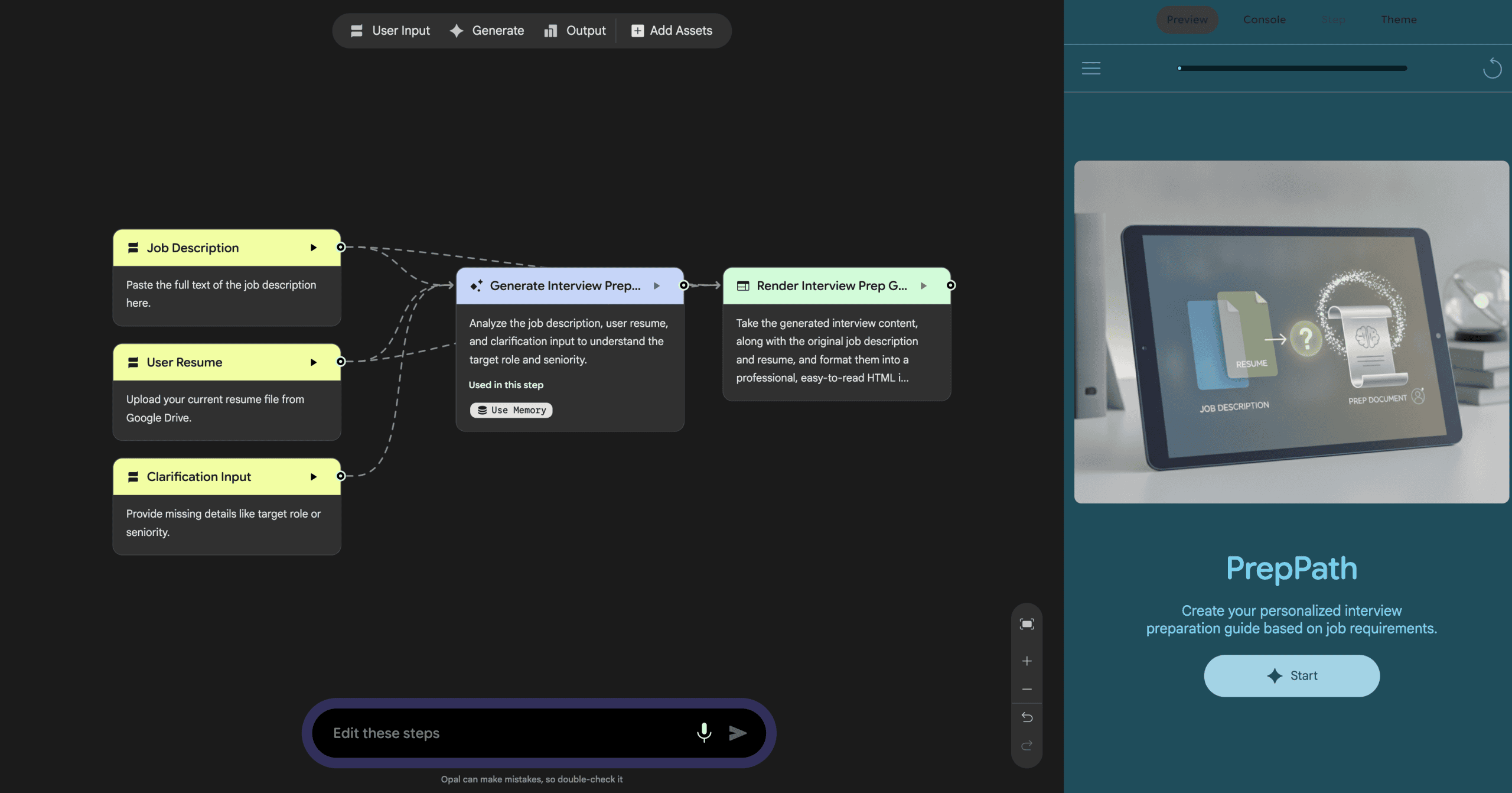
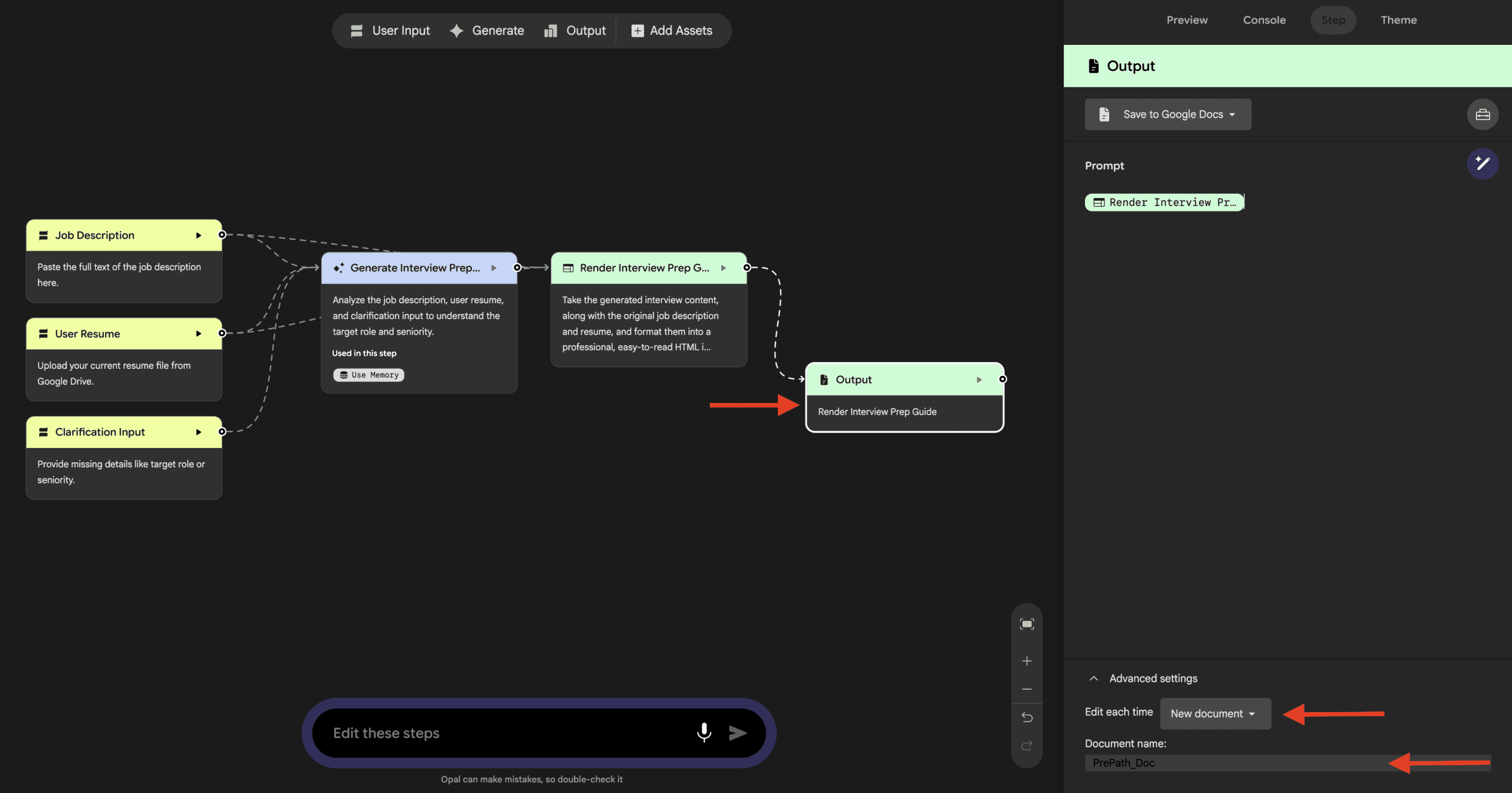
To demonstrate the capabilities of these new features, developers can construct applications that were previously impossible within Opal’s static framework. A prime example is an automated interview preparation coach that ingests a candidate’s resume and a target job description.
Unlike older workflows that execute a linear path regardless of input quality, an agent-enabled coach evaluates the submitted materials to determine whether critical data—such as seniority level or specific role requirements—is missing. If information is lacking, the system utilizes interactive chat capabilities to pause execution and prompt the user for clarification.
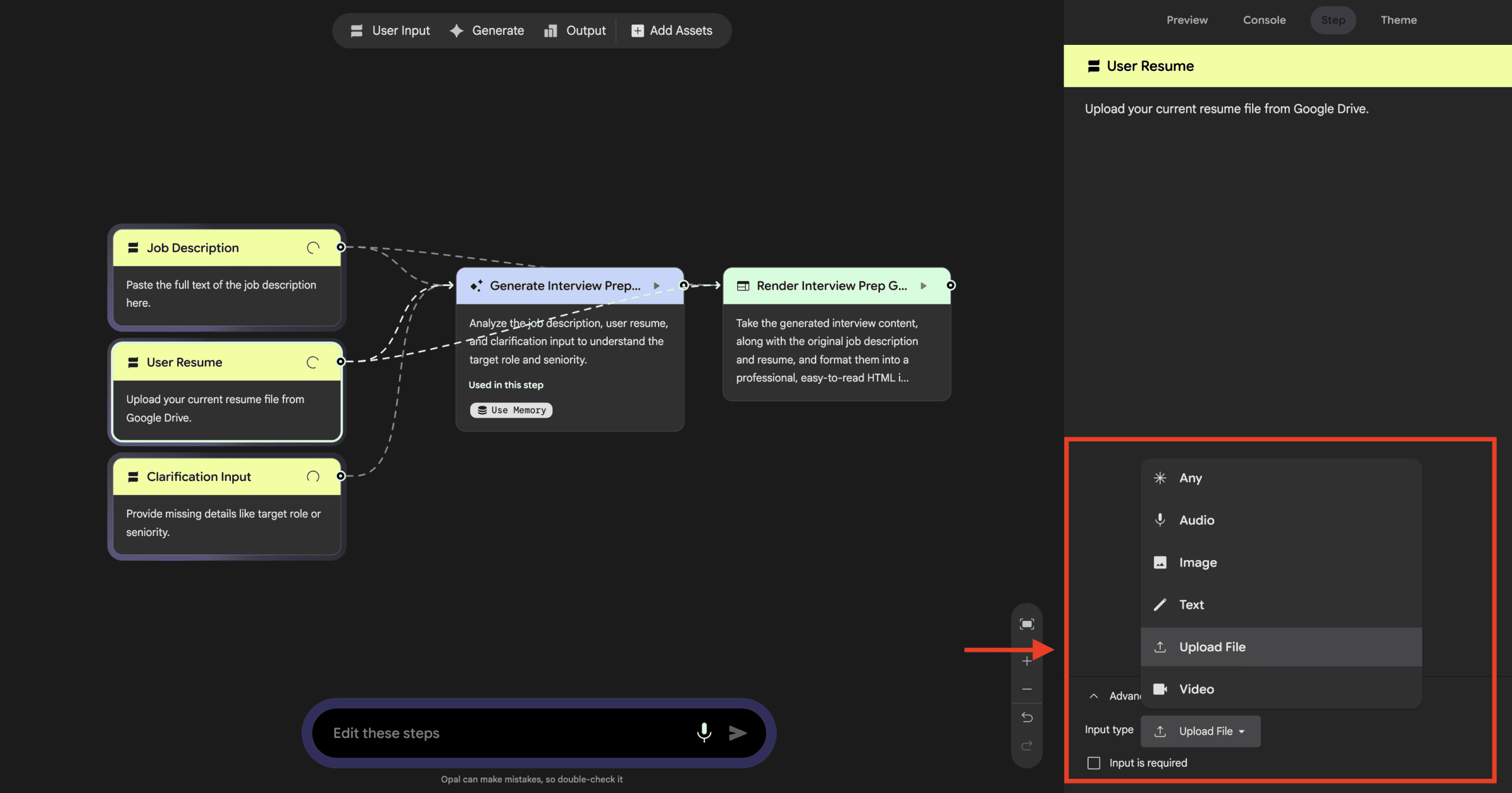
Furthermore, the agent can independently evaluate whether it possesses sufficient internal context regarding the employing organization or specific job market. If specialized knowledge is required, the system autonomously incorporates web search capabilities at runtime, without requiring the developer to hardcode a search node into the visual canvas. Finally, the application leverages persistent memory to retain user context across sessions, ensuring that recurring users do not need to re-establish their professional background upon subsequent visits. The final output is then compiled into a structured document, such as a personalized Google Doc containing targeted questions, tailored talking points, and strategic inquiries for the interviewer.
Implications and Current Limitations of No-Code AI Prototyping

Despite the rapid expansion of Opal’s capabilities, industry observers and enterprise architects note certain operational boundaries. Because Opal remains an experimental product under Google Labs, there is currently no direct pathway to export visual prototypes into production-ready software code. Organizations seeking to scale applications built within Opal must eventually rebuild them utilizing standard developer interfaces, such as the Gemini API.
Additionally, Google has not yet published formal documentation regarding enterprise-grade quotas, sustained rate limits, Single Sign-On (SSO), or comprehensive audit logging. These omissions suggest that while the platform is exceptionally powerful for rapid prototyping, internal validation, and lightweight workflow automation, it occupies a specialized niche distinct from traditional enterprise software deployment pipelines.
Future Outlook for Autonomous Development Tools
The introduction of agent-driven workflows in platforms like Opal points toward a broader industry trend: the democratization of complex software creation through intent-based programming. By shifting the developer’s role from writing exhaustive procedural logic to defining high-level goals and constraints, tools of this nature lower the technical barrier for cross-functional teams. As Google continues to refine Opal’s underlying architecture and expand its toolsets, the platform serves as a vital proving ground for how autonomous agents will interact with users in everyday application development.