Multilingual Text Classification with Scikit-LLM and Multilingual Embeddings

The Evolution of Cross-Lingual Machine Learning
For years, the standard approach to multilingual text classification involved either machine translation of all input data into a single dominant language—often resulting in a loss of semantic nuance and cultural context—or the independent training of language-specific classifiers. The former approach introduces latency and dependency on external translation APIs, while the latter multiplies the operational burden on DevOps teams.
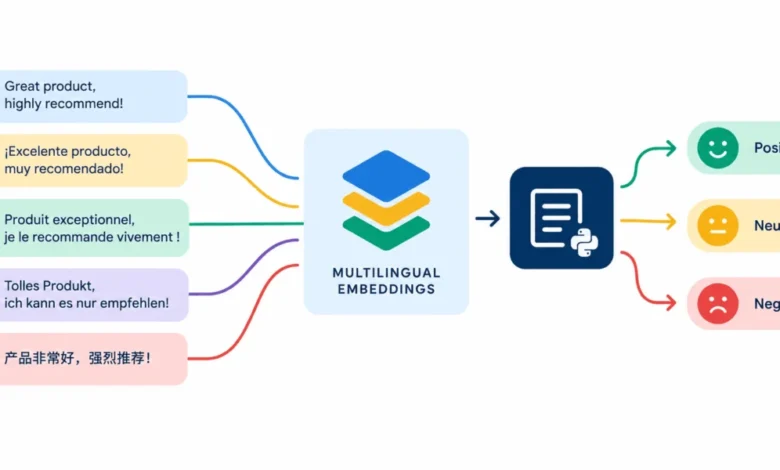
The emergence of multilingual embedding models marks a paradigm shift in this landscape. These models, such as the BGE-M3 (BAAI General Embedding) architecture, act as a universal translator of sorts, mapping text from diverse linguistic origins into a shared, high-dimensional vector space. In this unified space, the semantic distance between an English phrase and its Spanish or Mandarin equivalent is minimized, effectively removing language as a barrier to classification. By combining these advanced embeddings with Scikit-learn, developers can now build lightweight, high-performance pipelines that treat linguistic diversity as a feature rather than an obstacle.
Technical Implementation and Infrastructure
To construct a robust pipeline that bypasses the limitations of proprietary, paid APIs, developers are increasingly turning to local, open-source solutions. The current industry trend favors the use of the Ollama distribution, which facilitates the local deployment of powerful open-source models. By leveraging the Scikit-LLM library, engineers can bridge the gap between LLM-based vectorization and the mature, efficient classification algorithms provided by Scikit-learn.
The technical workflow involves a specific sequence of operations. First, the environment must be provisioned with necessary dependencies, including the Scikit-LLM wrapper and the Ollama runtime. Second, the selected embedding model—in this case, BGE-M3—is pulled into the local environment. BGE-M3 is particularly notable for its multi-functionality, supporting multi-granularity, multi-linguality, and multi-functionality, making it a state-of-the-art choice for researchers and commercial developers alike.
Once the infrastructure is initialized, the configuration requires pointing the Scikit-LLM module to the local server endpoint. While the software architecture often expects an API key for compatibility reasons, the local, self-hosted nature of the Ollama instance allows for the use of dummy credentials, ensuring both security and compliance with strict data-residency requirements.
Data Preparation and Model Training
The efficacy of a multilingual pipeline is intrinsically linked to the diversity and quality of the training data. Using datasets such as the Amazon Multi-language Reviews repository, researchers can conduct evaluations across various languages simultaneously. The process begins with data ingestion, where a balanced sample of reviews from different languages is aggregated.
A critical step in this phase is the randomization of the dataset. By shuffling the combined bilingual data, the pipeline ensures that the classifier does not develop a bias toward a specific language due to the order of operations. Once the data is prepared, the pipeline is structured into two distinct stages: the vectorization stage and the classification stage.
- Vectorization (GPTVectorizer): The input text is passed through the BGE-M3 model, which generates fixed-length vector embeddings. These vectors capture the intent, sentiment, and semantic structure of the review regardless of whether it was originally written in English, Spanish, or other supported languages.
- Classification (Logistic Regression): The resulting embeddings serve as features for a logistic regression model. Because the embedding space is language-agnostic, the logistic regression model operates on the underlying meaning of the text, enabling it to perform classification tasks on a global scale with a single model instance.
Performance Analysis and Limitations
Preliminary performance metrics from these pipelines often reveal a trend: extreme categories (such as 1-star or 5-star reviews) exhibit higher classification accuracy compared to intermediate ratings. Data scientists often attribute this to the intensity of language used in polar sentiments, which is easier for embedding models to cluster, compared to the subtle, nuanced language found in 2-star or 3-star reviews.
The reported accuracy, while functional, highlights that these models are not "plug-and-play" in every context. Several factors influence the final F1-score:
- Data Imbalance: Even with careful sampling, class representation may vary, skewing results.
- Semantic Overlap: In intermediate ratings, the difference between a "neutral" and a "slightly disappointed" review may not be clearly demarcated in the latent vector space.
- Model Sensitivity: The choice of embedding model and the dimensionality of the vector space play a crucial role in how well the classifier can separate classes.
Broader Implications for Global AI Strategy
The adoption of multilingual LLM-based pipelines has profound implications for global business operations. For multinational corporations, this technology allows for the rapid deployment of customer support automation, sentiment analysis for global product launches, and automated content moderation across dozens of languages.
Furthermore, this approach contributes to the democratization of artificial intelligence. By reducing the reliance on massive, language-specific training datasets, smaller organizations and regional startups can achieve competitive performance levels with minimal data overhead. The ability to "transfer" learning from a high-resource language to a low-resource language within the same embedding space is a powerful tool for bridging the global digital divide.
Looking Ahead: The Future of Unified Pipelines
As the industry moves forward, the focus is shifting toward optimizing the efficiency of these pipelines. Future developments are likely to include:
- Quantization: Reducing the computational footprint of embedding models to allow for real-time deployment on edge devices.
- Fine-tuning: Implementing Parameter-Efficient Fine-Tuning (PEFT) techniques to adapt general-purpose embedding models to specific industrial domains (e.g., medical or legal terminology).
- Multi-Modal Integration: Expanding these pipelines to handle not just text, but images and audio, within the same cross-lingual framework.
In conclusion, the integration of Scikit-LLM with multilingual embeddings represents a fundamental shift in machine learning engineering. By replacing rigid, language-specific architectures with flexible, semantic-aware vectorization, developers have gained a robust toolset to address the complexities of a globalized digital environment. While challenges regarding nuanced classification and class imbalance remain, the architectural benefits—namely scalability, reduced maintenance, and improved cross-lingual performance—make this approach the current gold standard for multilingual text classification in the modern era. As the technology continues to mature, it will undoubtedly serve as the backbone for the next generation of inclusive, global-scale AI applications.