Apple Watch Series 12 Hands-On: Refining the Standard for Wearable Health Technology

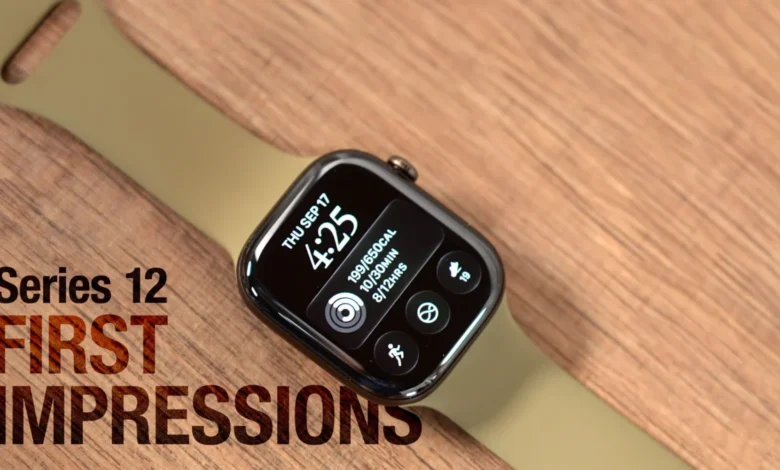
The Apple Watch Series 12 has officially arrived, marking the latest iteration in a product line that has fundamentally altered the landscape of consumer health monitoring. Released on September 18, 2026, the device arrives following a high-profile unveiling at Apple’s "Surprise and Shine" event in Cupertino. While the Series 12 maintains the familiar silhouette of its predecessor, the Series 11, it introduces a significant suite of internal hardware upgrades and sensor enhancements designed to cement its position as the industry leader in biometric data collection.
A Chronology of the Series 12 Launch
The path to the release of the Series 12 began in late August 2026, when industry analysts, including Bloomberg’s Mark Gurman, confirmed that Apple would forgo a major chassis redesign in favor of a "refinement-first" strategy. On September 9, 2026, Apple officially pulled back the curtain on the device, alongside the highly anticipated iPhone 18 Pro and the innovative foldable iPhone Duo. This strategic grouping of product launches underscored Apple’s focus on ecosystem synergy, positioning the Series 12 as a vital peripheral for the new mobile hardware. Following a week-long pre-order window, the device reached retail shelves and customer doorsteps on September 18, 2026.
Architectural Consistency and Material Evolution
Externally, the Apple Watch Series 12 presents a design profile nearly indistinguishable from the Series 11. For many, this continuity is a deliberate choice by Apple to ensure accessory compatibility, including the vast ecosystem of existing bands. However, Apple has introduced a fresh palette of finishes to distinguish the new model.
The aluminum lineup now features a sophisticated light gold, a departure from last year’s rose gold, alongside dark bronze, black, and space gray. For those seeking premium materials, the ceramic models are available in pearl white and night blue, while the polished titanium options—radiant gold and natural—round out the professional tier. Perhaps the most functional physical update lies in the display protection; the aluminum models have transitioned from Ion-X glass to Ceramic Shield 2. Internal testing suggests this new material offers a 60 percent increase in durability, addressing long-standing concerns regarding screen fragility in high-impact activities.
The Heart of the Innovation: The S11 Chip and Sensing System
Beneath the familiar exterior lies a revamped internal architecture centered around the S11 system-in-package (SiP). This chip serves as the engine for the new Health Sensing System, a significant leap in data granularity. The Series 12 increases the frequency of heart rate sampling to every five seconds, while heart rate variability (HRV) is now tracked every five minutes.
This increase in data density is achieved without compromising the device’s established all-day battery life profile—a feat of engineering efficiency. To facilitate this, Apple has introduced a faster charging protocol. Users can now achieve a 12-hour charge in just 15 minutes, provided they utilize the proprietary charger included with the Series 12. Legacy chargers, while compatible for basic power needs, do not support this accelerated replenishment rate.
Analytical Readiness and Health Insights
The data captured by the S11 chip feeds directly into a new, sophisticated "Readiness Score." This metric synthesizes historical data—including recent activity levels, physiological vitals, and sleep architecture—to provide users with a daily recommendation on whether to push their training intensity or prioritize recovery.
Unlike simple activity rings, the Readiness Score is dynamic; it adjusts throughout the day as new data points are collected. Users should note, however, that the system requires a seven-day baseline of personal data collection before the algorithm can provide accurate, personalized insights. This "calibration week" is a critical component of the user onboarding experience, ensuring that the health metrics are tailored to the individual’s specific physiological baseline rather than generic population averages.
Future-Proofing with AI-Driven Features
While the hardware is available immediately, the full software experience of the Series 12 will evolve later this year. The S11 chip is specifically engineered to handle advanced machine learning tasks, including "Live Rewind" and "Siri Recap." These features are designed to process audio and information streams locally, further emphasizing Apple’s commitment to on-device privacy. By leveraging the increased processing overhead of the S11, these tools will allow users to summarize lengthy audio interactions or quickly retrieve key information from their daily device usage, effectively turning the watch into a more proactive digital assistant.
Market Implications and Competitive Positioning
The launch of the Series 12 occurs at a pivotal moment for the wearable market. With health sensors becoming a commodity in the sub-$200 space, Apple’s strategy is clearly focused on the reliability and accuracy of its data. By positioning the Series 12 as the "most accurate wearable for heart rate sensing," Apple is targeting the professional athlete and health-conscious consumer segments who demand medical-grade confidence from their consumer electronics.
The pricing strategy remains consistent with previous generations, starting at $399 for the 42mm model, with the 46mm model commanding a premium. This pricing bracket continues to solidify the Series 12 as a "bridge" product—more accessible than the Ultra lineup, but significantly more capable than the budget-friendly SE models.
Expert Analysis: Should You Upgrade?
When evaluating the necessity of an upgrade, the decision matrix depends largely on the user’s current hardware. For owners of the Series 10 or Series 11, the Series 12 offers incremental improvements in sensor frequency and durability but may not provide a transformative leap in day-to-day utility. The primary value proposition for these users lies in the future-proofed AI capabilities and the enhanced Ceramic Shield 2.
Conversely, for those operating on Series 8 or older models, the transition to the Series 12 represents a significant leap in capability. The accumulation of faster charging, the sophisticated Readiness Score, and the integration of advanced health sensors provides a compelling argument for replacement.
Conclusion: A Maturity in Design
The Apple Watch Series 12 is a testament to the maturation of the wearable category. Apple has moved past the era of annual radical redesigns, choosing instead to focus on the "invisible" components of the user experience: sensor accuracy, data synthesis, and long-term durability. By prioritizing the internal ecosystem—the interaction between the S11 chip and the Health Sensing System—Apple has created a device that is less about the aesthetic statement on the wrist and more about the actionable intelligence it provides to the user’s daily life.
As the integration of health monitoring and AI-driven assistant features continues to accelerate, the Series 12 serves as a reliable, high-performance foundation for the next chapter of personal health management. With the upcoming rollout of software features like Siri Recap, the device is positioned to remain relevant well into the next development cycle, reinforcing Apple’s dominance in a competitive, fast-evolving sector. The Series 12 is, at its core, a refined tool for a digital age, balancing the requirements of a high-tech lifestyle with the practical, daily needs of health tracking and efficient communication.