From Legacy File-Sharing Icon to Generative AI Powerhouse: The Evolution of LimeWire

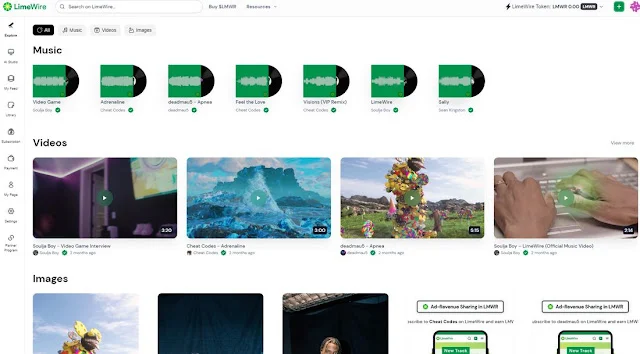
The digital landscape has witnessed a remarkable transformation in the case of LimeWire, a brand that once dominated the early 2000s as a peer-to-peer file-sharing software. After a decade-long absence from the public consciousness following its legal shutdown in 2010, the brand was resurrected in 2022 under new ownership. This modern iteration of LimeWire has pivoted entirely away from its controversial roots, re-emerging as a sophisticated platform for generative artificial intelligence, digital content creation, and Web3 monetization. By integrating AI-driven image generation with blockchain-based asset management, LimeWire now positions itself as a centralized hub for creators to produce, publish, and profit from digital art.
A Chronology of Transformation
To understand the current state of LimeWire, one must look at its rapid evolution over the past three years. In early 2022, Austrian entrepreneurs Paul and Julian Zehetmayr acquired the brand assets of LimeWire with the explicit intention of relaunching it as an NFT marketplace. The platform’s initial focus was on providing a space for musicians and artists to sell exclusive digital collectibles.
By early 2023, the strategy shifted toward the burgeoning generative AI sector. Recognizing that the market for static NFTs was cooling, the company pivoted to "LimeWire Studio." This platform moved beyond a simple marketplace, becoming an integrated production suite. In late 2023 and early 2024, the company further refined its model, introducing a proprietary revenue-sharing system and integrating diverse AI models, including Stable Diffusion and DALL-E, to compete with other AI-native platforms like Midjourney and Adobe Firefly.
The Technical Infrastructure of LimeWire Studio
The core of the current LimeWire experience is its AI Studio, which serves as an interface for high-end generative models. Users gain access to a suite of tools capable of producing high-fidelity imagery based on text prompts. The platform currently supports Stable Diffusion 2.1, Stable Diffusion XL, and DALL-E 2. This multi-model approach allows users to select the architecture that best fits their artistic requirements, whether they are looking for photorealistic renders, anime-style illustrations, or abstract digital art.
From a technical standpoint, the platform simplifies the often-daunting process of prompt engineering. By providing an intuitive interface, it lowers the barrier to entry for users who may not have the technical expertise to operate local instances of Stable Diffusion or complex API-based tools. Furthermore, the platform offers advanced settings such as sampler adjustment and prompt guidance, allowing for granular control over the output. The company has publicly stated its intent to expand this technological stack to include proprietary AI music and video generation models, aiming to position itself as a multimodal creative platform.
Democratizing Monetization through Web3
Perhaps the most distinct aspect of the modern LimeWire is its integration of blockchain technology and cryptocurrency. Unlike traditional social media platforms where content creators often struggle to monetize their intellectual property, LimeWire automates the process of digital asset protection.
When a user generates an image on the platform, they have the option to mint that creation as a Non-Fungible Token (NFT) on the Polygon or Algorand blockchains. This process provides a verifiable record of ownership and authenticity. More importantly, the platform’s economic model allows for secondary market royalties. Whenever an NFT is traded between users, the original creator is entitled to a 2.5% royalty fee, creating a perpetual revenue stream for successful artists.
The platform also utilizes its native cryptocurrency, the LMWR token, to facilitate payments and rewards. Creators earn a percentage of ad revenue generated by their content, which is paid out in LMWR tokens. This revenue can be swapped on decentralized exchanges such as UniSwap or centralized exchanges like Kraken and ByBit, providing a tangible liquidity path for digital artists.
Comparative Market Analysis
The generative AI market is currently saturated with competitors, ranging from standalone tools to enterprise-grade software. Adobe’s Firefly, for instance, focuses on the creative professional workflow, while Midjourney maintains a high-quality, community-driven approach via Discord. LimeWire distinguishes itself by merging these creative tools with a social and economic infrastructure.
| Feature | LimeWire | Traditional AI Tools |
|---|---|---|
| Content Ownership | Blockchain-verified (NFT) | Proprietary/Terms of Service |
| Monetization | Built-in Revenue Share/NFT Sales | Subscription-based (no return) |
| Community | Social-style creator pages | Disparate/External communities |
| Ad Revenue | 50% – 70% to creator | Usually 0% |
Data from the platform indicates that the creator-first model is a response to the "creator economy" fatigue, where influencers and artists feel that large tech platforms capture too much of the value generated by their content. By offering up to 70% of ad revenue to the creators, LimeWire is attempting to capture a share of the market that prioritizes equitable compensation.
Official Stance and Market Implications
In public statements, the leadership at LimeWire has emphasized that the platform is designed to lower the barrier for entry into the creative economy. By combining a free-to-use tier with professional subscription plans, the platform caters to both hobbyists and serious digital entrepreneurs. The subscription plans are tiered, starting from free access—which includes 10 credits and limited revenue share—up to enterprise-level plans that offer thousands of image generations, faster processing times, and higher revenue-sharing percentages.
The implications of this model are significant. If successful, LimeWire provides a blueprint for how legacy brands can pivot to survive in a decentralized future. However, it also faces challenges. The use of generative AI remains a contentious topic regarding copyright and intellectual property. LimeWire mitigates some of these risks by utilizing established AI models that have implemented safety guardrails, yet the company must navigate the evolving legal landscape surrounding AI-generated art, which is currently a subject of intense debate in the United States and the European Union.
Broader Impact on the Creator Economy
The shift toward AI-assisted content creation is not merely a technical trend; it is a fundamental shift in how digital media is produced. LimeWire’s integration of social media functionality with AI tools suggests a future where content is not just consumed but is constantly iterated upon by a community of users.
By allowing fans to subscribe to specific creators and gain access to exclusive content or own digital collectibles, LimeWire is fostering a deeper level of engagement than standard social media platforms. This "fan-to-creator" dynamic, underpinned by blockchain-based transparency, may provide a sustainable alternative to the ad-dependent models of platforms like Instagram or TikTok.
Looking Ahead: The Roadmap
As of mid-2024, LimeWire is preparing to roll out its own proprietary AI models. This is a critical milestone for the platform, as it marks the transition from being a middleman for third-party AI services to being a primary developer of generative technology. The promised expansion into AI-driven music and video is particularly anticipated, as these sectors have seen less penetration by consumer-friendly AI tools compared to static imagery.
For users interested in the intersection of art, technology, and finance, LimeWire serves as a test case for whether a community-focused, blockchain-integrated platform can compete with the tech giants of Silicon Valley. While the company still carries the historical weight of its previous incarnation, its current focus on providing actionable revenue streams for digital artists suggests that its relevance in the modern era will be defined by its utility rather than its past. The platform stands as an invitation to a new generation of creators to participate in the generative AI revolution, offering the tools to build, the marketplace to trade, and the financial infrastructure to potentially sustain a career in the digital arts.
Related posts: