The release of SuperPlane 1.0 marks a significant shift in how development organizations approach the integration of artificial intelligence into the software development lifecycle (SDLC). By positioning itself as a "software factory," the platform seeks to solve the fragmented nature of current AI-assisted coding tools, which often operate in silos at the individual developer level rather than as a cohesive team-wide utility.
The Evolution of the AI-Integrated Workflow
The trajectory of software engineering has been defined by a constant pursuit of automation, from the early days of manual assembly language programming to the modern era of continuous integration and continuous deployment (CI/CD). Over the past eighteen months, the rapid advancement of Large Language Models (LLMs) has introduced a new paradigm: the AI coding agent. However, while individual developers have benefited from tools like GitHub Copilot or Cursor, engineering managers have struggled to standardize the use of these agents across distributed teams.
SuperPlane addresses this by creating a centralized, repeatable environment. The platform functions as a orchestration layer that sits between the project management dashboard and the code repository. By automating the journey from a ticket—such as a Jira issue or a GitHub task—to a verified pull request, SuperPlane moves beyond simple code completion and into the realm of autonomous task execution.
Operational Mechanics and Team Oversight
At the core of SuperPlane 1.0 is the concept of visibility. In many traditional development environments, the use of AI agents is opaque; a developer may use an agent to write a function, but the rest of the team remains unaware of the agent’s logic, the testing parameters used, or why the code was structured in a specific way.
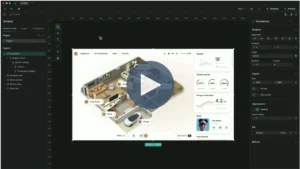
SuperPlane introduces a centralized "factory" view where the entire team can monitor the status of active coding agents. This includes real-time telemetry on which tasks are currently being processed, which have failed, and where human intervention is required. By standardizing these workflows, SuperPlane ensures that AI-generated contributions meet the same quality benchmarks as manual commits.
The workflow is structured to handle the end-to-end lifecycle:
- Task Readiness: The system evaluates whether a ticket contains sufficient information to be processed by an agent, reducing the likelihood of hallucinations or off-target implementations.
- Execution: The agent performs the requested task within the defined parameters of the project.
- Verification: The platform automatically runs tests, linting, and security scans.
- Resolution: If a check fails, the system provides feedback to the agent to iterate on the solution or flags the issue for a human engineer if the complexity exceeds the agent’s current capacity.
The Role of Human Oversight in the AI Era
A critical concern among engineering leadership is the potential for "black box" development, where AI agents produce code that humans no longer fully understand. SuperPlane 1.0 takes a firm stance on this by maintaining the "human-in-the-loop" model. The platform is explicitly designed not to replace software engineers, but to act as a coordinator for routine, repetitive tasks.
By offloading the "boilerplate" work—such as writing unit tests, refactoring legacy code, or addressing minor technical debt—engineers are freed to focus on high-level architectural decisions and product strategy. The platform ensures that while the agent does the heavy lifting of writing the code, the final decision to merge and deploy remains a human prerogative. This maintains organizational accountability and prevents the unintentional introduction of technical debt or security vulnerabilities that can arise from unchecked AI automation.
Technical Architecture and Model Agnosticism
One of the most notable features of SuperPlane 1.0 is its commitment to model agnosticism. In an industry where major tech conglomerates are aggressively pushing their proprietary model ecosystems, SuperPlane provides teams with the flexibility to choose their underlying intelligence. Whether an organization prefers the reasoning capabilities of OpenAI’s GPT-4, the speed of Anthropic’s Claude 3.5 Sonnet, or the specialized performance of open-weights models like Llama 3, SuperPlane allows teams to plug in their own API keys.

This design choice serves two purposes: it prevents vendor lock-in and allows companies to maintain strict control over their data privacy. By allowing teams to host the software on their own infrastructure, SuperPlane addresses the regulatory and compliance concerns that often prevent enterprises from adopting third-party AI coding solutions. The Apache 2.0 license further solidifies this, enabling organizations to inspect, modify, and audit the factory’s source code to ensure it meets internal security standards.
Data-Driven Implications for Engineering Velocity
Industry data from sources like DORA (DevOps Research and Assessment) suggest that high-performing teams are defined by their ability to maintain short lead times for changes and low failure rates. SuperPlane is designed to impact these metrics directly. By automating the verification and feedback loops, the platform reduces the time spent on "context switching"—the cognitive drain that occurs when a developer must manually test, fix, and resubmit minor changes.
If an agent can identify a failed check, self-correct, and present a passing build to a human reviewer, the cycle time for a single ticket could theoretically be reduced by significant margins. For organizations managing thousands of Jira tickets, this could translate to hundreds of hours of reclaimed engineering capacity per quarter.
Industry Context and Competitive Landscape
The market for AI-driven development tools is currently undergoing a rapid maturation phase. While early competitors focused on IDE-based completion plugins, the market is now shifting toward agentic systems that can operate across entire repositories. SuperPlane enters this space by focusing on the "factory" aspect—the management and governance of these agents rather than just the generation of code.
This mirrors the evolution of CI/CD pipelines in the mid-2010s. Just as Jenkins and GitLab CI turned the "it works on my machine" problem into a standardized, automated process, SuperPlane aims to turn the "AI works in my chat window" problem into a standardized, enterprise-grade engineering workflow.
Future Outlook and Strategic Implications
The introduction of an open-source standard for AI agent orchestration could have profound implications for how development teams are structured. As the platform matures, it is likely that "AI Orchestration" will become a distinct discipline within engineering organizations, similar to the rise of DevOps or SRE (Site Reliability Engineering).
For the broader developer community, the availability of a self-hosted, open-source factory means that the barriers to entry for utilizing advanced AI agents are lowered significantly. Small-to-medium-sized enterprises that previously lacked the resources to build custom internal tooling can now adopt SuperPlane to achieve a level of operational maturity that was once the exclusive domain of tech giants.
As SuperPlane 1.0 continues to integrate with broader ecosystem tools, the focus will likely remain on enhancing the "human-agent interface." As agents become more capable, the primary engineering challenge will shift from writing code to defining the constraints, tests, and business logic that govern the agents. By providing a transparent, extensible, and team-centric platform, SuperPlane is positioning itself as a foundational layer in the next generation of software engineering.
The company’s decision to open-source the project signals a long-term play for adoption within the developer community. By fostering a community-driven development model, SuperPlane aims to benefit from the collective intelligence of the industry, ensuring that the platform remains compatible with the ever-changing landscape of LLMs and development workflows. For engineering leaders, the message is clear: the future of development is not just about writing code faster, but about building systems that manage the process of coding more intelligently.