Qt Group Unveils Clate to Bridge the Gap Between Embedded Hardware Constraints and Modern User Experience Design

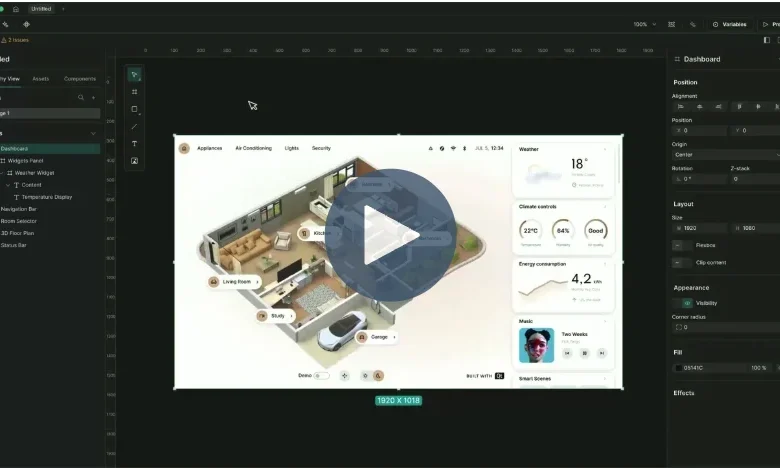
The landscape of embedded systems development is undergoing a paradigm shift as Qt Group officially announces the launch of Clate, an AI-native, no-code design environment engineered specifically for the constraints of resource-limited hardware. By decoupling the creative process from manual software engineering, Qt Group aims to resolve a long-standing friction point in the technology sector: the inability for UX designers to create high-fidelity, production-ready interfaces without deep expertise in complex, low-level programming languages.
The Embedded Design Dilemma
Historically, the design of user interfaces for embedded devices—such as medical monitors, automotive dashboards, industrial control panels, and smart home appliances—has been characterized by a forced compromise. Designers typically utilize web-centric design tools that prioritize aesthetic fluidity and high-resolution visuals. However, these tools often fail to account for the harsh realities of embedded hardware, which frequently operates on low-power microcontrollers, limited memory, and restricted processing capabilities.
When these designs are handed off to software engineers, the translation process is often fraught with complications. The engineer must reconstruct the design within the constraints of the target hardware, frequently leading to a dilution of the original UX vision. This disconnect often results in lengthy feedback loops, increased time-to-market, and a final product that falls short of the designer’s intent.
Industry Research and the Need for Change
Recent research conducted by Qt Group highlights the urgency of this industry challenge. According to the company’s internal study, approximately 59% of embedded UX designers report that their current workflows are inefficient and that they could significantly benefit from a specialized tool. Yet, these same designers often struggled to articulate the exact nature of the required solution, underscoring a fundamental lack of specialized tooling in the embedded sector.
The problem is compounded by the reliance on traditional IDEs (Integrated Development Environments) that require significant coding proficiency. While designers have become adept at using prototyping tools like Figma or Adobe XD, these platforms do not inherently understand the memory footprint or frame-rate requirements of a target hardware chipset. Consequently, the "no-code" movement, which has revolutionized web and mobile development, has largely bypassed the embedded sector until now.
Clate: An AI-Native Approach to Hardware Constraints
Clate represents a departure from traditional design workflows by embedding hardware-awareness directly into the design environment. By leveraging the existing Qt framework—a industry standard for cross-platform development—Clate allows designers to work in a visual environment while the system automatically handles the generation of production-ready QML (Qt Modeling Language) code in the background.
The inclusion of AI-native capabilities is a cornerstone of the Clate platform. Through the integration of standard Model Context Protocol (MCP) protocols, Clate allows designers to interact with their workspace using natural language. This facilitates a fluid design process where a designer can request a UI element modification or a layout adjustment, and the AI assistant executes the change within the established technical boundaries of the hardware.
Antti Kujala, vice president of design products at Qt Group, emphasized that the primary goal of Clate is to restore autonomy to the designer. "For too long, embedded UI/UX designers have had to compromise their work, using web-centric tools that simply don’t account for real-world hardware constraints," Kujala noted. "We created Clate to end that compromise, and to give designers back full control and ownership of the user experience."
Chronology and Roadmap to Release
The development of Clate follows a multi-year effort by Qt Group to streamline the path from concept to deployment.

- Pre-2023: Recognition of the "Designer-Developer Gap" within the embedded sector through extensive customer feedback and industry analysis.
- Early 2024: Qt Group begins internal development of an AI-assisted design tool tailored for low-resource environments.
- Late 2024: Official announcement of Clate as a beta project.
- Early 2025 (Expected): General availability and full commercial release.
At the time of its initial beta launch, users will have access to the core no-code workspace, the AI assistant, and the ability to export QML code. Qt Group has confirmed that more advanced hardware-specific diagnostic features—such as real-time memory consumption tracking and frame-rate optimization monitoring—are currently in development and will be rolled out shortly after the initial release.
Technical Implications and Market Impact
The introduction of Clate carries significant implications for the broader embedded systems market. By reducing the reliance on manual code translation, companies may see a drastic reduction in development cycles. If designers can verify the performance of an interface on a target hardware profile within the design tool itself, the need for iterative "code-then-test" cycles in the hardware laboratory is minimized.
From an engineering perspective, this shifts the role of the software developer. Rather than acting as a translator for the designer, the developer can focus on high-level system architecture, security, and hardware integration. This symbiotic relationship—where designers control the UX and developers secure the system—mirrors the advancements seen in mobile app development over the last decade.
Furthermore, the focus on "resource-constrained hardware" aligns with the growing trend of edge computing and the Internet of Things (IoT). As devices become smaller, more numerous, and more reliant on battery power, the ability to deliver a premium user experience without demanding heavy hardware resources becomes a competitive advantage.
Analyzing the Competitive Landscape
While specialized embedded UI tools have existed in the past, they have often been niche, proprietary, or prohibitively difficult to learn. Many current solutions require the designer to have a working knowledge of C++ or low-level graphics APIs. Clate’s strategy to use QML as the output format is particularly shrewd; QML is already widely adopted, performant, and capable of rendering sophisticated UIs on hardware as humble as an ARM Cortex-M processor.
By adopting an AI-native approach, Qt Group is also positioning itself ahead of competitors who may still rely on static, manual design-to-code workflows. The use of MCP protocols suggests that Qt is betting on an open ecosystem where the designer’s tools can communicate effectively with other AI agents and development infrastructure, a vision that is increasingly becoming the standard for modern DevOps environments.
The Future of Embedded UX
As the industry moves toward the 2025 full release, the success of Clate will likely hinge on the accuracy of its AI-driven hardware optimization. If the tool can reliably predict how a UI will behave on specific hardware—accounting for limited RAM, CPU spikes, and display refresh rates—it could become an indispensable utility for automotive, medical, and industrial OEMs.
The broader impact of this technology is the democratization of high-quality interfaces. When designers are no longer hindered by the technical complexity of embedded code, the barrier to entry for building sophisticated, intuitive, and modern user experiences on simple hardware is lowered. This could usher in a new wave of consumer and industrial devices that feel just as responsive and polished as modern smartphones, regardless of the underlying technical limitations.
In conclusion, Qt Group’s introduction of Clate addresses a fundamental maturity gap in embedded development. By aligning the creative freedom of the designer with the performance requirements of the engineer, and by leveraging the power of AI to bridge that gap, the company is positioning itself to define the next generation of embedded user experience design. As the beta period progresses, the industry will be watching closely to see if Clate can truly deliver on its promise of "no-compromise" design.