New Relic launches suite of GitHub Copilot integrations to bridge the gap between AI-generated code and production observability

The rapid ascent of generative AI in software engineering has fundamentally altered the development lifecycle, promising unprecedented velocity in code generation. However, this shift has introduced a complex set of operational challenges that many organizations are struggling to navigate. New Relic, a leader in observability, has officially announced a new suite of integrations for GitHub Copilot, designed to embed continuous telemetry directly into developer workflows. This strategic move aims to solve the growing disconnect between the speed of AI-driven coding and the stability of production environments, effectively bringing "headless" observability to the tools engineers use every day.
The Paradox of AI-Driven Velocity
The integration arrives at a critical juncture for the software industry. According to the New Relic 2026 State of AI Coding report, there is a stark disparity between perceived code quality and actual post-deployment performance. While 94% of engineering leaders surveyed expressed confidence that AI-generated code meets high-quality standards during the review phase, a contradictory 78% of these same leaders reported an increase in production incidents following the implementation of AI-assisted coding tools.
This phenomenon—often referred to as the "AI performance gap"—suggests that traditional code review processes, which focus on syntax and logic, are insufficient for identifying downstream architectural bottlenecks or performance regressions. Without the ability to see how AI-generated code interacts with complex, distributed microservices in real-time, developers are often left in a state of reactive triage. New Relic’s latest suite, unveiled during the GitHub Universe event in San Francisco, seeks to automate this visibility, allowing for proactive remediation before minor code changes escalate into critical system outages.
Core Components of the New Relic Integration Suite
The new offering is comprised of three distinct, yet complementary, capabilities that address different stages of the development and operational cycle:
New Relic Change Tracking for GitHub Copilot
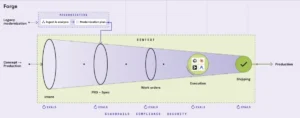
This tool is designed to bridge the gap between deployment and production impact. By integrating directly into the deployment workflow, it enables continuous, automated validation. The system runs pre-merge checks against established performance baselines and implements "canary gates" post-deployment. If a regression is detected, the integration automatically triggers an update to Slack and creates a GitHub Issue, complete with the diagnostic data necessary for Copilot to suggest a fix.
New Relic Autopilot Integration for GitHub MCP Server
Leveraging the open Model Context Protocol (MCP) standard, this integration allows New Relic’s Autopilot SRE agent to interface directly with a company’s GitHub codebase. When an incident occurs, Autopilot does not merely alert the developer; it performs a deep dive into the relevant code context to identify root causes and suggest specific remediation steps. This minimizes the "context switching" that often plagues SRE teams, allowing them to remain focused on resolution rather than manual data correlation.
New Relic Preflight Integration for GitHub Copilot
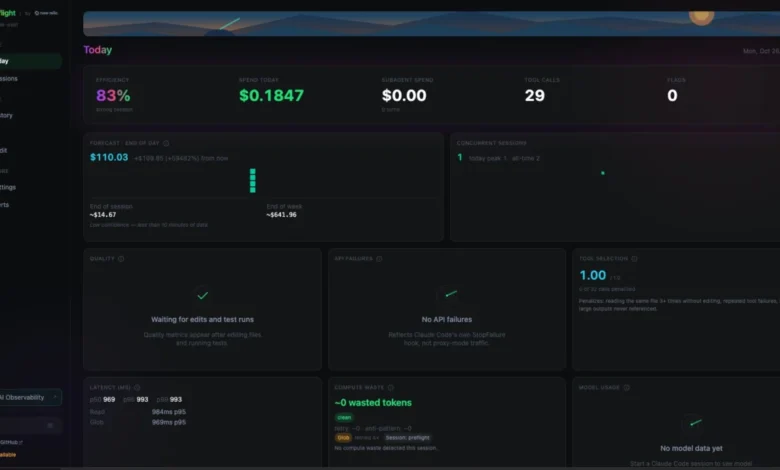
Perhaps the most granular of the new features, Preflight is an open-source capability focused on the "inner loop" of development. It provides developers with real-time feedback on how they are utilizing coding agents. By surfacing metrics such as token consumption, latency, and execution errors directly within the IDE or CLI, developers can optimize their interactions with Large Language Models (LLMs). This transparency helps teams manage costs and evaluate the efficacy of different models in real-time.
Industry Context and Strategic Implications
The announcement reflects a broader trend in the observability market: the movement away from centralized, siloed dashboards toward decentralized, developer-centric workflows. For years, observability platforms were primarily the domain of SREs and operations teams who operated independently of the development cycle. As software architectures have grown increasingly complex, the industry has realized that observability must be treated as a first-class citizen in the development IDE.

"As AI accelerates development, engineers and agents need a shared understanding of how their software behaves in production," said Camden Swita, Head of AI at New Relic. "While traditional observability locks critical data inside closed SaaS dashboards, headless New Relic brings trusted operational intelligence directly into the tools and workflows where software is built and delivered."
Industry analysts note that this shift is essential for the sustainable adoption of AI agents. If developers cannot trust the code generated by their AI counterparts, the potential efficiency gains are quickly erased by the time spent in troubleshooting. By providing a feedback loop that connects production telemetry back to the code repository, New Relic is attempting to commoditize reliability, making it a predictable output of the software development lifecycle rather than a manual, after-the-fact effort.
Chronology of Development
The introduction of these tools follows a period of rapid innovation in the integration of AI and observability.
- Early 2025: Initial industry reports begin to highlight the correlation between AI code generation and increased deployment-related incidents.
- Mid-2025: New Relic begins internal testing of "headless" observability modules, focusing on minimizing context switching for developers.
- Q3 2026: Finalization of the Model Context Protocol (MCP) support, enabling the secure connection between SRE agents and code repositories.
- October 2026: Official unveiling at GitHub Universe, marking the public preview of Change Tracking for GitHub Copilot and the general availability of Autopilot and Preflight.
Analysis: Moving Toward "Autonomous Reliability"
The implications of this release extend beyond simple convenience. By routing regressions directly to Copilot and GitHub Issues, New Relic is effectively creating a closed-loop system where the AI is not just creating the code, but also participating in its maintenance and debugging.
From an economic perspective, this approach addresses the "token tax" associated with heavy AI usage. By monitoring token consumption and model latency through the Preflight tool, organizations can gain better control over their AI infrastructure spending—a growing concern as enterprises scale their generative AI initiatives.
Furthermore, the reliance on the open Model Context Protocol (MCP) indicates a strategic choice by New Relic to align with industry-wide open standards. This reduces the risk of vendor lock-in for organizations that want to swap out different LLMs or development environments, provided they adhere to the protocol.
Looking Ahead
As development teams continue to lean on AI agents to handle routine coding tasks, the burden on human engineers shifts from writing code to managing the behavior of code. New Relic’s suite of integrations is an admission that in the age of AI, the definition of a "developer" is expanding. They are no longer just authors of syntax; they are architects of intent.
For the immediate future, the success of these integrations will be measured by their adoption rate among enterprise DevOps teams. With Change Tracking currently in public preview and the other modules generally available, the industry will be watching closely to see if these tools can effectively lower the 78% incident rate reported in the company’s recent state-of-the-industry survey.
For those attending GitHub Universe in San Francisco, New Relic’s presence at booth #114 serves as a focal point for demonstrations of this workflow. As the software industry matures in its use of generative AI, tools that successfully bridge the gap between the IDE and the production environment will likely become the standard for high-performance engineering teams. The era of "observability by default" has arrived, and it is increasingly taking place inside the editor, not the dashboard.