Fifteen Coder fingerprints and 7,392 title matches describe very different evidence


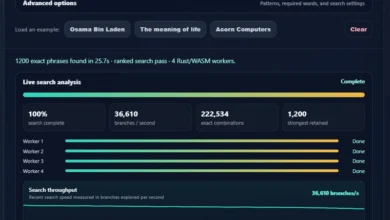
The inherent complexities of digital reconnaissance and internet-wide asset discovery have once again been brought to the forefront following a comparative analysis of search engine queries targeting the Coder development workspace platform. On October 30, 2026 UTC, a diagnostic query executed on the ZoomEye search engine exposed a massive statistical discrepancy: a search for the application fingerprint returned precisely 15 results, whereas a broader text-based title search for the identical keyword yielded 7,392 hits. This stark divergence of more than 7,300 entries highlights a fundamental challenge in cybersecurity measurement: the propensity for common dictionary words to distort asset visibility, conflate contextual noise with concrete infrastructure deployments, and complicate risk assessment metrics for enterprise security teams.
To understand the mechanics behind this numerical chasm, one must examine how internet-scanning engines index public-facing web servers. When researchers or threat actors deploy search strings across platforms like ZoomEye, Shodan, or Censys, they rely on two distinct methods of data retrieval: application-layer fingerprinting and textual metadata matching.
In the case of the October 30 telemetry gathering, the researcher utilized a query parameter of page size 1 with sub_type=all. The first dork, app="Coder", was designed to locate instances where the remote server actively presents explicit indicators, response headers, or structural signatures uniquely associated with the Coder software ecosystem. This narrower methodology returned 15 matches. Conversely, the second dork, title="Coder", cast a vastly wider net by scanning HTML title tags for the exact string. This query returned 7,392 matches.
Security analysts emphasize that neither figure represents an absolute census of global Coder deployments. The application fingerprinting query is inherently conservative; it successfully flags canonical installations but routinely misses custom-configured environments, instances hidden behind specialized reverse proxies, or servers where default product banners have been altered or obfuscated. On the other end of the spectrum, the title query captures an immense volume of false positives. Because "coder" is a ubiquitous noun in the English language, the title search indiscriminately aggregates developer blogs, computer science recruitment portals, instructional tutorials, generic code editor landing pages, and unrelated software products that happen to incorporate the word into their HTML metadata.
The technical architecture of the Coder platform introduces significant security considerations that elevate the importance of accurate asset identification. Coder functions as a remote development environment management tool, utilizing workspace proxies that authenticate users, relay application traffic directly to underlying containers or virtual machines, and maintain high-privilege access points to running development ports. Furthermore, workspace applications can be configured with path-based or subdomain-based routing schemas, each carrying distinct browser security contexts.
Because a compromised or improperly configured Coder control plane can grant an unauthorized actor deep visibility into source code repositories, continuous integration pipelines, build credentials, and internal corporate networks, precise inventory management is critical. However, analysts warn that confusing a noisy search engine title match with a verified exposure creates a cascade of operational errors. Security teams that utilize raw, unfiltered search engine results as a target population risk misallocating finite resources toward systems they do not own or, conversely, overlooking genuine security misconfigurations hidden beneath the noise of generic web traffic.
Recognizing these methodological pitfalls, cybersecurity professionals advocate for a disciplined, multi-phased approach to digital surface measurement and vulnerability management. The primary directive for organizations utilizing the Coder platform is to rely exclusively on internal asset discovery—such as authoritative DNS records and cloud resource inventories—rather than external search engines when establishing their baseline threat surface.
For those conducting authorized external reconnaissance, application-specific fingerprints should be treated strictly as high-level scoping tools rather than definitive vulnerability counts. When a legitimate Coder control plane or proxy is identified via an application query, the discovery must be manually cross-referenced against corporate inventories and intended exposure parameters. Key validation metrics include reviewing the designated public access URL, verifying proxy token storage mechanisms, inspecting Transport Layer Security (TLS) configurations, assessing workspace sharing levels, and auditing session token lifetime controls.
Furthermore, organizations must exercise caution when evaluating shared workspace security attributes. Coder’s official documentation outlines distinct operational differences between subdomain-based and path-based application sharing, noting that certain attribute configurations may bypass template-level maximum sharing restrictions. These nuanced security boundaries cannot be inferred from a rudimentary public title page or a high-level search engine index.
From a reporting and compliance perspective, transparency and methodological rigor are paramount. Industry standards dictate that any formal assessment detailing internet-exposed infrastructure must clearly delineate between application-level fingerprints and textual metadata matches. A credible security report should explicitly document the exact query strings utilized, the precise time of execution, and the query scope, while acknowledging the inherent limitations imposed by common-word ambiguity.
Reporting 7,392 exposed Coder platforms based on a title search is a critical analytical failure that confuses general linguistic data with product-specific identity. Similarly, asserting that 15 application matches represent the definitive global population of the software misinterprets search engine indexing constraints as exhaustive discovery. By maintaining a strict separation between broad discovery signals and verified product ownership, security practitioners can prevent inflated metrics from metastasizing into false exposure claims, ensuring that defensive engineering efforts remain focused on actual, verified risk.