The Internet of Things (IoT) landscape is currently undergoing a significant period of recalibration, characterized by the aggressive pursuit of subscription-based security models, the maturation of cross-platform interoperability through the Matter standard, and an intensifying focus on AI-driven industrial analytics. As the smart home market reaches a saturation point for simple connected devices, manufacturers are pivoting toward service-oriented architectures, while the industrial sector is leveraging high-stakes capital to solve the perennial problem of predictive maintenance.
Signify Shifts Toward Security-Centric Revenue Models
Signify, the parent company of the prominent Philips Hue lighting brand, appears poised to expand its ecosystem into the home security sector. Following comments made by company leadership during a recent earnings call, industry reports suggest that Signify is developing a suite of four security cameras and a series of contact sensors.
This strategic pivot is arguably a necessary evolution for a brand that has dominated the smart lighting space since 2013. Market analysts note that the lighting sector faces a commoditization challenge; because LED bulbs are durable and long-lasting, the replacement cycle is too slow to sustain aggressive year-over-year growth in hardware sales alone. By integrating security hardware, Signify can unlock recurring revenue streams through video cloud storage and premium monitoring subscriptions. This shift mirrors broader industry trends, where smart home companies are increasingly moving away from "buy-once" hardware models in favor of the software-as-a-service (SaaS) architecture that defines the modern connected home.
The Expansion of the Matter Ecosystem
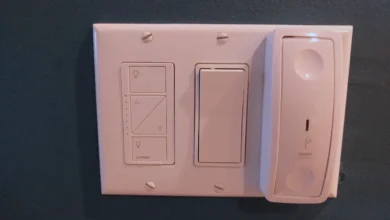
Interoperability remains a focal point for the smart home industry, with TP-Link continuing its commitment to the Matter protocol. The company has officially launched two new devices under its Kasa brand: the KS205 Smart Wi-Fi Light Switch and the KS225 Smart Wi-Fi Light Dimmer Switch. Priced at $27.99 and $29.99 respectively, these devices require a neutral wire installation, a standard requirement for high-performance smart switches.
The inclusion of these devices in the Matter ecosystem is significant. Matter, the industry-standard unified communication protocol, is designed to eliminate the "walled garden" approach that has historically fragmented the smart home experience. By supporting Matter, TP-Link ensures these switches can communicate seamlessly across ecosystems like Apple Home, Amazon Alexa, and Google Home, lowering the barrier to entry for consumers and increasing the long-term utility of the hardware.
Microsoft Retires Cortana as AI Focus Intensifies
The sunsetting of the Cortana digital assistant marks a definitive conclusion to Microsoft’s decade-long endeavor to compete with Apple’s Siri and Amazon’s Alexa. Launched in 2014, Cortana was originally envisioned as a cornerstone of the Windows experience. However, it struggled to gain meaningful traction in the consumer IoT market, largely due to a lack of compatible third-party hardware compared to its rivals.
With the release of recent Windows 11 updates, Microsoft has officially deprecated the standalone Cortana application, signaling a complete transition toward generative AI integrations, such as the AI-powered Copilot. This transition reflects a broader shift in the tech industry: moving away from general-purpose voice assistants toward specialized, large-language-model-driven interfaces that provide more sophisticated task management rather than simple voice commands.
Industrial IoT: Tractian Secures $45 Million in Funding
Predictive maintenance is no longer merely a theoretical application for IoT sensors; it is a high-growth commercial reality. Atlanta-based industrial monitoring firm Tractian has successfully raised $45 million in new funding, bringing its total capital raised to over $60 million since its inception in 2019.
Tractian specializes in hardware and software solutions that monitor machine health in industrial environments. The company’s success highlights the growing demand for "AI-driven" anomaly detection. By deploying sensors that track vibration, temperature, and acoustic data, manufacturers can predict equipment failures before they result in costly downtime. With over 500 customers already onboarded, the capital infusion will be directed toward scaling sales operations and advancing research into more sophisticated machine-learning algorithms.
The Intersection of Insurtech and Surveillance
The rise of "insurtech"—the application of technology to insurance processes—is introducing new ethical and privacy challenges for consumers. In response to rising climate risks and high housing replacement costs, insurance companies are increasingly utilizing aerial drone technology to conduct remote property inspections.
In California, reports have emerged of insurance providers canceling policies based on drone imagery that identified issues such as roof disrepair or the drainage of swimming pools. While insurance firms argue that these measures are necessary to assess risk accurately in an era of climate-driven uncertainty, consumer advocates raise concerns about the lack of transparency. The danger is that the proliferation of connected devices in the home—from security cameras to smart thermostats—could provide insurance companies with an unprecedented, granular view of a policyholder’s lifestyle, potentially creating a "risk-based" filter that could lead to the mass termination of coverage for high-risk, but compliant, homeowners.
Innovations in Energy Harvesting: Graphene Foam
Technological progress in IoT is often hindered by the logistical burden of battery management. Researchers in Scotland have unveiled a breakthrough in energy harvesting: a graphene-based foam that generates electricity through kinetic energy.
When an individual steps on a floor sensor integrated with this material, it generates approximately 10 watts of electricity—enough to power the sensor itself. Beyond mere power generation, the sensor can process data to determine occupancy and movement patterns. This "self-powered" sensor architecture is a critical development for the future of ambient intelligence, as it removes the need for cabling or frequent battery replacements, thereby reducing the environmental and maintenance overhead of large-scale IoT deployments.
SaaviHome and the Professionalization of Smart Home Installation
As the smart home market matures, the demand for professional installation and system integration is increasing. SaaviHome, a smart home integration service provider established in 2004, has announced its intent to franchise its business model.
By leveraging the Control4 platform, SaaviHome aims to standardize the fragmented process of professional home integration. The company is currently targeting the Mountain West region—specifically Colorado, Utah, Nevada, and Arizona—to recruit franchisees. This move underscores a growing trend where consumers, overwhelmed by the complexity of managing dozens of connected devices, are increasingly willing to pay for professional oversight to ensure system reliability and security.
Analysis and Implications
The events of the past week demonstrate a clear maturation of the IoT industry. We are witnessing a transition from the "experimental" phase of the early 2010s to a "utility" phase. Whether it is the professionalization of home integration through franchises like SaaviHome, or the standardization of hardware through Matter, the industry is focused on reducing friction for the end user.
However, this maturation brings significant challenges regarding data privacy and corporate overreach. As seen in the insurance industry, the data collected by IoT devices is becoming a powerful lever for corporate decision-making. The transition from "smart" devices to "managed" services is inevitable, but it places a greater burden on regulators to ensure that consumers maintain ownership of their data and that the use of surveillance technology—even when legally permissible—remains within ethical bounds.
Furthermore, the shift toward subscription models for hardware, as seen with Signify, represents a fundamental change in the consumer value proposition. Manufacturers must now prove that their ongoing services provide tangible value, as the hardware itself becomes an entry point rather than the final product. As we move into the latter half of 2023, the successful players in the IoT space will be those who can balance the demand for high-performance connectivity with the necessity of user privacy and sustainable, value-driven business models. The industry is no longer just about connecting things; it is about building reliable, secure, and intelligent ecosystems that can withstand the rigors of long-term real-world deployment.